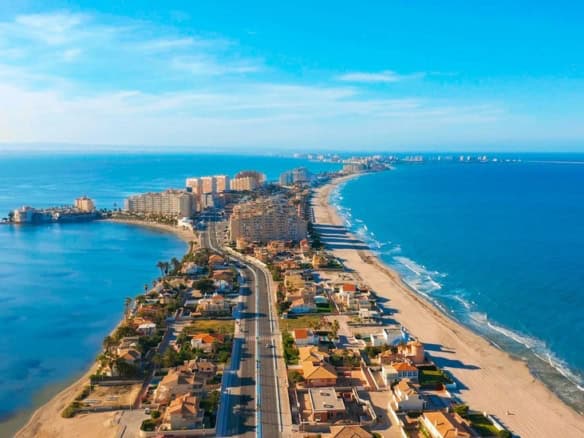

The dream of owning a home in another country feels closer than ever, but the world of property for sale international can often seem like a complex maze. This guide is designed to be your map, breaking down what seems like a massive undertaking into a clear, step-by-step journey. We’ll walk you through everything, from pinpointing the perfect location on the map to finally getting the keys in your hand.
Embarking On Your Global Property Journey
Think of this as your personal playbook. It doesn’t matter if you’re a retiree picturing a sun-drenched villa from our Homes for Sale in Spain listings or a sharp investor eyeing up high-yield flats in a buzzing new market. The goal is the same: to make a smart, confident purchase of an overseas home for investment.
We’ll show you how to use platforms offering International Property For Sale to find trustworthy agents and cut through the noise. By the end, you’ll be ready to tackle market analysis, legal hurdles, and financing like a seasoned professional. This isn’t just about buying bricks and mortar; it’s about turning a complex dream into an exciting, real-life adventure.
The Three Pillars of International Property Acquisition
When you strip it all back, buying property abroad really comes down to three core stages: nailing the location, mastering the property search, and getting the legal side right. Get these right, in that order, and you’ll sidestep the costly mistakes that trip up so many buyers. It’s a simple, methodical approach that gives you the clarity to move forward.
This flowchart lays out the journey visually, showing how a successful purchase always starts with solid research and ends with bulletproof legal checks.
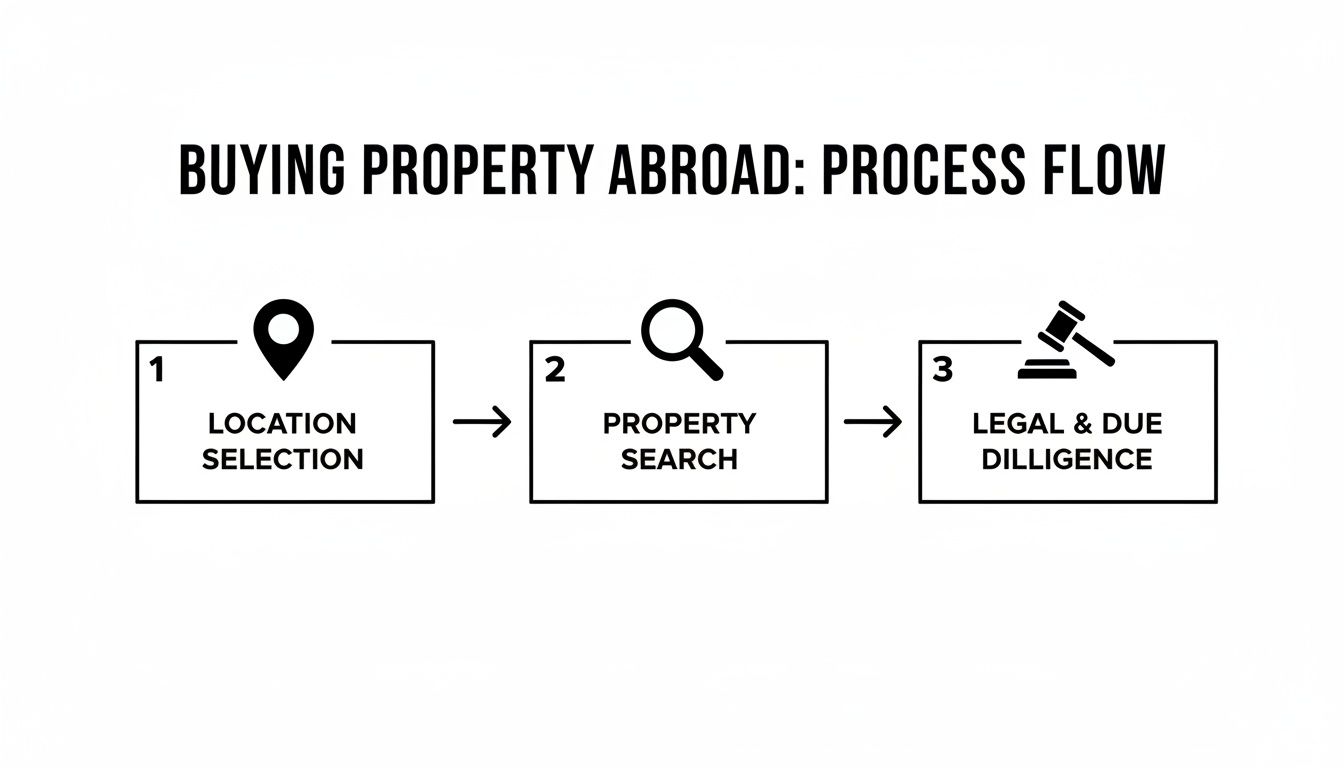
As you can see, it’s a process built on a foundation of deep research and meticulous validation.
A Structured Approach for Every Buyer
A successful international property purchase isn’t about luck; it’s built on diligent research and surrounding yourself with the right experts. By breaking the process down, you can tackle each critical piece one by one.
Here’s where to begin:
- Define Your “Why”: Get crystal clear on your motivation. Are you chasing a lifestyle change, setting up a retirement haven, or is this purely an investment play? Your “why” will be your compass, guiding every decision you make about the property and its location.
- Establish a Realistic Budget: Your budget is more than just the price on the listing. You absolutely must factor in taxes, legal fees, ongoing maintenance costs, and the wild card of currency fluctuations. A comprehensive budget is a realistic one.
- Build Your Professional Team: Don’t even think about going it alone. You need a team in your corner: a trusted local estate agent who knows the area inside out, an independent solicitor who specialises in foreign property law, and a sharp currency exchange expert to save you a fortune on the transfer.
Thinking this way turns a fuzzy dream into a concrete, actionable plan. In the sections that follow, we’ll dive deep into each of these stages, giving you the practical tools and insider knowledge you need to navigate the exciting world of property for sale international.
To give you a clearer overview, the table below summarises the main steps you’ll be taking on this journey.
Key Stages of Buying International Property
| Stage | Key Objective | Primary Consideration |
|---|---|---|
| 1. Vision & Strategy | Define your personal and financial goals for the purchase. | Is this for lifestyle, investment, retirement, or a mix? |
| 2. Research & Location | Identify countries and regions that align with your budget and goals. | Market stability, local culture, property laws, and accessibility. |
| 3. Financial Planning | Secure funding and understand all associated costs. | Purchase price, taxes, legal fees, and currency exchange rates. |
| 4. Property Search | Find specific properties that meet your criteria. | Using online portals, connecting with local agents, and viewing trips. |
| 5. Due Diligence | Verify the property’s legal status and physical condition. | Title deeds, planning permissions, structural surveys, and debt checks. |
| 6. Negotiation & Offer | Agree on a purchase price and terms with the seller. | Market value, property condition, and seller’s motivation. |
| 7. Legal & Closing | Complete the legal transfer of ownership. | Signing contracts, paying taxes, and registering the property. |
| 8. Post-Purchase | Manage the property and settle into your new life abroad. | Utilities, maintenance, residency permits, and local integration. |
Each of these stages builds on the last, creating a solid foundation for a successful and stress-free purchase abroad.
Mastering Your Search For International Property
Finding the perfect property for sale international doesn’t start with endless, aimless scrolling. It begins with a smart, focused search strategy. The most successful buyers I’ve seen over the years don’t just rely on one method; they combine the huge reach of global platforms with the on-the-ground knowledge of local experts. Your mission is to get beyond basic search filters and build a process that’s both efficient and genuinely insightful.
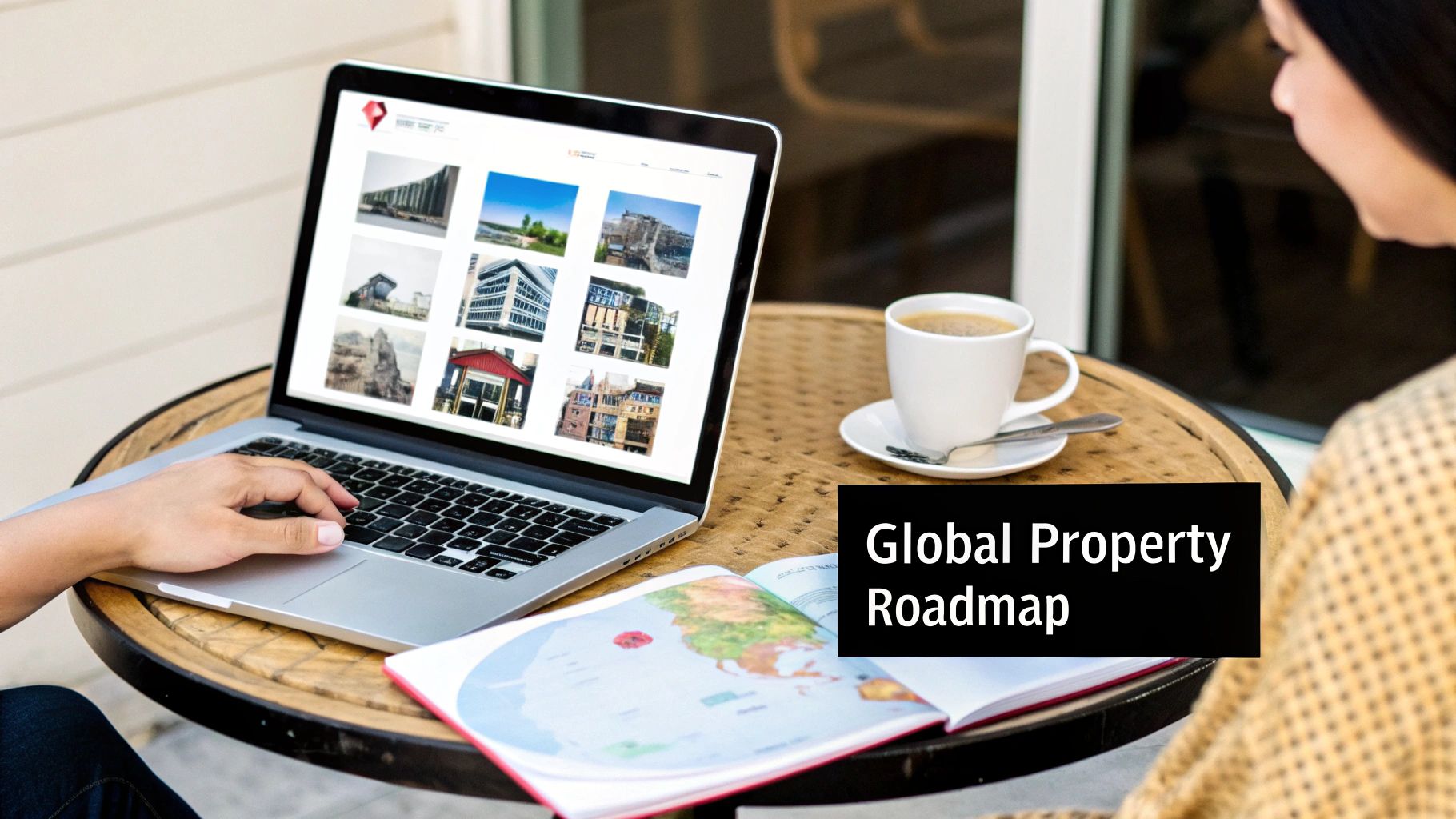
This is where you can really make global portals work for you. The first step? Setting up intelligent alerts. Forget generic notifications that just clog up your inbox. Get specific. Think “three-bedroom villas with a pool under €500,000 in the Algarve” instead of just “Homes for Sale in Portugal“. This simple trick makes the market come to you, so you see the right properties the second they go live.
Beyond The Basic Filters
When you’re scanning listings, you’ve got to learn to read between the lines. Pay close attention to the small things: the quality of the photos, the level of detail in the description, and—crucially—how long the property has been on the market. These aren’t just details; they’re clues. They can point to a motivated seller, a hidden bargain, or a property with problems no one wants to talk about. A listing with crisp, professional photos and a thorough description usually signals a serious seller and a well-cared-for home.
As Nick Marr, founder of HomesGoFast.com, often says, “Technology has empowered buyers to conduct deep preliminary research from anywhere, turning what was once a leap of faith into a data-driven decision.”
But a truly effective search is more than just clever browsing on a single website. It requires a strategic, multi-pronged approach, pulling in information from several different places.
Building A Multi-Channel Search Strategy
To get the full picture of any market, you need to layer your sources. Think of it like assembling an intelligence report. Each channel has its own strengths, and using them together gives you a massive advantage in finding that dream overseas home.
Here’s a look at how the different platforms stack up:
- Global Portals (e.g., HomesGoFast.com): These are your starting point. They offer the widest selection, letting you easily compare countries and regions side-by-side. They are brilliant for that initial research, discovering new markets, and getting a feel for broad price trends for property for sale international.
- Local Agent Websites: Once you’ve zeroed in on a specific region, local agent sites are your next stop. They often have listings that haven’t hit the major portals yet and give you a much more granular view of a particular town or even a single neighbourhood.
- Direct Developer Listings: If you’re interested in a new-build property, going straight to the source is a must. Developers can offer access to off-plan pricing, let you customise finishes, and show you projects that aren’t being widely advertised yet.
This blended approach ensures you don’t miss out on those hidden gems. For example, a global portal can help you weigh up the value between the Spanish Costas and the French Riviera. But it’s the local agent in Homes for Sale in Brittany who might tip you off about a charming farmhouse before it ever hits the open market.
Diversifying Your Search To Uncover Value
Don’t just stick to the well-trodden paths. While established markets in Europe and the USA offer a degree of safety, the real growth potential often lies in emerging property markets. I’m seeing more and more smart investors looking seriously at regions in South America and parts of Asia. In these places, strong economic growth is fuelling property demand and creating incredible opportunities for capital appreciation.
Try expanding your search criteria to include at least one emerging market alongside your main targets. By doing a bit of homework on the legal rules for foreign ownership and the local economic drivers, you can diversify your options and potentially uncover high-growth opportunities that everyone else is overlooking. It’s this kind of forward-thinking that turns a good property search into a great one.
How To Analyse And Compare Global Property Markets
So, you’ve spent hours scrolling through listings and have a shortlist of dream locations. Great! Now the real work begins. It’s time to switch from browsing beautiful photos to doing some serious homework on the markets themselves.
Finding the right property for sale international means digging deeper. You need to scrutinise the numbers that underpin a healthy, long-term investment. This involves comparing everything from economic stability and property price trends to potential rental yields and the legal hoops you’ll need to jump through as a foreign buyer.
A methodical approach is your best friend here. Whether you’re weighing a mature, stable market like the UK against a high-growth emerging economy, or simply deciding between two different sunny coastlines in Europe, each location comes with its own unique blend of risk and reward. Your job is to unpack it all with cold, hard data.

Economic And Political Stability
Think of this as the foundation of your investment. A country with a shaky economy or volatile political scene can turn a dream home into a nightmare, wiping out value and creating legal headaches.
Before you get too attached to a location, check these vital signs for each country on your list:
- GDP Growth Rate: Is the economy growing consistently? A positive trend is a sign of good health.
- Inflation and Interest Rates: Wildly fluctuating inflation can eat into your rental profits and signals wider economic trouble.
- Political Climate: How stable is the government? Crucially, what’s its track record on protecting property rights, especially for foreigners? A country with a strong rule of law is a much safer bet.
- Currency Stability: A volatile currency can have a massive impact on the real cost of your purchase and the value of any income you earn when you convert it back home.
Getting this basic analysis done first helps you quickly weed out the high-risk markets, letting you focus your energy on places with a solid footing.
Property Market Health And Trends
Next, it’s time to zoom in on the property market itself. You’re looking for its current direction and future potential, which you can figure out by looking at historical data and current trends. For example, the UK market is known for its resilience. In August 2025, average house prices climbed by 0.8% from the previous month to hit £273,000, representing a 3% annual increase and showing the sector’s stability. Transactions were also healthy, with 94,000 homes sold in July 2025—a 1.7% rise year-on-year.
Here are the key metrics to line up when comparing different markets:
- House Price Index (HPI): Look at the HPI over the past 5-10 years. This helps you spot long-term growth trends and avoid markets that might be in a speculative bubble.
- Rental Yields: This is a simple but powerful calculation: divide the annual rent by the property’s value. It’s the quickest way to compare the income potential of different cities and property types.
- Vacancy Rates: Low vacancy rates are a fantastic sign. They tell you that rental demand is strong, meaning you’re more likely to have consistent income from your property for sale international.
- Supply and Demand: Look into the local housing pipeline. A shortage of new construction combined with a growing population or booming tourism can be a powerful driver for price growth.
Calculating Investment Potential
To properly compare global property markets and spot genuine opportunities, you need good data. Consulting resources like a comprehensive analysis of short-term rental markets for investors can provide the detailed numbers you need for accurate forecasting.
By blending this kind of deep-dive analysis with official government stats and local market reports, you can build a solid model for comparison. It’s this methodical approach that ensures your decision is based on solid evidence, not just a gut feeling.
Navigating The Legal And Financial Maze Of Buying Abroad
This is the point where your dream of owning a property for sale international gets real. Moving from browsing listings to actually buying a home abroad means tackling the local legal and financial systems head-on. This isn’t the time for a DIY approach; putting together a team of independent, trusted professionals is the single most important investment you can make.
Getting to grips with the local rules is everything. Every country has its own unique web of regulations covering property ownership, taxes, and even inheritance. These aren’t just minor details—they can completely change whether a purchase is even a good idea for you.
Understanding Foreign Ownership Laws
The very first question you need to ask is: “Can I, as a foreigner, actually own property here?” The answer changes dramatically from one country to the next.
- Open Markets: Lots of countries, like France and the UK, have very few restrictions. They treat foreign buyers almost exactly the same as local citizens.
- Conditional Ownership: Some places, like Mexico, have specific rules. You can’t directly own land in certain coastal or border areas (known as the ‘restricted zone’). Instead, you have to use a special bank trust called a fideicomiso to hold the property title on your behalf.
- Restricted Markets: A handful of countries make it very difficult, or even impossible, for non-citizens to get direct freehold ownership.
Not figuring this out right at the start can cause a world of legal and financial pain later on.
Assembling Your Professional Team
You absolutely cannot navigate this maze by yourself. Trying to do so is the biggest mistake overseas buyers make, time and time again. Your ‘dream team’ isn’t a luxury; it’s essential. It should be made up of a few key, independent experts who work only for you.
“The value of an independent, multilingual solicitor cannot be overstated,” notes Nick Marr of HomesGoFast.com. “Their loyalty is to you and you alone, ensuring your interests are protected against sellers, developers, and even agents.”
Your team should include:
- An Independent Solicitor: They must be a specialist in property deals for foreign buyers in that specific country. Their job is to do the due diligence, check all contracts, and make sure the property title is clean and clear.
- A Tax Advisor: This expert will break down all the tax implications for you—from purchase taxes (like Stamp Duty) and ongoing property taxes, to what you might owe in Capital Gains Tax if you decide to sell.
- A Mortgage Broker: If you need a loan, a broker with experience in international or local financing is crucial.
- A Currency Exchange Specialist: Your high street bank will rarely give you a good exchange rate. A specialist firm can save you thousands on the final transfer by getting you a better rate and helping you manage currency risk.
The Financial Realities Of An Overseas Purchase
Getting a mortgage for a property for sale international comes with its own set of hurdles. Lenders in your home country are usually not keen on securing a loan against a property in another country. That means you’ll probably have to find financing locally, in the country where you’re buying.
You need to know where you stand financially. A key number lenders look at is your debt-to-income ratio. For a closer look, it’s worth understanding your debt-to-income ratio (DTI) and why it’s so important for getting a mortgage. Lenders will want to see your entire global financial picture and will often ask for a much larger deposit—typically 30-40%—from foreign buyers.
Due Diligence: Your Non-Negotiable Checklist
When you’re buying a property for sale internationally, thorough due diligence is your single best defence against expensive, heart-breaking problems down the line. This isn’t just a box-ticking exercise. Think of it as a forensic examination of the property, its legal standing, and its physical state, where you verify every single detail.
This is the critical stage where the dream of ownership meets the reality of a secure investment. It’s not something to rush or hand off to anyone but your own, independent legal counsel. Treat it as the non-negotiable checklist that protects your money and ensures there are no nasty surprises waiting for you after the ink is dry.
Verifying Legal Ownership and Status
First things first: does the seller actually own the property and have the legal right to sell it? This is ground zero. Your solicitor’s initial job is to pull an up-to-date copy of the title deed from the local land registry.
This official document is the proof of ownership, but more importantly, it’s where any hidden issues will surface. Your legal team must meticulously scan it for red flags like:
- Liens or Encumbrances: Are there any outstanding debts tied to the property? This could be an unpaid mortgage, contractor bills, or local taxes that could become your problem.
- Legal Disputes: Is the property tangled up in any ongoing boundary arguments or messy inheritance claims?
- Permissions and Permits: Does the property have all the required building permits and occupancy licences? This is especially critical for any extensions or renovations the current owner has made.
Investigating Planning and Zoning Laws
Owning a property is one thing; being able to use it the way you want is another entirely. This is a massive stumbling block for many buyers, especially if you have plans to renovate, build an extension, or generate rental income.
Local zoning laws are the rulebook for how a property can be used—be it residential, commercial, or mixed-use. That charming farmhouse might look perfect, but if it sits on protected agricultural land, your dreams of adding a modern wing could be dead on arrival. Your solicitor must dig into these local regulations to confirm your plans are legally viable. Skipping this step can be a financially devastating mistake.
As you think about your long-term plans, you might also find our guide on capital gains tax for foreign property useful.
Conducting Property Inspections
Whether you can fly out for a viewing or have to arrange it remotely, a professional property inspection is absolutely essential. A surveyor’s report is an unbiased, expert assessment of the building’s structural health and overall condition.
The inspection should be tailored to the local environment. In a tropical climate like in many parts of South America, the focus is on termite damage, damp, and weather resilience. For a historic stone cottage in Europe, you’re looking for signs of damp, roofing problems, and ancient electrical wiring.
A detailed report gives you two things: powerful leverage to negotiate the price down, or the confidence to walk away from a property that’s a money pit in disguise.
The UK’s residential real estate market, valued at USD 587.23 billion in 2025, is set to hit USD 742.01 billion by 2030, showing just how much potential diligent investors can tap into. With secondary resales making up 79.50% of the market and listings at multi-year highs, thorough checks are more important than ever to secure real value. You can dive deeper into this market with this in-depth UK real estate market report.
Negotiating Your Offer and Closing the Deal
You’ve done the hard yards. After all the research, viewings, and careful due diligence, you’ve found it—the perfect property for sale international. Now comes the final, and often most delicate, part of the journey: making an offer, navigating the negotiation, and getting the deal over the line. This is where cultural know-how, legal precision, and financial sharpness all come together.
How you approach negotiation really depends on where you’re buying. A direct, no-nonsense offer might be perfectly normal in the United States, but in many parts of Europe or South America, it’s all about building a relationship first. A more flexible, patient approach is often expected. Your local agent is your best friend here; they’ll have the inside track on the seller’s mindset and what the market is doing, helping you put together an offer that’s both compelling and sensible.
Understanding the Purchase Process
Once your offer is accepted, things get official. The exact steps will differ from country to country, but you’ll almost always start by signing a preliminary contract and putting down a deposit to take the property off the market.
A classic example is the ‘contrato de arras’ in Spain. It’s a binding preliminary agreement where you pay a deposit, usually 10%. The stakes are high: if you back out, you lose your deposit. But if the seller backs out, they often have to pay you back double.
This initial contract locks in the key terms of the sale and sets a target date for the final closing. It’s absolutely critical that your solicitor gives this document a thorough review before you put pen to paper.
Navigating Closing Day
Closing, or completion day, is the grand finale—the moment ownership officially passes to you. It’s a formal affair, almost always overseen by a public notary, who acts as a neutral, government-appointed legal professional.
Here’s what typically happens on the day:
- Final Document Review: The notary will check every last piece of paperwork, from title deeds and tax receipts to everyone’s ID.
- Signing the Deed: You (or your legal representative) and the seller will sign the final deed of sale. This is known as the ‘escritura’ in Spain or the ‘acte de vente’ in France.
- Final Payment: The rest of the purchase price is transferred.
- Handover of Keys: With the transaction complete, you get the keys. Congratulations!
Budgeting for the Extra Costs
Remember, the sale price isn’t the final price. You need to budget for closing costs to avoid any nasty surprises. These fees can easily add another 5% to 15% on top of the property price, depending on the country.
Make sure you’ve accounted for:
- Property Transfer Tax: This is usually the biggest extra cost, levied by the government.
- Notary Fees: For the notary’s services in overseeing the transaction.
- Land Registry Fees: The cost to officially register you as the new owner.
- Legal Fees: What you pay your own solicitor for their expertise.
- Agent Commission: Sometimes paid by the buyer, depending on local customs.
Post-Purchase Essentials
Getting the keys isn’t quite the end of the road. There are a few final admin tasks to tick off. Your solicitor will get the new title deed registered in your name at the Land Registry, which can take a few weeks. In the meantime, you’ll need to get utilities like electricity, water, and internet switched over to your name. Getting these things sorted quickly means you can start enjoying your new international home without a hitch.
What’s Next? Emerging Trends In The Global Property Market
When you’re searching for property for sale international, it’s just as important to look ahead as it is to analyse the present. The global property landscape is always in motion, shaped by new tech, shifting lifestyles, and fresh investment models. Getting a handle on these trends is your key to making a strategic move that pays off for years.
The world of work has been completely turned on its head, and property markets are catching up. Remote work has ignited demand for homes that fit a more flexible, location-independent life, creating new hotspots in places that offer a fantastic quality of life over just a short commute.
The Rise of Digital Nomad Visas
One of the biggest game-changers is the explosion of ‘digital nomad’ visas. Countries are now actively competing to lure remote workers with long-term residency permits. This isn’t just a niche trend; it’s reshaping demand, pushing up property values and rental returns in areas that nail the sweet spot between great connectivity and lifestyle perks.
Today’s buyers are hunting for homes with dedicated office space, rock-solid internet, and access to wellness facilities. This sharp focus on lifestyle-first markets is a massive driver for investors looking for growth beyond the usual city centres.
Green and Healthy Living is the New Luxury
Buyers and investors are putting a much higher price on sustainability. It’s no longer just a “nice-to-have.” New developments featuring green materials, energy-efficient systems, and wellness-focused amenities are now commanding a premium. This reflects a deep-seated demand for healthier, more environmentally responsible places to live.
Properties with communal gardens, fitness centres, and plenty of natural light are flying off the shelves. For investors, targeting developments with strong ESG (Environmental, Social, and Governance) credentials is now a cornerstone of any future-proof strategy for finding valuable property for sale international.
New Ways to Invest: The Build-to-Rent Boom
Investment strategies are evolving, too. One of the most powerful trends, especially in stable markets, is the growth of the Build-to-Rent (BtR) sector. In this model, entire developments are built specifically for long-term rental rather than for individual sale, and it’s attracting serious money from big institutions.
Take the UK’s BtR market, for example. It’s completely reshaping the rental scene. With nearly 100,000 homes already completed and tens of thousands more in the works, the sector has seen a 40% surge in recent years. This explosive growth is pulling in sovereign wealth funds and private equity firms, who see the UK’s housing shortage and political stability as a golden opportunity for steady, long-term returns.
Nick Marr, founder of HomesGoFast.com, notes, “The most exciting growth potential I see over the next five years is in markets that successfully blend lifestyle appeal with innovative investment models like BtR. Buyers are looking for more than just a property; they want a sound investment that aligns with modern living standards.”
By keeping these trends on your radar, you can get ahead of the curve and spot the next wave of opportunities in the global property market. It’s about making sure your next purchase isn’t just for today, but for tomorrow.
FAQs: Your International Property Questions Answered
What are the biggest mistakes people make when buying overseas property?
The most common mistakes include failing to secure independent legal advice, underestimating the total purchase costs by forgetting taxes and fees, and not performing thorough due diligence on the property’s legal title. Underestimating the impact of currency fluctuations is another significant pitfall that can add thousands to the final cost.
Can I use a mortgage from my home country to buy abroad?
It is extremely rare. Domestic lenders are generally unwilling to secure a loan against a property located in another legal jurisdiction. The standard approach is to seek financing from a bank within the country of purchase, use a specialist international mortgage broker, or fund the purchase with cash, potentially by releasing equity from existing assets.
How can I find a trustworthy real estate agent in another country?
Start your search on reputable global property portals like HomesGoFast.com, as listed agents are typically experienced with international buyers. Further vet potential agents by checking for memberships in national professional associations, requesting testimonials from past foreign clients, and assessing their responsiveness and clarity of communication.
What is a “Golden Visa” and is it relevant for property buyers?
A “Golden Visa” is a residency-by-investment programme offered by several countries. By making a qualifying investment, often in real estate above a certain value threshold, non-EU nationals can gain residency rights. Countries like Portugal, Spain, and Greece have popular programmes that have become a key driver for international property investment, offering a pathway to living and travelling within the EU’s Schengen Area.
How much should I budget for closing costs on top of the purchase price?
As a general rule, you should budget for an additional 5% to 15% of the property’s purchase price to cover all closing costs. These typically include property transfer taxes, notary fees, land registry fees, legal fees, and sometimes estate agent commissions. Your solicitor should provide a detailed estimate of these costs upfront.
Are emerging markets like South America a safe place to invest in property?
Emerging markets can offer significant potential for capital appreciation but come with higher risks compared to established markets in Europe or the USA. Risks can include political instability, currency volatility, and less transparent legal systems. However, with thorough due diligence and expert local guidance, countries with strong economic fundamentals and growing middle classes can present lucrative investment opportunities. It is crucial to work with professionals who specialise in foreign investment in that specific region.
About Homesgofast.com
HomesGoFast.com is a leading international property website, established in 2002, helping homeowners, real estate agents, and developers reach overseas buyers. Featuring thousands of listings from over 50 countries, the platform connects global property seekers with homes, apartments, villas, and investment opportunities worldwide.
Looking for expert mortgage guidance? Get international property mortgage advice here:
https://homesgofast.com/mortgages-overseas/
Explore more overseas homes for sale at our global partner site:
https://homesgofast.com/overseas-property/
Looking to sell real estate to foreign buyers? Go to
https://homesgofast.com/sell-overseas-property/