
The dream of owning a home abroad is more accessible than it has ever been, but diving into the world of international property for sale can feel like a huge undertaking. This guide is your roadmap. We have designed it to cut through the noise and give you the confidence to invest wisely.
Think of buying property overseas not just as a transaction, but as a lifestyle investment. It is about finding that perfect spot under the sun, a bustling city apartment, or a quiet retreat for your family.
Embarking On Your Global Property Journey

Exploring listings for international property for sale throws open a door to incredible opportunities. It connects savvy buyers with everything from sun-drenched European coastlines to high-growth emerging markets. Central hubs like HomesGoFast.com are brilliant for this, bringing together a massive variety of global real estate all in one place.
This guide will walk you through every crucial step, from spotting the right market to getting your head around the tricky details of foreign ownership. By the end, you will be more than ready to get started.
Understanding The Modern Global Market
The global property market is a vast, interconnected beast. It might surprise you to learn that a huge chunk of the world’s property value is actually concentrated in just a few powerhouse nations. In fact, some reports show that just 10 countries hold 70% of all global real estate value, with China and the US way out in front.
But that is not the whole story.
For investors and lifestyle buyers, the real magic often happens beyond these big players. We are seeing a huge shift in focus towards:
- Established European Destinations: It is no surprise that countries like Homes for Sale in Spain are perennial favourites. They offer that perfect mix of lifestyle, culture, and a solid legal footing for buyers.
- High-Growth Emerging Markets: For the more adventurous investor, regions in South America and Southeast Asia are showing real potential for serious capital growth.
- Golden Visa Hotspots: Nations offering residency through investment continue to be a massive draw for anyone looking for greater mobility and a secure plan B.
As Nick Marr, founder of HomesGoFast.com, puts it, “International buyers are increasingly focused on lifestyle-led markets with long-term value fundamentals. They are looking beyond pure investment returns to find properties that enhance their quality of life.”
Your Roadmap To Success
We have structured this guide to give you clarity at every stage. We will get into the nitty-gritty of comparing markets, handling legal and tax responsibilities, and sorting out financing across borders. You will also get practical advice on working with agents, carrying out inspections, and finally, getting the keys in your hand.
Whether you are a seasoned investor, a retiree dreaming of a life in the sun, or a family searching for that perfect second home, our goal is simple: to give you the knowledge you need to make great decisions.
Let’s start exploring the world of International Property For Sale.
Navigating The World’s Most Desirable Property Markets

So, where in the world should you buy? It is the first big question on your global property journey, and the answer is not always straightforward. The planet is packed with diverse markets, each with its own personality, opportunities, and quirks.
Finding international property for sale is about more than just browsing listings; it is a strategic hunt that balances your lifestyle dreams with smart investment sense. Let’s take a high-level tour of the key regions to help you zero in on what is right for you.
We will look at the classic appeal of Europe, the sprawling landscape of the US, and the exciting potential of high-growth emerging markets. By the end, you will have a much clearer picture of where your money can work hardest.
The Timeless Appeal Of European Markets
Europe has always been a magnet for overseas buyers, and for good reason. It is a compelling mix of rich culture, incredible quality of life, and solid legal systems that give property owners peace of mind.
Countries like Spain are perennial favourites, drawing people in with endless sunshine, a vibrant culture, and property that is still relatively affordable compared to other Western European hubs. Likewise, the market for Homes for Sale in Portugal has absolutely boomed, thanks to its laid-back lifestyle and popular residency programmes like the “Golden Visa,” which adds a massive layer of value for non-EU investors.
- Key Strengths: Established tourism, stable legal frameworks, and massive lifestyle appeal.
- Buyer Profile: Often retirees, second-home seekers, and investors chasing long-term rental income.
- Considerations: Tax rules can get complicated, and cutting through the red tape often requires a local expert.
The Diverse USA Real Estate Landscape
The United States is a property market of enormous scale and variety. Global investors are drawn to its economic stability and refreshingly transparent legal system. It is so vast that there is truly an option for every kind of buyer.
For those dreaming of a retirement spot, states like Homes for Sale in Florida offer a winning formula: sunshine, top-notch amenities, and no state income tax. On the other end of the spectrum, buzzing cities like New York and Los Angeles attract investors after high-value assets in dynamic rental markets, though you will need deep pockets to get in. A huge plus is that the legal process for foreign buyers is generally quite straightforward.
Emerging Markets: Growth And Opportunity
If you have a bigger appetite for risk and an eye on serious capital growth, emerging markets in South America and parts of Asia are worth a look. These regions often come with lower price tags and the potential for huge gains as their economies mature.
Countries like Colombia and Brazil in South America are gaining serious traction, offering breathtaking natural beauty alongside rapidly growing cities. While the returns can be impressive, these markets are more volatile and the legal protections for foreign buyers can be less developed. Doing your homework here is not just advisable; it is essential.
Nick Marr, founder of HomesGoFast.com, notes, “While mature markets offer stability, savvy investors are increasingly allocating a portion of their portfolio to emerging hotspots. The key is to balance the potential for high growth with a clear understanding of the local risks and legal environment.”
To help you dig deeper, we have put together a guide exploring the top locations for your money. You can discover more about the best countries for property investment in our dedicated article.
A Comparative Overview
Choosing the right market comes down to your personal goals. Are you looking for a stable lifestyle asset, or are you chasing aggressive growth? The table below offers a quick comparison to help you weigh your options.
Comparative Overview Of Global Property Market Regions
Here’s a snapshot of how these major regions stack up for international buyers.
| Region | Key Strengths | Typical Buyer Profile | Considerations |
|---|---|---|---|
| Established Europe | Strong lifestyle appeal, stable legal systems, high rental demand in tourist areas. | Retirees, second-home buyers, lifestyle investors. | Higher taxes, potential bureaucracy, currency fluctuations against USD. |
| United States | Economic stability, transparent legal process, diverse market options. | High-net-worth individuals, institutional investors, families seeking relocation. | High entry costs in prime cities, property taxes vary significantly by state. |
| Emerging Markets | High potential for capital growth, lower property prices, developing economies. | Speculative investors, adventurous lifestyle buyers, expatriates. | Higher political and economic risk, less legal transparency, infrastructure challenges. |
Ultimately, the best place to find your international property for sale is the one that fits your budget, risk tolerance, and long-term vision.
Mastering The Financials Of Buying Abroad
Getting the keys to your dream home overseas is a huge milestone. But the real win? Nailing the financials. Buying international property for sale brings a whole set of financial challenges you just do not face back home. We are talking about everything from getting a mortgage and handling currency swings to figuring out foreign tax laws. Every single step demands smart planning.
Just imagine trying to get a mortgage in a country where you do not live. Local banks can be wary of foreign buyers, often demanding much bigger deposits and drowning you in paperwork in another language. This is exactly why specialist overseas mortgage brokers are worth their weight in gold—they act as the crucial link between you and lenders who actually get what international buyers need.
But it is not just about the upfront loan. Managing the money side of your property for the long haul is what really counts. Let’s break down the main financial hurdles you will need to clear.
Managing Currency Fluctuations
One of the biggest risks—and one that catches so many people out—is currency fluctuation. The exchange rate between your home currency and the property’s local currency can swing wildly in the weeks or months between making an offer and finalising the deal. A sudden dip could inflate the cost of your property by thousands overnight. Ouch.
To sidestep this nightmare, seasoned buyers always use currency exchange specialists. These firms offer smart tools that your high street bank probably will not mention:
- Forward Contracts: This is a game-changer. It lets you lock in an exchange rate today for a transaction down the line, protecting your money from any nasty market surprises.
- Market Orders: You can set your ideal exchange rate, and the transfer only goes through when the market hits your target. It is about buying smart, not just fast.
Using a specialist gives you certainty and can save you a small fortune compared to standard bank transfers, which often sting you with poor rates and hidden fees.
Unpacking Foreign Property Taxes
Taxes are a fact of life in any property deal, but they get a whole lot trickier when you cross borders. The tax rules tied to international property for sale are wildly different from country to country, and not knowing them can be a very expensive mistake.
Here are the key taxes you absolutely must budget for:
- Purchase Taxes: Sometimes called Stamp Duty or Transfer Tax, this is a one-off tax you pay when you buy. Rates can be anything from less than 1% to over 10% of the property’s price.
- Capital Gains Tax: This is the tax on the profit you make when you eventually sell up. It is vital to understand the local rules here—some countries waive this tax for a primary home, while many others do not. You can dig deeper into this with our guide to capital gains tax on foreign property.
- Inheritance Tax: If you are thinking of passing the property down to your family, you need to get your head around the local inheritance laws and taxes. They can be completely different from what you are used to back home.
As Nick Marr, founder of HomesGoFast.com, often advises, “The smartest investors budget for the hidden costs you don’t see on the listing price. Taxes, legal fees, and currency conversion costs can add a significant percentage to the final bill.”
Benchmarking Your Investment Potential
Getting a grip on the financials also means looking at how the market is performing. For example, investors in UK real estate had a good year in 2025, with the market delivering a solid 8.1% total return in the year to February. This kind of data is a fantastic benchmark for investors browsing opportunities in over 50 countries on HomesGoFast.com, as UK buyers often look for similar returns abroad in villas, land, or new-builds. You can read more about the UK real estate market outlook on aberdeeninvestments.com.
By getting these financial pieces right—from finding the best mortgage to planning for taxes and shielding your money from currency risks—you turn a potentially daunting process into a savvy, successful investment.
Navigating The Legal Labyrinth Of Foreign Ownership
Buying property abroad is much more than just a financial deal; it is an entry into a completely new legal world. This part of your journey demands a steady hand, and it helps to think of professional legal counsel as your pilot. They are absolutely essential for steering you through the often-confusing maze of foreign ownership rules.
As you start searching for international property for sale, you will quickly encounter different types of ownership that might be unfamiliar. Getting your head around these from the start is vital, as they fundamentally change what you actually own.
Understanding Ownership Structures
The two most common ways to own property are freehold and leasehold, but what they mean in practice can vary wildly from one country to the next.
- Freehold (or Fee Simple): This is the gold standard. When you buy a freehold property, you own the building and the land it stands on, forever. It is the norm in places like the USA and the UK, but many countries restrict this type of ownership for foreigners.
- Leasehold: With a leasehold, you are buying the right to use the property for a fixed, long-term period—often 99 or even 999 years. The land itself is still owned by the freeholder. This is a standard setup in much of Asia and for flats in many European cities.
- Restricted Ownership: Some nations have specific no-go zones for foreign buyers. Mexico, for example, restricts direct ownership in certain coastal and border areas, requiring foreigners to buy through a bank trust called a fideicomiso. You must check the specific rules for any country you are serious about.
The Roles Of Lawyers And Notaries
The cast of legal characters also changes depending on where you are. In the UK or USA, your lawyer or solicitor handles everything. But in many ‘civil law’ countries, like when you are looking at Homes for Sale in France, a public notary plays a massive, state-appointed role.
A notary in these systems is not your lawyer. They are a neutral legal officer responsible for drafting and registering the official deed, confirming everything is legal from the state’s perspective. Because they do not represent your personal interests, it is still crucial to hire your own independent lawyer to fight your corner and carry out proper due diligence.
Nick Marr of HomesGoFast.com observes, “One of the most common pitfalls for overseas buyers is assuming the legal process is the same as at home. Engaging independent, bilingual legal advice from day one is the single best investment you can make.”
This local expertise is worth its weight in gold, especially when you are faced with complex contracts or need to get documents officially recognised. For international deals, legal paperwork often needs special authentication. You will want to check the latest Hague Apostille Country List to see what is required for documents to be accepted across borders.
Your Essential Due Diligence Checklist
Before you even think about signing a binding contract, your legal team needs to conduct a tough due diligence process. This is your safety net, making sure the property is clean and free from hidden nightmares.
Your checklist must include:
- Title Deed Verification: Confirming the person selling the property is actually the legal owner with the right to sell it. It sounds basic, but you would be surprised.
- Land Registry Checks: A deep dive to ensure there are no outstanding debts, mortgages, or legal claims against the property that could become your problem.
- Planning Permission Review: Verifying that the property was built legally and that any add-ons, like extensions or a swimming pool, have the right permits.
- Contract Scrutiny: Pulling apart every clause in the preliminary and final purchase contracts to ensure your rights are protected and every term is crystal clear.
This upfront legal groundwork ensures your search for international property for sale ends with a secure, transparent purchase, not a future headache. For comparison, the robust UK property market saw 395,090 completed sales in the first four months of 2025, a 29.5% increase year-on-year, showing just how much activity a well-regulated market can handle. Read more on UK property market performance at globalpropertyguide.com.
Your Step-By-Step Guide to a Successful Purchase
With your financial and legal groundwork laid, you are ready to get down to the exciting part. This section is a practical, chronological walkthrough of the entire buying process, breaking down the complex journey of acquiring international property for sale into a series of clear, manageable steps.
From that first online search to finally getting the keys in your hand, every phase needs careful attention. We will demystify the art of making an offer, navigating negotiations, and understanding the contracts that seal the deal.
Phase 1: Perfecting Your Property Search
The hunt for your dream home abroad almost always starts online. Powerful property portals are your best friend here, letting you filter through thousands of global listings to zero in on opportunities that actually match what you are looking for.
Think beyond just the country and price tag. Use advanced filters to narrow your search by property type, must-have features like a swimming pool or a sea view, and how close it is to local shops or transport. For example, if you are looking at Homes for Sale in Cyprus, you can specifically search for Homes for Sale in Limassol to compare waterfront apartments with hillside villas.
A targeted search saves an incredible amount of time and energy. Instead of endlessly scrolling through irrelevant listings, you create a curated shortlist of high-potential properties that genuinely fit your vision.
Phase 2: The Critical Viewing Stage
Once you have got that shortlist, it is time for viewings. Whether you fly out in person or arrange a virtual tour, this is your chance to see past the glossy photos and get a real sense of the property’s condition.
During any viewing, keep your eyes peeled for:
- Structural Integrity: Look for any tell-tale signs of damp, cracks in the walls, or problems with the roof.
- Neighbourhood Vibe: It is a great idea to visit at different times of the day. This gives you a proper feel for the area’s character, noise levels, and the local community.
- Hidden Details: Do not be shy. Check the water pressure, test the light switches, and ask about the age of the boiler and appliances.
Virtual viewings have come a long way, but if you cannot be there yourself, think about hiring a local property surveyor. A small investment for an independent inspection can save you from a very expensive mistake down the line.
Phase 3: Making an Offer and Negotiation
You have found ‘the one’. Now it is time to make an offer. This is usually done in writing through your estate agent and should be grounded in your research of what similar local properties have recently sold for.
In many cultures, a bit of back-and-forth negotiation is all part of the dance. Be ready for it, but always hold firm to the maximum budget you set out in your financial plan. Once you and the seller agree on a price, you will typically sign a preliminary agreement.
This document—often called a reservation agreement or preliminary contract—makes the offer official and usually involves paying a small deposit to take the property off the market. It is absolutely crucial that your independent lawyer reviews this document before you put pen to paper.
Phase 4: The Closing Process
The final stage is closing the deal, often known as ‘completion’. This is where all the legal and financial pieces of the puzzle come together. By this point, your lawyer will have completed all the due diligence, ensuring the property’s title is clean with no outstanding debts attached to it.
Here is what typically happens during closing:
- Final Contract Signing: You and the seller will sign the final deed of sale, often in front of a public notary.
- Funds Transfer: The rest of the purchase price is transferred to the seller, usually through your lawyer’s or the notary’s secure client account.
- Registration of Ownership: The notary or lawyer then officially registers the property in your name with the country’s land registry.
- Handover of Keys: Congratulations, the property is now legally yours!
The whole process, from making an offer to getting the keys, can take anywhere from a few weeks to several months. It really depends on the country’s legal system and how complex the purchase is. Patience and clear communication with your professional team are your best assets for a smooth transaction.
To help you stay organised, we have put together a checklist that breaks down the entire international property purchase into clear, actionable phases. Think of it as your roadmap from initial research to final ownership.
International Property Purchase Checklist
| Phase | Key Actions | Professional To Consult |
|---|---|---|
| 1. Preparation & Research | Define goals, set budget, research target markets, and understand visa/residency rules. | Financial Advisor, Mortgage Broker |
| 2. Legal & Financial Setup | Appoint an independent lawyer, open a local bank account, and arrange currency transfer. | International Property Lawyer, Currency Specialist |
| 3. Property Search & Viewing | Create a shortlist using online portals, conduct in-person or virtual viewings, and inspect property condition. | Real Estate Agent, Property Surveyor |
| 4. Offer & Negotiation | Make a formal offer based on market value, negotiate the price, and sign a preliminary agreement. | Real Estate Agent, Lawyer |
| 5. Due Diligence | Lawyer checks property title, planning permissions, and for any debts or legal issues. | Lawyer |
| 6. Closing & Completion | Sign the final deed of sale (often with a notary), transfer final funds, and register the property. | Lawyer, Notary Public |
| 7. Post-Purchase | Arrange utilities, insurance, property management (if applicable), and understand tax obligations. | Property Manager, Accountant |
Following these steps methodically and consulting the right experts at each stage will take the stress out of the process, ensuring your purchase is both successful and secure.
Beyond The Purchase: Managing Your Overseas Asset
Getting the keys to your international property is a massive milestone, but it is really just the beginning. The day-to-day reality of owning a home in another country, especially if you are not living there, demands a smart, organised approach from day one.
Successful long-term ownership is all about effective property management. This goes way beyond just collecting rent. It is about protecting the value of your investment through consistent maintenance, careful tenant selection, and staying on the right side of local laws.
Assembling Your Local Management Team
For anyone owning property from afar, a trustworthy local management company is not a luxury—it is essential. Think of them as your eyes and ears on the ground, handling everything from finding and vetting tenants to fixing a leaky tap at 2 AM and making sure the bills are paid on time.
When you are choosing a management partner, you need to dig a little deeper.
- Local Reputation: Ask for recommendations. Read online reviews from other foreign owners who have been in your shoes.
- Transparent Fee Structure: Make sure you know exactly what you are paying for. Our guide on typical property management fees breaks down what you can expect.
- Communication: A great manager keeps you in the loop with regular, clear updates. You should never have to chase them for information.
This whole process follows a clear path, from the initial hunt to the final handover, which then leads into this management phase.
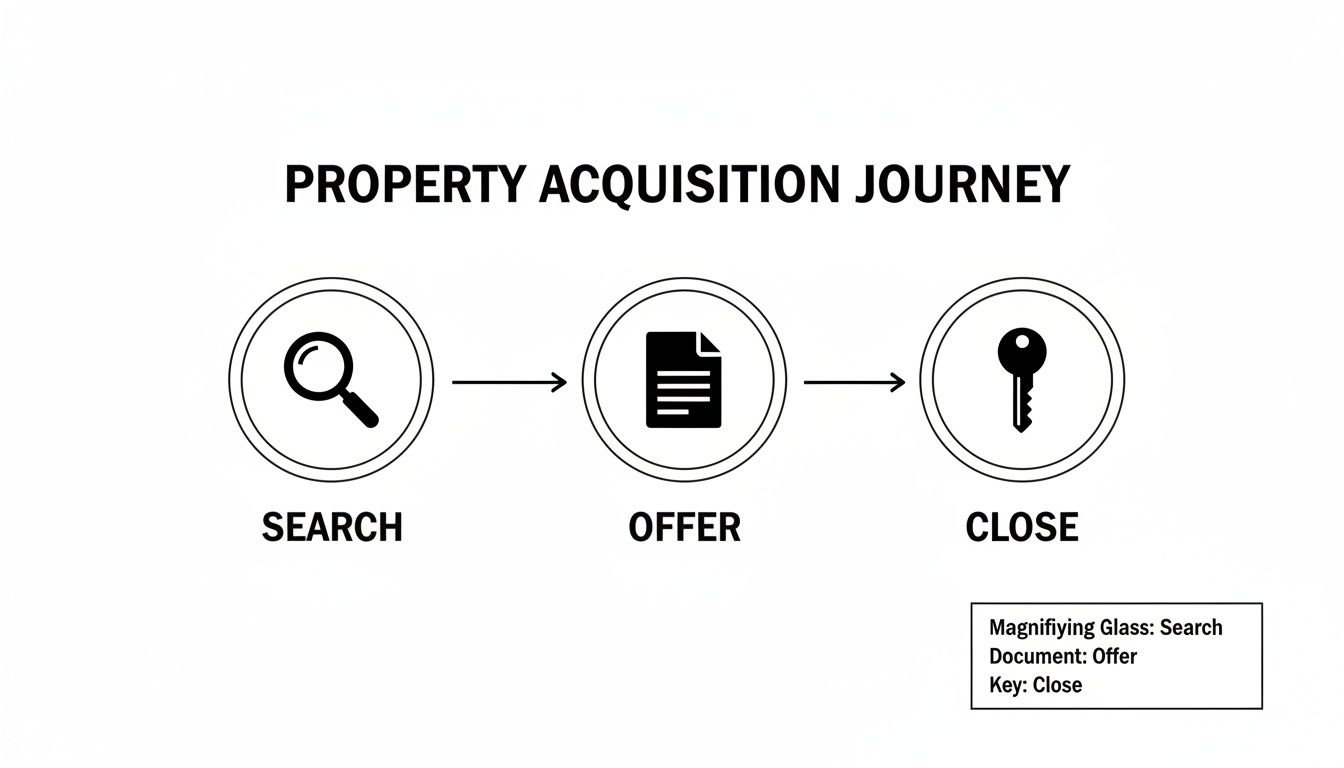
As the visual shows, it boils down to three core stages: finding the right place, making an offer, and finally, closing the deal.
Navigating Ongoing Obligations
Beyond the day-to-day upkeep, owning property abroad comes with a steady stream of admin and financial duties. You will be responsible for setting up utilities, getting to grips with community rules (especially in apartment buildings or gated developments), and keeping up with property tax payments.
These tasks are non-negotiable and can trip up even the most seasoned investor. A good management plan ensures nothing falls through the cracks, saving you from potential fines or legal headaches down the line.
It is also vital to keep an eye on wider market trends, as they often give clues about your own property’s potential. For example, the UK market showed surprising resilience in 2025, with the UK House Price Index reporting an average value of £273,000 in August. New-build properties did particularly well, a trend often seen in prime overseas locations too.
Ultimately, a well-managed overseas property is not just a line item on a spreadsheet; it is a source of income, enjoyment, and peace of mind. To get the best return, whether you plan to rent it out or eventually sell, staying sharp on current real estate marketing strategies can make all the difference.
FAQs: Your Questions on International Property For Sale Answered
How can I safely transfer money abroad for a property purchase?
Using a specialist currency exchange firm is the safest and most cost-effective method. Unlike high street banks, they offer more competitive exchange rates and lower fees, potentially saving you thousands. Critically, they provide tools like ‘forward contracts’, which allow you to lock in an exchange rate in advance of the transaction, protecting your funds from market volatility. Always ensure the firm is fully regulated in your country for maximum security.
What are the biggest mistakes to avoid when buying overseas?
The most common mistake is assuming the legal and purchasing processes are the same as in your home country. They rarely are. Another significant error is failing to hire an independent, bilingual lawyer who represents only your interests, rather than using one recommended by a developer or seller. Finally, underestimating the total cost by forgetting to budget for taxes, notary fees, and ongoing management can lead to significant financial strain.
Do I need to be physically present to close an international property deal?
Not necessarily. It is possible to complete a purchase remotely by granting a Power of Attorney (POA) to your independent lawyer. This legal document authorises them to sign contracts and handle the final transaction on your behalf. The process for creating a valid POA varies by country and often requires notarisation and an Apostille stamp for international recognition, so it must be arranged well in advance.
How can I find a trustworthy local real estate agent?
Start by researching agents who are members of official national real estate associations, as this often indicates adherence to a professional code of conduct. Ask for testimonials from previous international clients and read online reviews. It is advisable to interview several agents to gauge their local market knowledge, communication skills, and experience in handling transactions for foreign buyers. A good agent will act as a valuable on-the-ground partner.
Are Golden Visa programmes still a sound investment?
Golden Visa programmes, which offer residency in exchange for a significant property investment, can be a valuable tool for gaining mobility. However, the landscape is constantly changing, with governments frequently adjusting investment thresholds and requirements. It is crucial to view the property as a standalone investment first. Seek up-to-date advice from both immigration and legal experts to determine if a programme aligns with your long-term goals and whether the underlying real estate is a sound financial decision.
What is the most crucial step in the due diligence process?
While every step is important, verifying the property’s title deed is arguably the most critical. This check, conducted by your lawyer, confirms that the seller is the legitimate owner with the legal right to sell. It also uncovers any liens, debts, or legal claims against the property that could become your liability after purchase. Without a clean title, your entire investment is at risk.
About Homesgofast.com
HomesGoFast.com is a leading international property website, established in 2002, helping homeowners, real estate agents, and developers reach overseas buyers. Featuring thousands of listings from over 50 countries, the platform connects global property seekers with homes, apartments, villas, and investment opportunities worldwide.
Looking for expert mortgage guidance? Get international property mortgage advice here:
https://homesgofast.com/mortgages-overseas/
Explore more overseas homes for sale at our global partner site:
https://homesgofast.com/overseas-property/
Looking to sell real estate to foreign buyers? Go to
https://homesgofast.com/sell-overseas-property/