If you thought the Spanish property market had peaked back in 2024, I’ve got some numbers that might make you spit out your café solo. We are sitting in March 2026, and the landscape for anyone looking at homes for sale in Spain has shifted. The “safe bets” like Madrid and Marbella haven’t crashed, but they have hit a glass ceiling. They are the prestigious, expensive uncles of the Spanish market, reliable, but they aren’t exactly where the exciting growth is happening anymore.
The real action is happening in the “secondary” markets. I use that term loosely because there is nothing second-rate about a 25.3% year-on-year price increase. While the national average for used housing prices has climbed by a healthy 17.7% to reach €2,673/m², the provinces of Murcia and Valencia are absolutely sprinting ahead of the pack.
If you are looking to buy property abroad, specifically in the Mediterranean, the 2026 data suggests you need to look slightly to the left (or right) of the traditional tourist traps.
The 2026 Data: Growth Where You Least Expect It
Let’s talk numbers for a second. According to the latest reports from The Spanish Eye, we are seeing a fascinating decoupling of prices. Historically, when Madrid went up, everything else followed at a respectful distance. In 2026, the secondary cities have decided they are the main characters.
- National Average: €2,673/m² (Up 17.7% YoY).
- The Breakout Stars: Murcia and Valencia provinces are leading the charge at +25.3%.
- The “Ceiling” Effect: Madrid and Marbella are seeing single-digit growth as buyers balk at the entry-level costs.
This isn’t just a fluke. It’s the result of several years of infrastructure investment, the remote work revolution finally settling into a permanent rhythm, and a genuine search for value. People are realizing that you can get the same 300 days of sunshine in the Costa Cálida for a fraction of the price of the Costa del Sol, with the added bonus of actually being able to find a parking spot in July.

Why Murcia (Costa Cálida) is Winning the Popularity Contest
For a long time, Murcia was the “quiet” neighbor. It sat between the powerhouse of Valencia and the glitz of Andalusia, minding its own business. In 2026, that “quiet” nature is exactly what’s driving the overseas property for sale market here.
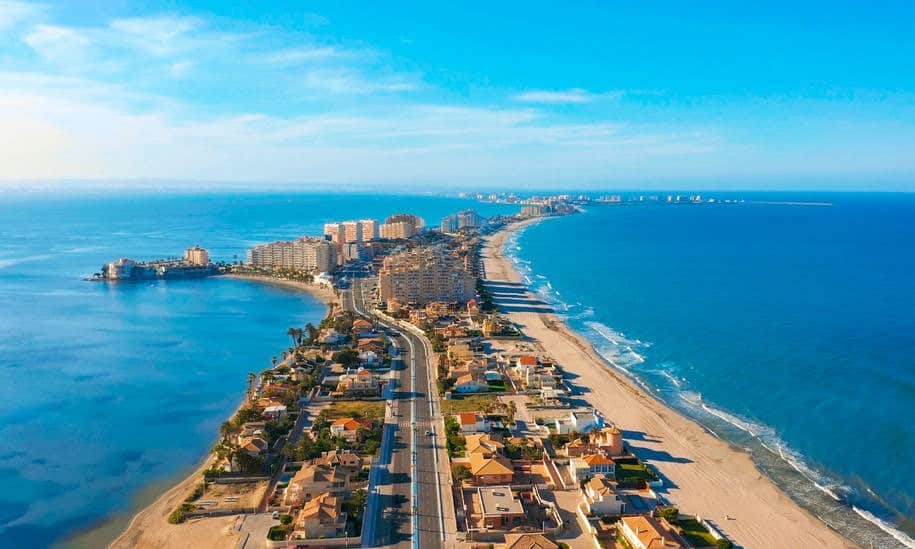
The Costa Cálida offers something that is becoming increasingly rare in Europe: space. The Mar Menor, Europe’s largest saltwater lagoon, provides a unique microclimate and a playground for water sports that doesn’t feel like a theme park. But the real driver is the wallet. When you look for cheap houses for sale spain, Murcia consistently delivers more square footage for your Euro.
Investors are flocking to places like Cartagena and San Pedro del Pinatar. These aren’t just holiday towns; they are living, breathing cities with year-round economies. If you’re a seller in this region, you’re currently sitting on a goldmine. If you’re wondering how to navigate this surge, our How to Sell Property Abroad: The Ultimate Guide for 2026 covers the specifics of timing your exit in a high-growth market.
Valencia: The New Metropolitan Standard
Valencia is no longer just the city of Paella and futuristic museums. In 2026, it has officially established itself as the primary alternative to Barcelona. Why? Because it’s arguably more livable. While Barcelona struggles with over-tourism and eye-watering rents, Valencia has managed to scale its growth more sustainably.
The 25.3% growth in Valencia province isn’t just about the city center. It’s about the surrounding towns and the “second ring” of the metropolitan area. Buyers who were priced out of the city are moving 20 minutes down the coast or inland, driving up prices in areas that were previously overlooked.
Valencia offers a tech-hub vibe without the pretension. It’s become a magnet for the best places to buy property abroad for digital nomads and early retirees alike. The balance of high-speed rail links, an international airport, and a beach you can actually see the sand on makes it an easy sell.

The “Madrid Hangover” and the Push Inland
We have reached a point where the traditional “Big Two” are becoming victim to their own success. Madrid is magnificent, but at current price points, the yield for investors is narrowing to a sliver. This has created what I call the “Madrid Hangover.” Buyers look at the prices in the capital, realize they can buy a villa and a small vineyard elsewhere for the price of a two-bedroom apartment in Salamanca (the district, not the city), and they start looking at the map.
This shift is benefiting cities like Granada. While it doesn’t have the beach-front pull of the Costa Cálida, it offers a cultural density that is hard to beat. If you haven’t looked into it, check out Granada: The Best Kept Secret for Low-Cost Property in Spain for a look at why inland gems are the next logical step when the coast gets too crowded.
What This Means for Buyers and Sellers
If you are a buyer in 2026, the strategy has to be “Buy for Growth, Not Just for Beach.” The days of picking a random spot on the coast and watching it double in value are mostly over. You have to be surgical. Look for the secondary cities that are attracting domestic Spanish buyers, not just expats. Murcia and Valencia are prime examples because the Spanish are moving there too.
For sellers, the news is even better. If you own property in these high-growth provinces, 2026 is your year. The 25.3% jump is a signal that the market is peaking in terms of velocity. This is the time to ensure your listing is seen by international eyes. Using the right platforms is key, and you can see where the traffic is moving in our guide to the top international property portals.
The Lifestyle vs. Investment Silo
When looking at the 2026 Spanish market, I like to divide the motivations into two distinct silos:
The Money Silo (Investment)
- Target: Murcia and Valencia outskirts.
- Goal: Capitalize on the 25%+ growth rate.
- Strategy: Buy-to-let for the increasing number of remote workers moving away from Madrid.
- Key Stat: Used housing at €2,673/m² still offers room for appreciation compared to Northern European averages.
The Lifestyle Silo (End-User)
- Target: Secondary cities and coastal towns like Playa del Carmen (if you’re looking globally) or the Costa Cálida if you’re staying in Spain.
- Goal: Year-round sun, lower cost of living, and authentic Spanish culture.
- Strategy: Look for “Used” properties that need a light cosmetic refresh to add immediate equity.

Is the Spanish Boom Sustainable?
The question everyone asks when they see 17.7% national growth is: “Is this a bubble?”
In 2026, the answer appears to be “No,” or at least “Not yet.” Unlike the crash of 2008, this growth isn’t driven by reckless lending and ghost-town developments. It’s driven by a genuine shortage of supply and a massive shift in where people want to live. People aren’t just buying Spanish property as a line on a spreadsheet; they are buying it to live in.
The move to secondary cities proves that the market is maturing. It’s no longer just about the “Golden Mile” in Marbella. It’s about the “Golden Province” of Murcia and the vibrant streets of Valencia.
If you’re still hunting for a bargain, keep an eye on those cheap houses for sale spain listings. The prices are moving up, but compared to London, Paris, or even Madrid, the value in the Costa Cálida remains one of the best-kept secrets in the Mediterranean: at least for now.
Don’t wait for 2027. The data is clear: the secondary cities have arrived, and they are taking the lead. Whether you’re looking for homes for sale in Spain for a lifestyle change or an investment play, the Costa Cálida and Valencia are the smartest places to put your money right now.