

Buying a holiday home abroad can feel overwhelming due to diverse legal rules and risks across countries. Many international buyers face costly disputes from overlooked legal differences, with 30% of problems arising from incomplete title verification alone. This guide will equip you to confidently navigate buying steps, avoid pitfalls, and secure your ideal holiday home abroad through a proven stepwise approach.
Table of Contents
- Prerequisites: What You Need Before You Start
- Step 1: Research Legal and Financial Requirements
- Step 2: Find and Engage Trusted Local Professionals
- Step 3: Navigate the Buying Process and Due Diligence
- Step 4: Close the Deal and Plan for Post-Purchase Management
- Common Mistakes and How to Avoid Them
- Expected Results and Realistic Benchmarks
- Discover More About International Property Buying with HomesGoFast
- Frequently Asked Questions
Key Takeaways
| Point | Details |
|---|---|
| Prepare finances and contacts | Secure proof of funds, mortgage pre-approval, and trusted local professionals before starting your search. |
| Research legal requirements | Understand ownership restrictions, tax obligations, and financing rules specific to your target country. |
| Follow due diligence steps | Verify title, conduct inspections, and never pay before contracts are signed to avoid fraud. |
| Engage local professionals | Hiring experienced local legal counsel reduces property disputes by 40% and streamlines transactions. |
| Expect realistic timelines | Most international property purchases complete within 3 to 6 months, including registration and delays. |
Prerequisites: What You Need Before You Start
Successful international property purchases begin with thorough preparation. You need to demonstrate financial readiness before serious property viewing starts. Gather proof of funds and obtain mortgage pre-approval if you plan to finance part of the purchase. According to secondary internal resources on financing, proof of funds and financing pre-approval are crucial for timely purchases.
Gain a basic understanding of your chosen country’s real estate market and legal environment. Research typical property prices, popular regions, and any restrictions on foreign ownership. This knowledge helps you set realistic budgets and identify genuine opportunities versus overpriced listings.
Identify trusted local real estate agents and lawyers before viewing properties. Start building your professional network early through online reviews, expat forums, and recommendations from other international buyers. Having this team ready lets you act quickly when you find the right property.
Essential documentation to prepare includes:
- Valid passport and proof of identity
- Bank statements showing available funds
- Mortgage pre-approval letter if financing
- Translated documents if required by the target country
- Tax identification numbers from your home country
Pro Tip: Create a dedicated folder with digital copies of all documents. Many international transactions require quick document sharing, and having everything organized saves valuable time during negotiations.
Having proper documentation and readiness lets you act quickly and avoid missed opportunities in competitive markets. Sellers take prepared buyers more seriously, giving you an advantage in negotiations.
Step 1: Research Legal and Financial Requirements
Every country has unique legal ownership restrictions and financial requirements that directly impact foreign buyers. Understanding these rules prevents costly mistakes and legal complications later. Some countries restrict foreign ownership to specific regions, property types, or require special permits before purchase.
Financing options vary dramatically by country. Mortgage financing for foreign buyers often requires higher down payments, ranging from 30 to 50% according to international mortgage market data. This contrasts sharply with domestic mortgages in many countries where 10 to 20% down payments are common.
Property taxes and ongoing financial obligations differ significantly across markets. Research annual property taxes, homeowner association fees, utility costs, and mandatory insurance requirements. Understanding foreign property tax liabilities helps you budget accurately for ownership costs beyond the purchase price.
Key legal and financial research areas include:
- Foreign ownership restrictions and permit requirements
- Minimum down payment percentages for international buyers
- Annual property tax rates and payment schedules
- Capital gains tax implications if you sell later
- Currency exchange risks and hedging options
- Inheritance laws affecting property transfer
Local legal counsel guides ownership legality and compliance throughout the process. Lawyers familiar with international transactions understand both your home country obligations and local requirements. They ensure contracts protect your interests and identify potential legal issues before they become problems.
Explore mortgage options by country to understand which markets offer favorable financing terms. Some countries welcome foreign investment with accessible mortgage products, while others require all-cash purchases or have prohibitive lending requirements.
Step 2: Find and Engage Trusted Local Professionals
Your success buying abroad depends heavily on the quality of local professionals you engage. Vet local agents and lawyers carefully based on experience, reputation, and specific expertise with international transactions. Ask for references from other foreign buyers and verify professional licenses through local regulatory bodies.

According to research on buying international property, hiring local legal counsel reduces property disputes by 40%. This statistic highlights how professional local representation drastically improves transaction success rates and protects you from common pitfalls.
Arrange independent property inspections to avoid defects and post-purchase costs. Never rely solely on seller disclosures or agent assurances about property condition. Hire qualified surveyors who understand local building standards and common structural issues in the region.
Essential professionals for your team:
- Real estate agent specializing in international buyers
- Local real estate attorney for contract review
- Independent property surveyor or inspector
- Tax advisor familiar with cross-border transactions
- Currency exchange specialist for large transfers
- Property manager if you won’t be present year-round
Pro Tip: Interview at least three professionals in each category before making your choice. Ask specific questions about their experience with buyers from your country and request detailed fee schedules upfront to avoid surprises.
When finding international properties, working with agents who understand your needs as a foreign buyer makes the search more efficient. They know which properties welcome international ownership and can navigate language barriers on your behalf.
Establish clear communication protocols with your team. Decide on preferred contact methods, response time expectations, and how urgent matters will be handled across time zones. Good communication prevents misunderstandings that derail transactions.
Step 3: Navigate the Buying Process and Due Diligence
The international property buying process follows a clear sequence that protects both buyers and sellers. Understanding each step helps you stay organized and avoid rushing critical decisions. Follow this sequence: property search, due diligence, contract signing, payment, and closing.
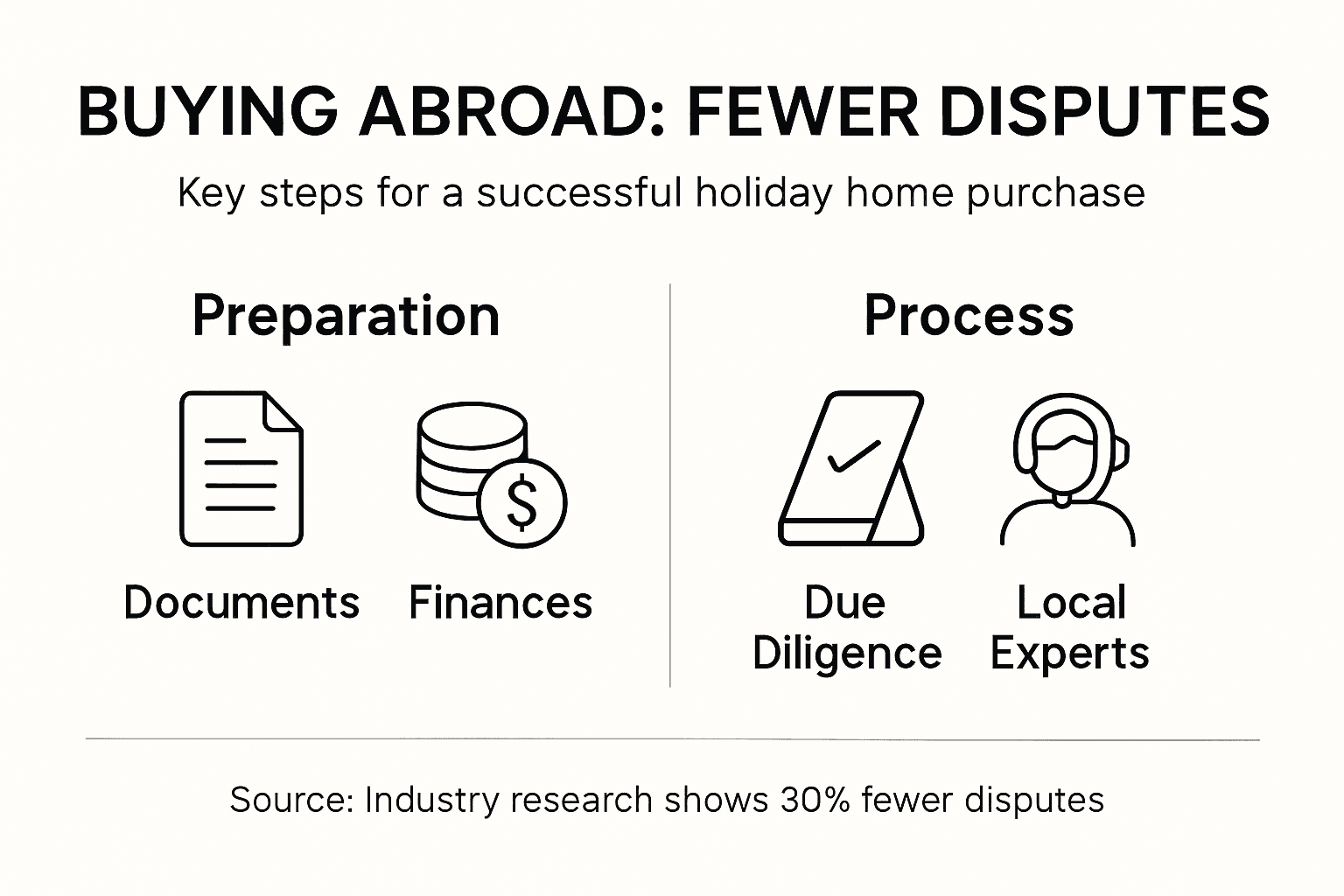
Use a due diligence checklist to verify title, liens, and property conditions before payment. According to expert guidance on buying abroad, title verification failures cause 30% of disputes, and upfront payments before contracts are involved in 25% of fraud cases. These statistics underscore why thorough verification is non-negotiable.
Detailed buying process steps:
- Identify properties matching your criteria and budget
- Schedule viewings and initial property assessments
- Submit formal offer through your agent once decided
- Negotiate price and terms with seller representation
- Sign preliminary agreement and pay deposit to escrow
- Complete full due diligence and property inspection
- Review and sign final purchase contract with lawyer
- Transfer remaining funds through secure channels
- Complete ownership registration with local authorities
- Receive keys and title documents confirming ownership
Never make payments before contracts are legally signed to prevent fraud. All deposits should go into escrow accounts managed by independent third parties, not directly to sellers or their agents. Your lawyer should verify escrow account legitimacy before you transfer any money.
| Due Diligence Item | Purpose | Timeline |
|---|---|---|
| Title search | Verify legal ownership and liens | 1 to 2 weeks |
| Property survey | Assess condition and boundaries | 1 week |
| Planning permission check | Confirm legal use and extensions | 1 to 2 weeks |
| Utility verification | Ensure services are connected | 3 to 5 days |
| Tax status review | Check outstanding obligations | 1 week |
Anticipate common delays and prepare for timeline variations. Bureaucratic processes, holiday periods, and document translation requirements often extend timelines beyond initial estimates. Build buffer time into your plans rather than booking non-refundable commitments around optimistic closing dates.
The buying process and due diligence tips available through specialized platforms help you understand country-specific variations. What works in Spain differs from procedures in Thailand or Mexico, so tailored guidance matters.
Step 4: Close the Deal and Plan for Post-Purchase Management
Closing formalities finalize your ownership and establish you as the legal property owner. Complete final contract signing and release of payment through secure channels only after your lawyer confirms all conditions are met. Your lawyer should be present at closing to verify document authenticity and explain what you’re signing.
Register the title and pay applicable property taxes promptly to ensure legal ownership. Some countries require registration within specific timeframes or impose penalties for delays. Your lawyer typically handles registration, but confirm this is included in their fee structure.
Post-closing tasks to complete immediately:
- Register title with local land registry office
- Pay stamp duty and property transfer taxes
- Update property insurance to reflect new ownership
- Transfer utility accounts to your name
- Change locks and secure the property
- Set up local bank account for ongoing expenses
Plan initial property maintenance and consider local property management options for upkeep. If you won’t be present most of the year, hiring property managers protects your investment. They handle maintenance, coordinate repairs, and can even manage rental income if you decide to let the property when not using it yourself.
Review closing and registration procedures specific to your country to ensure you complete all legal requirements. Missing steps can create problems when you later want to sell or pass the property to heirs.
Explore post-purchase property management tips to maintain your property value over time. Regular maintenance prevents small issues from becoming expensive problems, especially important when you’re not nearby to monitor the property regularly.
Establish relationships with local service providers like plumbers, electricians, and gardeners before you need them. Having trusted contacts ready saves time and money when maintenance issues arise.
Common Mistakes and How to Avoid Them
Learning from others’ mistakes saves you money and stress. The most frequent errors international buyers make are entirely preventable with proper guidance and discipline. Understanding these pitfalls helps you stay vigilant throughout your purchase.
According to research on buying property abroad, not validating property titles causes 30% of disputes, premature payments cause 25% of fraud, and local legal counsel reduces disputes by 40%. These statistics reveal where buyers most commonly fail and how to protect yourself.
Critical mistakes to avoid:
- Skipping title verification and assuming seller claims are accurate
- Making payments before contracts are finalized and reviewed
- Proceeding without experienced local legal counsel
- Accepting seller-provided inspections without independent verification
- Underestimating total costs beyond the purchase price
- Ignoring currency exchange risks on large transactions
Never skip title verification and due diligence to prevent legal disputes. Even properties that appear legitimate can have hidden liens, disputed boundaries, or ownership claims that surface after purchase. Your lawyer’s title search protects you from inheriting someone else’s legal problems.
Always insist on independent verification of every claim. Seller-provided documents, agent assurances, and verbal promises mean nothing without independent professional confirmation. This skepticism isn’t rude; it’s essential protection in international transactions.
Hire experienced local legal counsel to significantly reduce risks. The cost of quality legal representation is minimal compared to potential losses from disputes or fraud. Lawyers who specialize in international transactions understand both legal systems involved and structure deals that protect you in both jurisdictions.
Conduct independent inspections to identify property defects before purchase. Structural issues, water damage, pest problems, and building code violations can cost thousands to repair. Discovering these during inspection lets you negotiate price reductions or walk away from problem properties.
Review common mistakes in buying abroad to learn from real cases. Understanding how others lost money or faced legal problems helps you recognize warning signs early.
Expected Results and Realistic Benchmarks
Setting realistic expectations helps you stay patient and avoid panic during normal process delays. Transactions typically complete within 3 to 6 months, including registration, though this varies significantly by country and complexity. Simple cash purchases in streamlined markets may close in 60 days, while financed purchases in bureaucratic countries can take 9 months.
Mediterranean holiday markets show 3 to 5% annual property appreciation according to regional market data. However, property investment returns depend heavily on location, property type, and local economic conditions. Holiday home markets prioritize personal enjoyment over aggressive investment returns.
Expect occasional 2-month bureaucratic delays and plan accordingly. Document translation, notary availability, registry office backlogs, and holiday closures all extend timelines. Sellers and agents provide estimated closing dates, but treat these as optimistic rather than guaranteed.
| Success Metric | Realistic Benchmark | Timeline |
|---|---|---|
| Contract to closing | 2 to 4 months | Varies by country |
| Title registration | 2 to 8 weeks post-closing | Depends on registry efficiency |
| Property appreciation | 3 to 5% annually | Market dependent |
| Rental yield (if applicable) | 4 to 7% gross annually | Location dependent |
| Dispute-free purchase | 95%+ with proper counsel | Throughout process |
Success includes legal ownership with no disputes and confirmed property condition. If you complete the purchase, receive clear title, and the property matches what you expected, you’ve achieved a successful outcome. Many buyers focus excessively on getting the lowest price but overlook the importance of a clean transaction.
Explore investment growth and timeline expectations to understand market-specific norms. Each country and region has different appreciation patterns, rental demand, and regulatory environments affecting returns.
Your personal enjoyment of the property matters more than pure financial metrics for holiday homes. The ability to vacation in your own space, create family memories, and potentially generate rental income when not in use provides value beyond simple appreciation percentages.
Discover More About International Property Buying with HomesGoFast
Ready to turn your holiday home dreams into reality? HomesGoFast connects you with verified international property listings and expert resources designed specifically for overseas buyers. Our platform simplifies the complex process of buying abroad by providing country-specific guides, trusted agent connections, and comprehensive market insights.

Explore our expert buying guide for detailed country-specific advice that reduces risks and streamlines your purchase. Browse thousands of international properties from trusted agents worldwide. Access our investor’s guide to international properties to make informed decisions backed by market data and expert analysis. Start your journey to owning your dream holiday home today with HomesGoFast’s proven resources and global network.
Frequently Asked Questions
What are the first documents I need before buying abroad?
You need a valid passport, proof of funds through bank statements, and mortgage pre-approval if financing. Many countries also require tax identification from your home country and translated documents for official processes.
How long does the buying process typically take?
Most international property purchases complete within 3 to 6 months from offer to final registration. Cash purchases in efficient markets may close faster, while financed purchases or complex legal situations can extend to 9 months.
Can I get a mortgage as a foreign buyer?
Yes, but expect higher down payment requirements of 30 to 50% compared to domestic mortgages. Financing availability and terms vary significantly by country, with some markets offering favorable options and others requiring all-cash purchases.
What are common scams to watch out for?
Fraud often involves requests for payment before contracts are signed, properties sold by non-owners, and fake title documents. Always verify ownership through independent title searches and only transfer funds to verified escrow accounts managed by your lawyer.
How do I find reliable local agents and lawyers?
Seek recommendations from other international buyers, check online reviews on expat forums, and verify professional licenses through local regulatory bodies. Interview at least three candidates in each category and ask specifically about their experience with buyers from your country before deciding.
Recommended
- Blog – International Property For Sale | Homesgofast
- How to Buy Property Abroad: An Expert Guide for Global Investors
- Unlocking the World: Your Guide to Buying Overseas Property with HomesGoFast – International Property For Sale | Homesgofast
- Sell Your Property Internationally Without Paying Commission: A Step-by-Step Guide – International Property For Sale | Homesgofast
