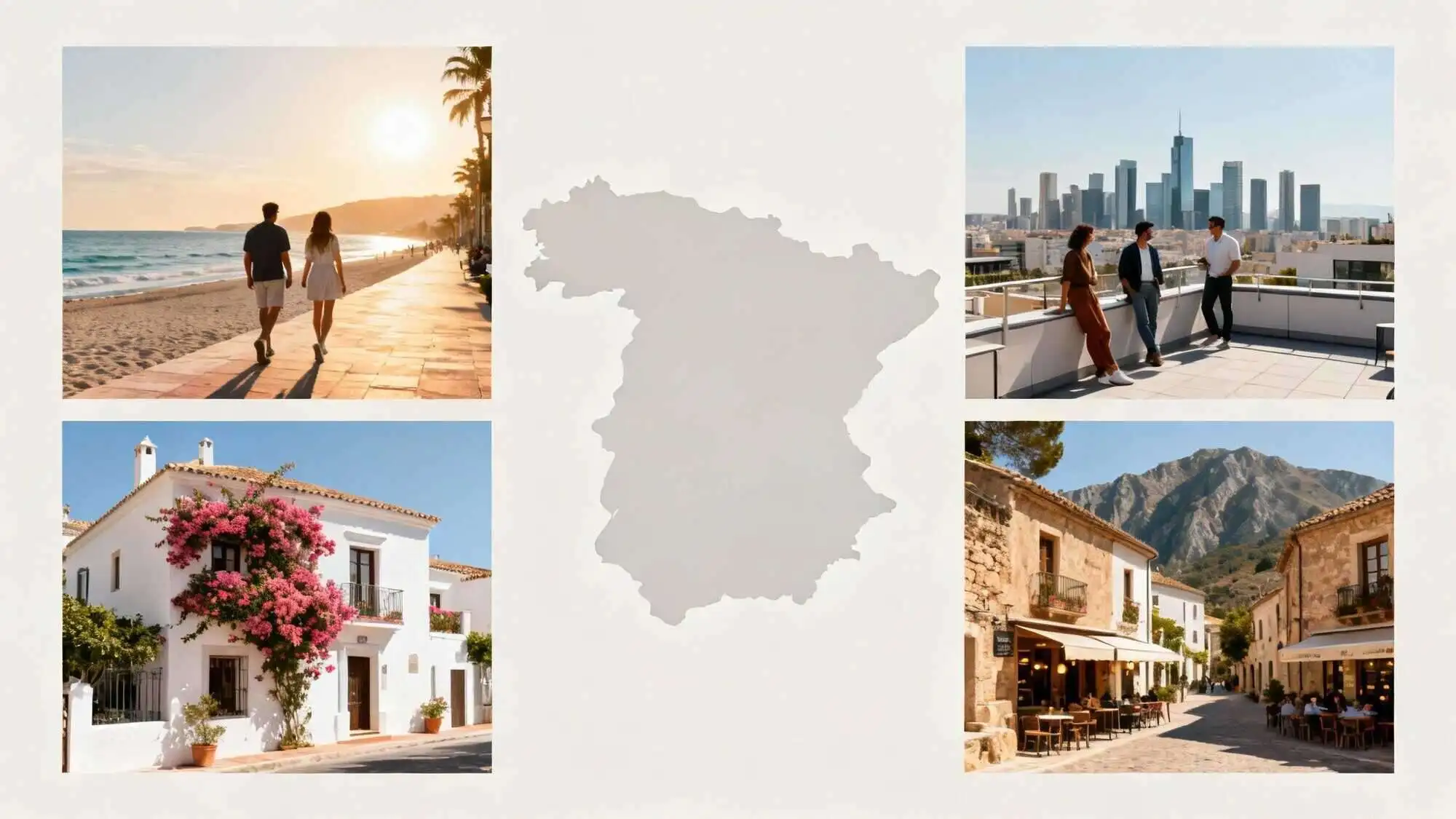
Spain’s allure for international property buyers is undeniable, fuelled by its enviable climate, rich culture, and an attractive property market. For savvy investors, real estate agents, and lifestyle seekers, understanding the nuances of the diverse expat communities in Spain is paramount to making a successful acquisition. From the sun-drenched coasts favoured by British retirees to the bustling metropolitan hubs attracting global professionals, each community presents a unique investment landscape and lifestyle proposition. This in-depth guide moves beyond generic advice to profile the key expat demographics shaping the Spanish property market today.
We will delve into their specific property preferences, financial profiles, and the unique opportunities they represent for sellers and agents targeting overseas buyers. The guide provides actionable insights for those looking to invest, whether your goal is securing a high-yield rental property in a digital nomad hotspot, a luxury retirement villa on the Costa del Sol, or a vibrant urban apartment in Barcelona.
This analysis will equip you with the critical knowledge needed to navigate one of Europe’s most dynamic real estate environments. The landscape for expat communities in Spain is continually shifting, influenced by economic trends, lifestyle priorities, and global mobility. Staying ahead of these trends is crucial for capitalising on emerging hotspots and established havens alike. Our comprehensive roundup details where these groups are settling, what they are buying, and why it matters for your investment strategy, offering a clear roadmap to the most promising opportunities in the Spanish market.
1. The Bedrock of the Market: British Retirees in Sun-Kissed Coastal Regions
For decades, British retirees have formed the foundational layer of many expat communities in Spain, particularly along the sun-drenched coastlines of the Costa del Sol and Costa Blanca. This demographic, typically aged 55 and over, represents the most established and largest group of foreign residents. They are drawn by the promise of an affordable, high-quality retirement under the Spanish sun, bolstered by excellent healthcare, robust social networks, and a wealth of English-speaking services that ease the transition.
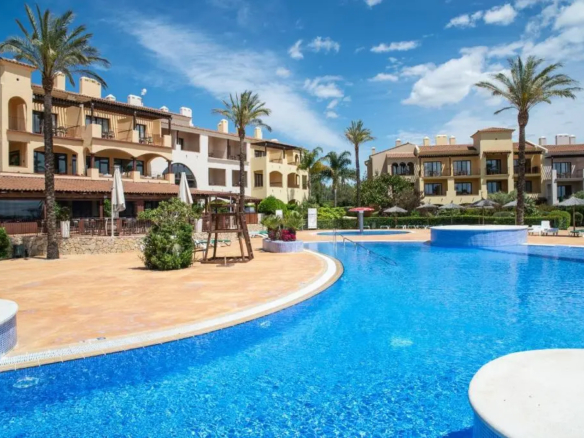
Their influence on the property market is substantial. Often arriving as cash buyers or with significant equity, they are a stable and reliable segment for developers and estate agents. Their property preferences are clear: they seek comfort, convenience, and a relaxed lifestyle. This translates into demand for ground-floor apartments, villas with low-maintenance gardens, and properties within walking distance of amenities.
Lifestyle and Community Highlights
The appeal for this group extends far beyond just the weather. The communities they favour are highly organised, offering a seamless and sociable retirement experience.
- Established Social Hubs: Areas like Jávea (Costa Blanca) and Estepona (Costa del Sol) boast a high concentration of British-owned cafes, social clubs, and community groups, from bowls clubs to charity organisations.
- Accessibility: Proximity to major international airports like Málaga and Alicante is a non-negotiable for easy travel back to the UK to visit family.
- Healthcare Confidence: The presence of high-quality private hospitals with English-speaking staff provides essential peace of mind.
Actionable Relocation Tips
For those considering joining this well-trodden path, focusing on practicalities is key.
- Visa and Residency: Post-Brexit, understanding the requirements for the Non-Lucrative Visa (NLV) or Golden Visa is the first step. Seek professional legal advice to navigate the application process smoothly.
- Healthcare Planning: While Spain’s public healthcare is excellent, many UK retirees opt for private health insurance to ensure comprehensive, English-speaking cover from day one.
- Property Focus: Prioritise properties that support an easy-living lifestyle. Look for features like walk-in showers, level access, and proximity to shops and medical centres. Urbanisations with shared pools and gardening services are also popular choices.
2. European Professional Workers in Madrid and Barcelona
A dynamic and growing segment of expat communities in Spain is composed of young to middle-aged European professionals. This demographic, typically aged 25-50, is drawn from countries like France, Germany, and Italy to the vibrant economic hubs of Madrid and Barcelona. They are employed by multinational corporations, innovative tech firms, and major financial institutions, seeking a blend of career progression and a high-quality, cosmopolitan lifestyle that Spain’s largest cities offer in abundance.
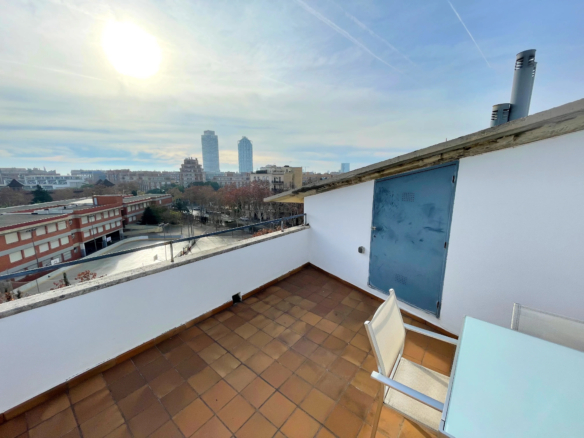
This group’s initial impact on the property market is primarily in the high-end rental sector, as they often prefer to rent before committing to a purchase. However, they represent significant future buyer potential. Their property preferences are distinctly urban: modern, well-equipped apartments in central, well-connected neighbourhoods like Chamberí in Madrid or Eixample in Barcelona. They value proximity to business districts, such as Barcelona’s 22@ innovation hub or Madrid’s CTBA, and access to a sophisticated urban environment.
Lifestyle and Community Highlights
For these professionals, the city itself is the main attraction, offering a perfect work-life balance that is hard to match elsewhere in Europe.
- Vibrant Social Scene: These communities thrive on the social and cultural offerings of major cities, with groups like InterNations facilitating networking events, and a bustling scene of international bars, restaurants, and cultural activities.
- Career Opportunities: The presence of major corporate headquarters and thriving tech ecosystems provides a fertile ground for career advancement and international networking.
- Family-Friendly Urbanism: For those with families, the availability of prestigious international schools and safe, amenity-rich residential zones makes city living a practical and appealing choice.
Actionable Relocation Tips
Professionals moving to Spain’s urban centres should focus on integrating career and lifestyle logistics for a smooth transition.
- NIE and Registration: As EU citizens, the process is streamlined. The first step is securing a Foreigner’s Identity Number (NIE) and registering as a resident (
Certificado de Registro de Ciudadano de la UE). - Networking Proactively: Utilise platforms like LinkedIn to connect with professionals in your industry before you even arrive. Join expat social groups online to build a support network quickly.
- Property Search Strategy: Since professionals have demanding schedules, engage a relocation agent or a real estate professional who offers flexible and virtual viewing options. Prioritise properties that highlight “work from home” spaces, high-speed internet, and easy commuter access to business parks.
3. Digital Nomads and Remote Workers in Secondary Cities
The fastest-growing segment among expat communities in Spain is the wave of digital nomads and remote workers. This demographic, typically aged 25-45, leverages location independence to trade traditional office life for the superior work-life balance offered by Spain’s vibrant secondary cities. Unlike retirees, they are drawn not just by the sun but by a potent mix of affordability, high-speed internet infrastructure, and rich cultural experiences found in places like Valencia, Seville, and Málaga.

This group’s initial footprint is often in the rental market, favouring flexible, furnished apartments. However, as they integrate and their residency stabilises, many transition into property ownership, seeking modern apartments or homes in well-connected, walkable neighbourhoods. Their presence is revitalising urban centres, fuelling demand for properties with dedicated home office space and access to co-working hubs, cafes, and a lively social scene.
Lifestyle and Community Highlights
This demographic prioritises a blend of productivity and immersive local culture, actively building communities both online and offline.
- Tech-Ready Cities: Cities like Valencia and Málaga have invested heavily in digital infrastructure, with widespread gigabit fibre optic internet, making them ideal for high-demand remote work.
- Work-Life Integration: Neighbourhoods such as Granada’s Albaicín or Seville’s Triana offer the perfect mix of co-working spaces, independent cafes for work sessions, and authentic tapas bars for after-hours socialising.
- Vibrant Social Networks: Thriving online communities on platforms like Facebook and Slack, popularised by Nomad List and other remote work blogs, make it easy for newcomers to connect, network, and share resources.
Actionable Relocation Tips
For remote workers aiming to make Spain their base, the focus is on seamless connectivity and community integration.
- Digital Nomad Visa: Spain’s Digital Nomad Visa is the purpose-built route for this demographic. It is crucial to gather all required documentation, including proof of remote work and sufficient income, well in advance.
- Connectivity is Key: When searching for property, explicitly confirm the availability and speed of fibre optic internet. This is a non-negotiable for most remote professionals and a major selling point.
- Rent-First Strategy: Consider a short-term furnished rental initially. This allows you to experience different neighbourhoods before committing to a purchase, ensuring your chosen area fits your lifestyle and work needs perfectly.
4. American and Canadian Expat Property Investors
A distinct and increasingly influential segment within Spain’s foreign property market is composed of North American investors. This demographic, typically aged 40 to 65, approaches the market with a different objective from lifestyle-driven retirees. They represent a capital-rich group seeking tangible assets for portfolio diversification, long-term retirement planning, and as a strategic hedge against currency fluctuations. These investors form specialised expat communities in Spain centred around financial goals rather than social clubs.
Their impact on the market is concentrated at the higher-value end. Unlike buyers seeking a single holiday home, North Americans often acquire multi-unit portfolios, commercial real estate in prime urban locations, or fund new-build residential projects. Their approach is analytical and data-driven, conducting thorough due diligence and engaging teams of legal and financial advisors. Properties are viewed primarily as investment vehicles, with potential rental yield, capital appreciation, and ROI being the paramount considerations.
Lifestyle and Community Highlights
The community for this group is professional rather than social, built on shared investment interests and facilitated by cross-border financial and legal networks.
- Professional Networks: Groups like the American Chamber of Commerce in Spain and international wealth management firms act as central hubs for networking and deal-making.
- High-Value Locations: Investment activity is focused on prime real estate zones, such as Madrid’s commercial districts, Barcelona’s high-demand rental neighbourhoods, or luxury resort developments along the Costa del Sol.
- Strategic Focus: They are drawn to Spain’s stable political climate within the EU, strong tourism sector which underpins rental demand, and favourable property valuations compared to North American markets.
Actionable Relocation Tips
For property professionals looking to engage with this demographic, a highly professional and transparent approach is essential.
- Data is King: Prepare detailed investment analyses. Provide comprehensive documentation on rental income history, potential ROI, capitalisation rates, and market comparison data.
- Professional Services: Establish strong relationships with reputable, English-speaking lawyers and tax advisors who specialise in cross-border transactions. Having these contacts ready is a significant value-add.
- Leverage Technology: Offer high-quality virtual property tours and remote viewing capabilities to cater to investors who may conduct initial due diligence from overseas. Ensure all critical documents are professionally translated.
5. French Expatriates in Border Regions and Catalonia
The geographical proximity and cultural links between France and Spain have cultivated a significant and growing demographic of French expatriates, particularly in Catalonia and the border regions of Aragon. This group, often comprising professionals and entrepreneurs aged 35-60, is drawn by a more affordable property market, a desirable lifestyle, and the ease of maintaining strong cross-border connections. Unlike some other expat communities in Spain, this group often manages assets or business interests in both countries simultaneously.
This community’s impact on the property market is distinctly dual-focused. In urban centres like Barcelona, they seek modern apartments for business or family life, contributing to the city’s dynamic international market. In rural areas near the Pyrenees, however, they are a driving force in the market for masias (traditional farmhouses) and village houses, often undertaking ambitious renovation projects for second homes or agritourism ventures.
Lifestyle and Community Highlights
The appeal for French nationals is the unique blend of Spanish lifestyle with the convenience of being just a short drive or train ride from France.
- Cross-Border Lifestyle: Many residents commute, shop, and socialise across the border, creating a fluid, integrated community. The high-speed AVE/TGV train link between Barcelona and Paris is a crucial piece of infrastructure.
- Cultural Synergy: The Catalan culture, with its own distinct language and traditions, shares some similarities with the south of France, making the cultural transition feel more natural for many.
- Business and Investment: The Chamber of Commerce France-Spain network is extremely active, providing a robust framework for entrepreneurs and professionals looking to expand their operations into Spain.
Actionable Relocation Tips
For those looking to join this cross-border community, the focus is on leveraging the geographical advantage.
- Bilingual Legal and Financials: Ensure all property documentation, contracts, and marketing materials are available in both Spanish and French. Engage notaries and lawyers who are fluent in both languages and experienced in cross-border transactions.
- Logistical Planning: When searching for property, highlight proximity to major transport links like the AP-7 motorway and Girona-Costa Brava Airport, which offers excellent connections to France.
- Investment Focus: For rural acquisitions, market properties by emphasising their renovation potential and potential returns from tourism. Create materials comparing property prices and renovation costs against those in the French countryside to highlight the value proposition.
6. Retirees from Northern European Countries (Germany, Netherlands, Scandinavia)
Moving beyond the traditional British retiree, a significant and increasingly influential group within Spain’s property market consists of retirees from affluent Northern European nations. This demographic, primarily from Germany, the Netherlands, and Scandinavian countries like Sweden and Norway, brings substantial purchasing power and a distinct set of expectations that are reshaping expat communities in Spain, particularly in regions like the Costa del Sol, Costa Blanca, and the Balearic Islands.
This group is not just seeking sun; they are seeking a continuation of their high living standards. Their influence is evident in the demand for high-quality new builds, modern renovations, and properties with excellent energy efficiency. They are discerning buyers who prioritise certified building standards, transparent legal processes, and well-managed urbanisations. Their presence has driven a market segment focused on quality, durability, and modern amenities, appealing to sellers who can demonstrate superior construction and legal diligence.
Lifestyle and Community Highlights
The Northern European retiree lifestyle in Spain is often a blend of relaxed Mediterranean living and organised, quality-focused activities. They value both integration and the comfort of established national communities.
- Quality-Centric Communities: Areas such as Moraira (Costa Blanca) and parts of Mallorca are popular for their clean, well-maintained infrastructure and high-end services that cater to German, Dutch, and Scandinavian tastes.
- Active and Outdoor Pursuits: Golf courses, sailing clubs, and hiking trails are major draws. These communities are less about the “Brits abroad” pub culture and more focused on sophisticated leisure and wellness.
- Formal Social Networks: Rather than informal clubs, these groups often form more structured associations, business councils, and cultural societies that uphold a strong sense of community and provide professional networking.
Actionable Relocation Tips
Appealing to this discerning demographic requires a focus on professionalism, transparency, and quality assurance.
- Legal and Financial Transparency: Provide all documentation, including property deeds and building permits, with certified translations. Ensure pricing is clear and non-negotiable, as this builds trust.
- Emphasise Building Standards: Highlight tangible quality markers such as energy efficiency certificates (CEE), professional building surveys (ITE), and details on construction materials. Offering independent inspection services is a strong selling point.
- Focus on Healthcare and Infrastructure: Create detailed guides on the proximity and quality of internationally accredited hospitals, specialist medical services, and local infrastructure like fibre optic internet and utility reliability. This practical information is highly valued.
7. Italian Expatriates and Mediterranean Lifestyle Seekers
Drawn by deep cultural and geographical affinities, a growing number of Italian nationals are establishing themselves within expat communities in Spain, particularly in the Balearic Islands, Catalonia, and Andalusia. This demographic, often spanning from entrepreneurs in their 40s to active retirees, is not just seeking a lifestyle change but also tangible property investment and business opportunities. The familiar Mediterranean rhythm, combined with Spain’s dynamic property market, creates a compelling proposition for those looking to expand their personal or commercial portfolios across the sea.
This group’s impact on the market is nuanced. Many maintain dual residency, engaging in cross-border property investments and seeking historic urban properties or rural fincas with renovation potential. They are particularly active in the tourism and hospitality sectors, acquiring properties to convert into boutique hotels, holiday lets, or exclusive restaurants. Their appreciation for architectural character and heritage makes them key players in the revitalisation of historic town centres and agricultural estates.
Lifestyle and Community Highlights
The Italian community in Spain thrives on a shared appreciation for a high-quality, sociable, and culturally rich lifestyle that mirrors their homeland.
- Business and Social Synergy: The Italian Chambers of Commerce in cities like Barcelona and Madrid are pivotal, fostering strong business networks that blend with a vibrant social scene.
- Cultural Proximity: From culinary traditions to a shared emphasis on family and community, the transition is seamless. This is evident in the rise of authentic Italian delis, restaurants, and cultural events in areas like Palma de Mallorca and Barcelona.
- Investment Focus: Many are drawn to tangible investments that align with their passions, such as acquiring small vineyards, olive groves, or coastal properties for high-end tourism projects.
Actionable Relocation Tips
For Italians considering a move to Spain, the focus should be on leveraging cultural similarities while navigating the specifics of the Spanish property market.
- Legal and Financial Structuring: Engage with a gestor (an official agent) who understands cross-border taxation and business regulations between Italy and Spain to optimise investment structures.
- Property Potential: Look beyond move-in-ready homes. Highlight a property’s renovation potential, its architectural history, and its eligibility for tourism licences to attract serious Italian investors.
- Language and Marketing: Present property details and legal documentation in Italian. Emphasise aspects like historic character, renovation possibilities, and local artisan networks to resonate with this buyer profile. Connecting with Italian renovation specialists in Spain can also be a significant advantage.
8. Business Owners and Entrepreneurs in Tourism and Hospitality
A dynamic and growing segment of the expat communities in Spain is composed of international entrepreneurs, typically aged 35-55, who relocate to establish or acquire businesses in the thriving tourism and hospitality sector. Unlike retirees or digital nomads, this group views property primarily as a commercial asset. They are drawn to Spain’s robust tourism industry and seek out opportunities to create boutique hotels, unique restaurants, wellness retreats, or portfolios of vacation rentals.
Their property search is laser-focused on business viability, analysing locations based on tourist footfall, accessibility, and potential for high returns. They purchase properties ranging from historic buildings in Barcelona’s Gothic Quarter for hotel conversions to rural fincas in Andalusia for agritourism ventures. This demographic injects significant investment and innovation into the local economy, often revitalising properties and creating new employment opportunities.
Lifestyle and Community Highlights
For these entrepreneurs, lifestyle is intertwined with their business venture, creating a unique and immersive Spanish experience.
- Integrated Professional Networks: They connect through chambers of commerce, tourism industry forums like HTSI, and business immigration consultancies, forming communities based on shared professional goals.
- High-Potential Locations: Popular areas include the Balearic Islands for luxury hospitality, coastal regions for vacation rental businesses, and major cities like Madrid and Valencia for restaurant and boutique hotel projects.
- Economic Impact: These expats become integral parts of their local communities, not just as residents but as employers and contributors to the tourism infrastructure.
Actionable Relocation Tips
For entrepreneurs planning a hospitality venture in Spain, a business-centric approach is crucial.
- Due Diligence: Thoroughly analyse the market. Properties with existing business licences, operational history, and a solid customer base offer a significant advantage and reduced risk.
- Business Planning: Develop a comprehensive business plan with detailed financial modelling. For expat entrepreneurs looking to venture into the tourism and hospitality sector, this article provides a proven guide to starting a vacation rental business that can serve as an excellent starting point.
- Legal and Financial Expertise: Engage specialists in Spanish business immigration, commercial property law, and hospitality sector financing. Understanding local zoning laws and permit requirements from the outset is non-negotiable.
9. Artists, Creatives, and Cultural Professionals in Urban Hubs
A dynamic and growing demographic among expat communities in Spain is the international collective of artists, writers, designers, and cultural professionals. This group, with a significant concentration in the 25-50 age range, is drawn to Spain’s vibrant cultural hubs like Barcelona, Madrid, Granada, and Valencia. They seek an environment that nurtures creativity, offering not just inspiration but also affordable studio spaces and a cosmopolitan community of like-minded individuals.
This creative class impacts the property market in a unique way. They often prioritise renting initially to immerse themselves in a neighbourhood’s character before committing to a purchase. Their ideal property is a hybrid: a live-work space that combines a comfortable residence with a functional studio or office. This demand is revitalising historic districts, as creatives seek out older buildings with character, high ceilings, and natural light that can be adapted for artistic pursuits.
Lifestyle and Community Highlights
The allure for this group is the fusion of a stimulating professional environment with an exceptional quality of life. The communities they build are collaborative and deeply integrated into the city’s cultural fabric.
- Creative Enclaves: Neighbourhoods like El Born in Barcelona or Malasaña in Madrid function as living galleries, filled with independent boutiques, workshops, and collaborative spaces.
- Cultural Infrastructure: Access to world-class museums, galleries, theatres, and cultural events is a primary driver for relocation, providing both inspiration and networking opportunities.
- Bohemian Atmosphere: Artists gravitate towards areas with a distinct bohemian character, such as Granada’s Albaicín, known for its historic charm and thriving expatriate creative scene.
Actionable Relocation Tips
For creatives looking to establish a base in Spain, the focus is on finding a space that supports both their life and their work.
- Zoning and Permits: Before converting a residential property into a live-work studio, investigate local zoning regulations (normativa urbanística) to ensure your professional activity is permitted.
- Community Integration: Connect with local arts councils (consejos de las artes) or cultural organisations. These can be invaluable resources for finding studio space, exhibition opportunities, and grant funding.
- Property Search: Specifically search for properties listed as “local” or “loft” which may offer more flexibility for a combined living and workspace. Focus on buildings with fewer community restrictions on noise or materials.
10. Family-Oriented Expats Seeking International Schools and Community
A significant and growing demographic within expat communities in Spain consists of families relocating for a better quality of life, career opportunities, or access to world-class international education. This group, typically professionals aged between 30 and 50 with children, prioritises community infrastructure, safety, and, most importantly, proximity to reputable international schools. Their move is often a long-term commitment, driven by a desire to provide their children with a multilingual, multicultural upbringing in a welcoming environment.
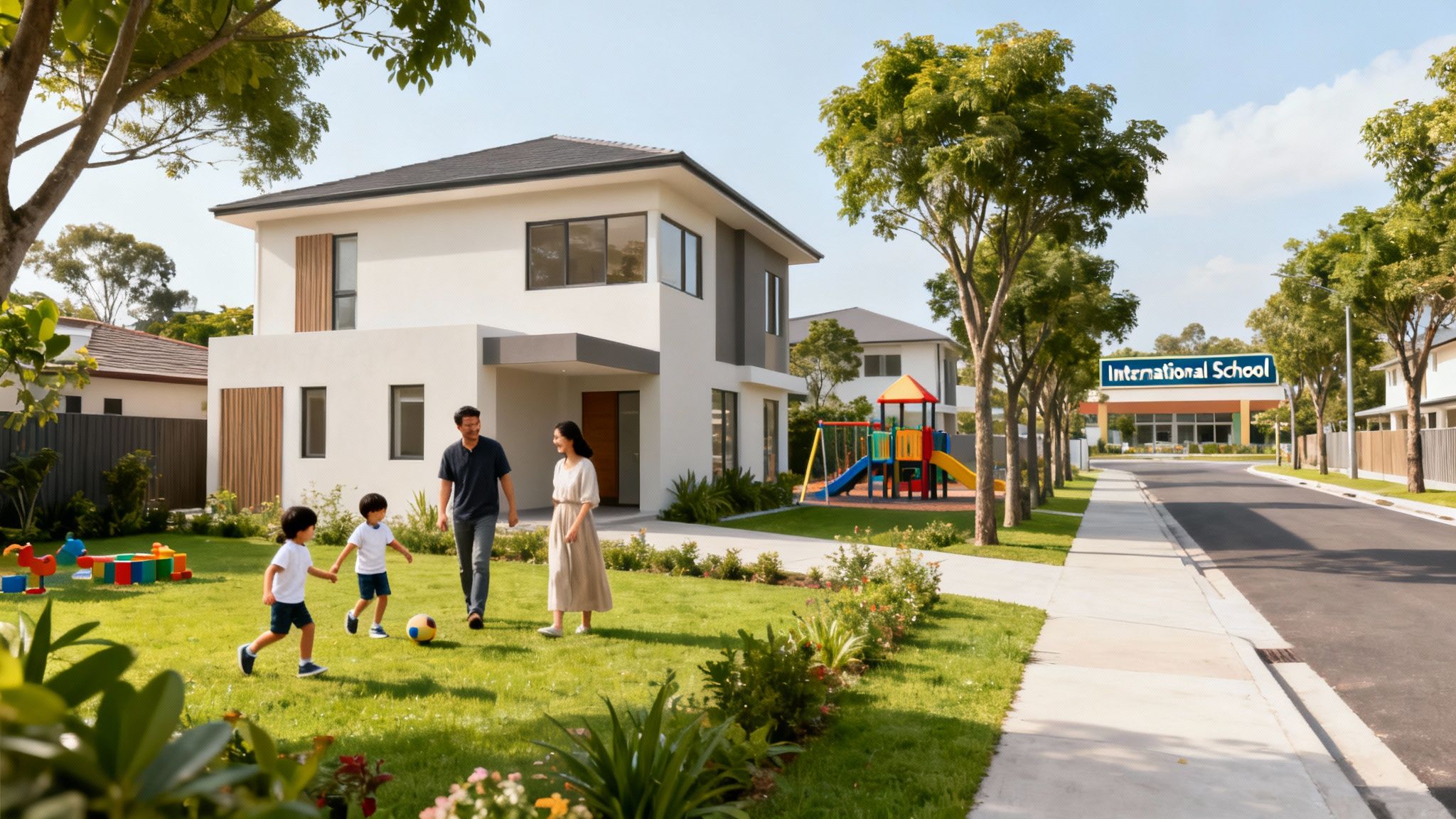
This segment has a distinct impact on the property market, creating demand for larger homes with specific features. Unlike retirees or digital nomads, these buyers require multiple bedrooms, outdoor space like a garden or a secure terrace, and proximity to both educational and recreational facilities. They are often looking for stable, family-friendly neighbourhoods in suburban areas of major cities like Madrid and Barcelona, or within purpose-built communities along the Costa del Sol.
Lifestyle and Community Highlights
For these families, the decision to move is anchored in the lifestyle and opportunities available for their children. The communities they choose are geared towards family life.
- Educational Excellence: Areas surrounding top-tier schools like SEK in Madrid or the Benjamin Franklin International School in Barcelona become highly sought-after hubs for international families.
- Family-Centric Amenities: Neighbourhoods such as Sarrià in Barcelona or Pozuelo de Alarcón in Madrid are popular for their abundance of parks, sports clubs, and cultural centres offering activities for all ages.
- Supportive Networks: These communities foster strong social bonds through parent-teacher associations, expat family social media groups, and community events, making the transition much smoother for parents and children alike.
Actionable Relocation Tips
Families planning a move should focus on logistical planning around their children’s needs.
- School Selection First: Research and apply to international schools well in advance, as places can be limited. Your choice of school will often dictate your property search area.
- Property Priorities: When searching for a home, prioritise features like multiple bedrooms, a safe play area, and an easy commute to school. Look for listings that specifically highlight family-friendly attributes.
- Engage with the Community: Before moving, connect with online parent groups and forums related to your target school or neighbourhood. This provides invaluable, first-hand advice on everything from paediatricians to after-school activities.
10-Group Comparison — Expat Communities in Spain
| Segment | Transaction complexity | Resource requirements | Expected outcomes | Ideal use cases | Key advantages |
|---|---|---|---|---|---|
| British Expat Retirees in Coastal Regions | Moderate — extended decision timelines; some visa issues | English-language marketing, local agents, healthcare/residency info, property management | High likelihood of cash sales; long-term residency; seasonal rental income | Coastal villas, retirement communities, rental-ready properties | Stable cash buyers, predictable preferences, high lifetime value |
| European Professional Workers in Madrid and Barcelona | Low–Moderate — fast decisions but career mobility risk | Targeted digital marketing, proximity data, flexible viewing hours | Quick transactions or rentals; demand for modern apartments; medium-term occupancy | New-builds and apartments near tech/finance hubs | High disposable income, tech-savvy, quick decision-makers |
| Digital Nomads and Remote Workers in Secondary Cities | Low — flexible leases; mortgage qualification challenges | Furnished short-term units, high-speed internet, online community marketing | Strong rental demand; rising purchase potential as segment matures | Furnished units near co-working spaces in secondary cities | Rapidly growing, high digital engagement, social-media reach |
| American and Canadian Expat Property Investors | High — extensive due diligence, tax and currency complexity | Legal/tax advisors, translation, ROI data, virtual tours, international banking links | Large-value, long-term investments; multi-property and development deals | Yield-generating assets, commercial, luxury, development projects | Substantial capital, professional buyers, low price sensitivity |
| French Expatriates in Border Regions and Catalonia | Low–Moderate — bilingual ease but renovation complexity in rural areas | French-language materials, cross-border logistics/tax info, bilingual agents | Steady purchases; interest in renovation and second homes; cross-border portfolios | Border-region homes, Catalonia urban and rural properties | Proximity to France, bilingual advantage, entrepreneurial buyers |
| Retirees from Northern European Countries | Moderate — strict documentation and inspection demands | Multilingual legal docs, certified inspections, hospital proximity information | High-value cash purchases; long-term residency (15+ years) | High-quality builds near medical facilities and established services | Exceptional purchasing power, preference for transparency and quality |
| Italian Expatriates and Mediterranean Lifestyle Seekers | Moderate — renovation-focused transactions; negotiation on price | Italian-language marketing, contractor/renovation networks, tourism investment data | Renovation projects and tourism-related investments; medium-term ownership | Historic property renovations, hospitality and coastal investments | Cultural affinity, strong entrepreneurial networks, renovation interest |
| Business Owners and Entrepreneurs in Tourism and Hospitality | High — complex licensing, regulatory compliance, extended due diligence | Market/tourism analysis, permits/legal support, industry consultants, specialized financing | Purchases as business assets with revenue targets; potential portfolio growth | Hotels, resorts, agritourism, vacation rental portfolios | ROI-driven buyers, willingness to invest and scale operations |
| Artists, Creatives, and Cultural Professionals | Low — rent-first, irregular financing and flexible timelines | Live-work conversion support, affordable studios, community and events marketing | Mostly rentals; selective purchases for live-work spaces; cultural area growth | Live-work studios in bohemian neighborhoods and cultural hubs | Community-building, adaptive reuse interest, cultural contribution |
| Family-Oriented Expats Seeking International Schools and Community | Moderate — timing tied to school calendars; larger property needs | School placement support, family services info, larger home listings, neighborhood guides | Stable long-term residency; investment in property improvements; community engagement | 3–4+ bedroom suburban homes near international schools and parks | Long-term commitment, stable household income, neighborhood stability |
Strategic Insights for Navigating Spain’s Diverse Expat Property Market
Navigating the vibrant and multifaceted Spanish property market requires more than a passing knowledge of its sunny coastlines and bustling cities. As we have explored, Spain is not a single, uniform market but a rich tapestry of distinct micro-markets, each shaped by the unique priorities and lifestyles of its diverse expat communities in Spain. From the sun-seeking British retirees prioritising turnkey villas on the Costa del Sol to the American investors analysing rental yields in Madrid’s prime districts, understanding the specific ‘who’ and ‘why’ is paramount for success.
The key takeaway from our deep dive into these communities is the critical importance of a targeted strategy. A property that perfectly suits a digital nomad in Valencia, with its emphasis on co-working spaces and cultural vibrancy, will likely hold little appeal for a French family seeking proximity to international schools near the Pyrenees. Similarly, the German buyer’s meticulous focus on build quality and energy efficiency demands a different sales approach than that for an Italian seeking a rustic finca that captures the essence of the Mediterranean lifestyle. This granular understanding moves beyond generic marketing to a more sophisticated, consultative approach.
Actionable Strategies for Market Success
To translate these insights into tangible results, consider the following strategic steps:
- Profile Your Property: Before listing, define which expat profile your property most closely aligns with. Is it a city-centre apartment ideal for a young professional, or a spacious family home in a suburban enclave? Highlighting amenities that speak directly to that group, such as high-speed fibre optic internet for remote workers or ground-floor accessibility for retirees, can significantly increase its appeal.
- Tailor Your Marketing Narrative: Craft your property descriptions and visual media to tell a story that resonates with your target demographic. For a property in the Canary Islands, focus on the year-round outdoor lifestyle and wellness benefits. For a Barcelona listing, showcase the blend of historic architecture and modern urban living.
- Leverage Local Community Insights: Emphasise the specific community benefits. Mention the established Scandinavian social clubs in Torrevieja, the thriving entrepreneurial network in Malaga, or the artistic hubs in Sitges. This demonstrates a deeper understanding of what makes a location a genuine home, not just a holiday destination.
Integrating into the Spanish Fabric
A crucial element for long-term success, both for expats settling in and for investors aiming to maximise their property’s appeal, is cultural integration. While many expat communities in Spain are well-established, the ability to connect with the local culture enhances the living experience exponentially. To effectively navigate daily life and foster connections within their new community, expats can explore the best way to learn conversational Spanish, a skill that opens doors to authentic experiences and deeper local relationships. This commitment to integration is often a key selling point for discerning buyers who seek more than just an enclave of fellow countrymen; they seek an authentic Spanish life.
As Nick Marr, founder of Homesgofast.com and EuropeanProperty.com, observes, “The sophistication of today’s international buyer in Spain requires a deeper understanding of their lifestyle drivers. It’s no longer just about sun and sand; it’s about community, infrastructure, digital connectivity, and long-term value. Agents and sellers who can speak to these specific needs will invariably outperform the market.”
Ultimately, success in this dynamic environment lies in recognising that you are not just selling a property, but a specific version of the Spanish dream, curated for a global audience. By aligning your property offerings and marketing strategies with the nuanced profiles of these key expat communities, you can more effectively connect with qualified buyers and achieve optimal results. For those seeking to explore opportunities further, browsing International Property For Sale can provide a broad perspective on the current market landscape. Mastering this targeted approach is not just a competitive advantage; it is the new standard for excellence in the Spanish international property sector.
Frequently Asked Questions (FAQs)
What are the best expat communities in Spain for UK retirees?
For UK retirees, the most popular and well-established expat communities are found along the Costa del Sol (e.g., Marbella, Estepona) and the Costa Blanca (e.g., Jávea, Moraira). These areas offer a fantastic climate, a large English-speaking population, and excellent infrastructure, including healthcare and social clubs catering specifically to British expats.
Which Spanish cities are attracting young professionals and digital nomads?
Major cities like Barcelona and Madrid are hubs for European professionals due to their strong job markets and cosmopolitan lifestyle. For digital nomads seeking a better work-life balance and lower cost of living, secondary cities such as Valencia, Málaga, and Seville are emerging hotspots, offering excellent digital infrastructure and vibrant cultural scenes.
As an American, what should I consider when investing in Spanish property?
American investors should focus on thorough due diligence, paying close attention to potential rental yields (ROI) and capital appreciation. It is crucial to engage with legal and tax advisors who specialise in US-Spain cross-border transactions to navigate complex issues like currency exchange and international tax obligations. The Golden Visa program is also a key consideration for non-EU investors seeking residency.
Are there specific regions in Spain popular with German and Scandinavian buyers?
Yes, retirees and buyers from Germany and Scandinavia often favour the Balearic Islands (especially Mallorca), the Costa Blanca (around Dénia and Moraira), and certain parts of the Costa del Sol. They are typically drawn to high-quality properties, well-maintained communities, and access to outdoor activities like golf, sailing, and hiking.
How important is learning Spanish when living in an expat community?
While it is possible to live in many coastal expat communities with minimal Spanish, learning the language is highly recommended for deeper cultural integration and a more fulfilling experience. It simplifies daily tasks, opens up social opportunities beyond the expat bubble, and shows respect for the local culture. It is particularly important if you live outside the main tourist-heavy areas.
About Homesgofast.com
HomesGoFast.com is a leading international property website, established in 2002, helping homeowners, real estate agents, and developers reach overseas buyers. Featuring thousands of listings from over 50 countries, the platform connects global property seekers with homes, apartments, villas, and investment opportunities worldwide.
Looking for expert mortgage guidance? Get international property mortgage advice here:
👉 https://homesgofast.com/mortgages-overseas/
Explore more overseas homes for sale at our global partner site:
👉 https://homesgofast.com/overseas-property/
Looking to sell real estate to foreign buyers? Go to
https://homesgofast.com/sell-overseas-property/