
Thinking about buying a home in Canada? You’re not the only one. Let’s get straight to it: Yes, as a US citizen, you can absolutely buy property in Canada. The Canadian property market has long been a magnet for savvy American investors and those seeking a second home in a stable, high-quality-of-life environment.
The path is well-travelled, but it has unique financial and legal twists that are quite different from the American home-buying process. This professional guide is here to break down exactly what you need to know.
We’ll unpack the big-ticket items for US citizens buying property in Canada, from securing a mortgage as a non-resident to navigating cross-border tax laws like the Underused Housing Tax. Think of this as your personal roadmap—a clear look at the journey ahead, reassuring you that with the right preparation, owning a piece of the Great White North is completely within reach.
The Canadian Property Landscape For US Buyers

The appeal of Canada’s stable real estate market, paired with its incredible quality of life, makes it a top destination for American investors and second-home buyers alike. But jumping into this market means getting a firm grasp of its distinct rules, especially when it comes to financing and foreign ownership regulations.
While the process is generally friendly to Americans, it’s just structured differently. For example, you won’t find title companies here. Instead, real estate lawyers or notaries are the ones who manage the legal transfer of property. This is one of the first of many differences you’ll notice.
The Financial Hurdle: Getting Started
One of the biggest adjustments for US buyers is the financial entry point. To keep the market stable, Canadian lenders have stricter requirements for non-residents.
Brace yourself for a significant down payment. Canadian advisors often report that lenders require most non-resident purchasers, including U.S. citizens, to put down at least a 35% deposit. This hefty equity stake has helped keep mortgage default rates low and made prime Canadian cities like Toronto and Vancouver more resilient.
This substantial down payment is a major departure from the US market, where much lower deposits are the norm. It really highlights the need for solid financial planning before you even start looking at listings.
For a wider view on buying internationally, you can find a wealth of International Property For Sale on our main platform.
Key Considerations For US Buyers at a Glance
To make this journey a success, you need to know what’s coming. And as you begin your property search, it’s always smart to review the key factors to look for when buying a house to ensure you make a solid decision.
Here’s a quick rundown of the essential topics you’ll need to get familiar with before you make your move.
| Consideration | Summary for US Citizens |
|---|---|
| Foreign Ownership Rules | Familiarise yourself with Canada’s “Prohibition on the Purchase of Residential Property by Non-Canadians Act” and its exemptions. Many Americans can qualify under specific conditions. |
| Mortgage & Financing | Be ready for higher down payment requirements (35% is common). You’ll also need to understand how Canadian banks assess US credit history. |
| Cross-Border Taxation | You must be aware of Canadian taxes like the Underused Housing Tax (UHT) and remember your ongoing reporting duties to the IRS back home. |
| The Legal Process | The system relies on a Canadian real estate lawyer or notary. They are central to handling contracts, title searches, and closing the deal. |
Getting these four areas dialled in is your first, and most important, step. It sets the foundation for a smooth, successful purchase and helps you avoid any unwelcome surprises along the way.
Understanding Canadian Real estate Law

Diving into another country’s legal system can feel intimidating, but for US citizens buying property in Canada, the process is surprisingly straightforward compared to many other foreign nationals. The key is to get a handle on a couple of important laws and truly appreciate the central role a Canadian legal expert will play in your purchase.
The big one you’ll hear about is the federal Prohibition on the Purchase of Residential Property by Non-Canadians Act. While the name sounds pretty final, the situation for Americans is much more flexible. This ban has been extended until January 1, 2027, but it’s loaded with important exemptions.
In fact, many US citizens discover they aren’t restricted by the ban at all, especially if they have temporary resident status or a valid work permit. The crucial first step is to verify your eligibility—don’t just assume the ban applies to you.
The Central Role of The Real estate Lawyer
In Canada, a real estate lawyer—also known as a solicitor, or a notary in provinces like Quebec and British Columbia—isn’t just a background advisor. They are the central figure who quarterbacks the entire transaction. This is a big shift from the US system, where title companies and escrow agents often handle these tasks. Your Canadian lawyer manages everything from the initial offer right through to closing day.
Their responsibilities are comprehensive and absolutely essential for a secure purchase.
- Reviewing the Agreement of Purchase and Sale: They’ll comb through the contract to make sure your interests are protected and all conditions, like financing and home inspections, are crystal clear.
- Conducting a Title Search: This is a deep dive into the property’s history to confirm the seller is the legal owner and that there are no hidden claims, liens, or other nasty surprises.
- Ensuring Provincial Compliance: Real estate law is not one-size-fits-all across Canada. Your lawyer is there to ensure your purchase follows all local rules, from Ontario’s Land Transfer Tax to British Columbia’s Property Transfer Tax.
A bit of wisdom from seasoned international buyers: get a Canadian real estate lawyer involved early. Their advice on how to structure your offer can save you from costly missteps and give you a real strategic edge, particularly when the market is hot.
Understanding Key Legal Requirements
On top of the federal rules, provinces have their own layers of regulation. Ontario and British Columbia, for example, levy a Non-Resident Speculation Tax (NRST) that can seriously bump up the cost for foreign buyers. Again, exemptions often exist, which is why having local legal counsel is non-negotiable.
Another practical legal step depends on what you plan to do with the property. If you’re thinking about renting it out for income, you’ll almost certainly need to get an Individual Tax Number (ITN) from the Canada Revenue Agency (CRA). This is a nine-digit number that non-residents need to file a Canadian tax return.
The Legal Framework Is Your Safeguard
Think of your legal team as your safety net. Their job is to ensure a smooth, compliant, and totally secure transfer of ownership. They manage the flow of funds through their trust account, register the property title in your name, and hand over the keys with a final report. For US citizens buying property in Canada, this reliance on legal professionals creates a protective and well-defined framework for your investment.
The journey of buying property in Canada as a US citizen is built on these legal standards. When you work with a qualified lawyer, what could be a confusing ordeal becomes a series of clear, manageable steps.
To get a feel for the country’s broader real estate climate, it’s worth exploring a detailed country profile for Canada. This gives you great context that will complement the specific legal advice you get from your solicitor or notary.
Securing Your Mortgage as a US Citizen
Financing is often the point where the dream of owning Canadian property gets a serious reality check. For US citizens buying property in Canada, the mortgage process isn’t quite what you’re used to back home. Let’s make sure this crucial step doesn’t trip you up.
The first major difference you’ll encounter is the down payment. While American buyers might be familiar with lower entry points, Canadian lenders are much more conservative with non-residents. It’s all about mitigating their risk.
Expect to put down a substantial amount of cash upfront. Most major Canadian banks will require a minimum of 35% of the property’s purchase price from non-resident buyers. Think of this as the standard threshold to prove you have serious skin in the game.
This isn’t a negotiable point; it’s fundamental to how Canadian lenders work with foreign nationals. Factoring this level of capital into your budget from day one is absolutely essential for a smooth ride.
Choosing Your Lender: Canadian Banks vs. US Cross-Border Services
When it’s time to find a lender, you really have two main paths. You can either work directly with a major Canadian bank—like RBC, TD, BMO, or Scotiabank—or you can look into US-based lenders that offer specialised cross-border mortgage services.
Going with a Canadian bank is often the most straightforward route. They live and breathe their own regulatory landscape and have well-oiled processes for non-resident applications. They get the nuances of Canadian property law and can guide you effectively.
Alternatively, some big US financial institutions with a footprint in Canada can help. This might seem convenient, especially since they can likely verify your US financial history more easily. Just be certain they are deeply familiar with the specifics of Canadian real estate deals—it’s a very distinct market.
Assembling Your Financial Dossier
Canadian lenders need to see a complete picture of your financial health. They won’t use your US FICO score directly, but they have their own ways of assessing your creditworthiness based on your American credit history. The more prepared you are, the stronger your application will be.
Here’s a checklist of documents you’ll almost certainly need to pull together:
- Proof of Income: Get ready with two years of tax returns (both US federal and state) plus recent pay stubs or a formal employment letter confirming your salary and position.
- Proof of Down Payment: Lenders need to see that the funds for your 35% (at least) down payment are sitting in a bank account, ready to go. Opening a Canadian bank account early on makes this whole process much easier.
- US Credit History: You’ll need a full credit report from one of the major US bureaus like Equifax or TransUnion.
- Bank Statements: Plan on providing three to six months of statements from your main bank accounts to show a stable financial history.
Having these documents organised and ready will seriously speed up the pre-approval process, which is a critical step to take before you even think about making offers. To get a handle on your numbers, a tool like this mortgage payment calculator can give you a rough idea of your monthly costs.
Managing Currency Exchange
One final, practical tip: don’t overlook the currency exchange when transferring your down payment. The rate between the US and Canadian dollar moves every single day. A tiny shift in the rate can mean a difference of thousands of dollars on a large wire transfer.
Instead of just accepting your bank’s standard exchange rate, look into a specialist foreign exchange (Forex) service. These companies almost always offer more competitive rates and lower fees than traditional banks, which means more of your money makes it into your Canadian account.
For anyone navigating the complexities of financing a property abroad, you can learn more about various second home financing options in our detailed guide.
Managing Your Cross-Border Tax Obligations
Getting a handle on the tax implications of owning property in two countries is probably the most crucial part of this entire process. For US citizens buying property in Canada, understanding your obligations on both sides of the border isn’t just a good idea—it’s absolutely essential to avoid nasty penalties and financial surprises down the road.
This isn’t something you should try to figure out on your own. Professional guidance is paramount here.
The minute you sign the papers for your Canadian real estate, you’re officially operating in a dual tax environment. You’ll have to deal with specific Canadian taxes aimed at non-residents while also keeping up with your reporting duties to the IRS back home. Getting this part wrong can seriously eat into your investment returns.
Key Canadian Taxes for US Owners
Your tax liabilities in Canada will hinge on the province you buy in and what you plan to do with the property. Two big ones that American buyers need to get familiar with are the Non-Resident Speculation Tax (NRST) and the Underused Housing Tax (UHT).
The Non-Resident Speculation Tax (NRST) is a provincial tax. In Ontario, for example, it adds a hefty 25% tax on top of the purchase price for foreign buyers. It sounds daunting, but there are exemptions, and it’s vital to check if your situation might qualify. British Columbia has a similar tax, which just goes to show how important localised legal and tax advice is.
Then there’s the Underused Housing Tax (UHT), which is a federal tax. It’s an annual 1% tax on the value of residential property owned by non-resident, non-Canadians that’s considered vacant or “underused.” Again, exemptions are available, especially for properties in designated resort or tourism areas, so don’t assume you’ll have to pay it without checking first.
“Many US buyers are surprised by the intricacy of Canada’s non-resident tax rules,” notes Nick Marr, founder of Homesgofast.com. “The UHT, in particular, requires careful planning. Whether you’re buying a vacation cottage or an urban flat, understanding its implications from day one is non-negotiable.”
Your Ongoing US Tax Responsibilities
Your US citizenship means the IRS has an interest in your worldwide income and assets. Owning a piece of Canada just adds a new layer to your annual tax filing.
If you earn rental income from your Canadian property, you absolutely must report it on your US tax return. This is a common point of confusion for new cross-border owners, but it’s a firm requirement.
You might also need to file a Report of Foreign Bank and Financial Accounts (FBAR). This applies if the combined value of your foreign financial accounts—including that Canadian bank account you opened for the mortgage or property expenses—exceeds $10,000 at any point during the year.
This decision tree gives a quick visual on the mortgage process, which is often the first financial hurdle for US buyers.
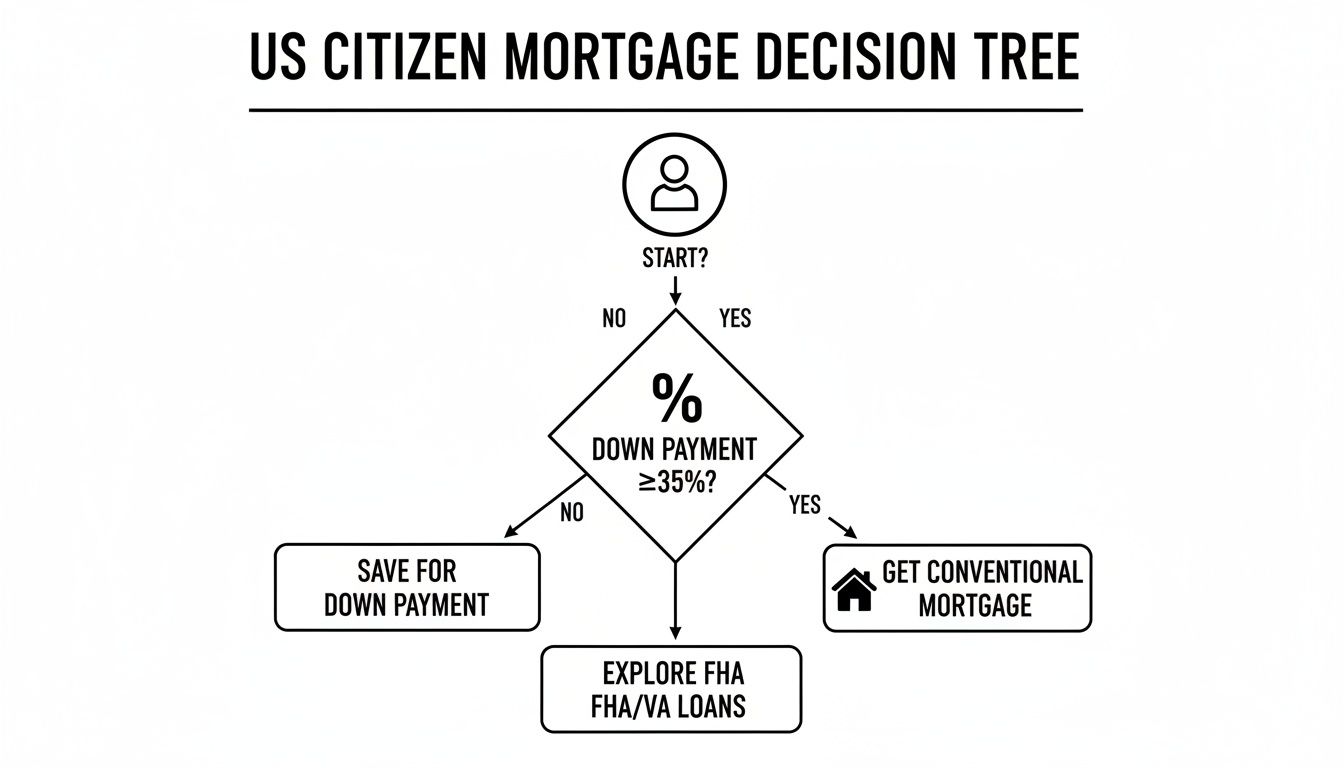
As you can see, the down payment is a huge factor. Putting down 35% or more really smooths the path to getting a Canadian mortgage approved.
Preventing Double Taxation with the Tax Treaty
Now for the good news. The US-Canada Tax Treaty exists specifically to prevent you from being taxed twice on the same income. It’s the cornerstone of smart cross-border financial planning.
For instance, when you pay Canadian income tax on your rental earnings, you can generally claim a foreign tax credit on your US return. This credit directly reduces your US tax bill by the amount of tax you’ve already paid to Canada. Simple as that.
The treaty is especially important when it’s time to sell. Selling your Canadian property will trigger a Canadian capital gains tax, and the Canada Revenue Agency (CRA) will withhold a chunk of the sale proceeds until that tax is settled. You also have to report that gain to the IRS, but the treaty lets you use the Canadian taxes you paid as a credit against your US tax obligation on the sale.
Making a clear distinction between personal and rental use is key. A property that’s just a personal holiday home is treated very differently from one that generates income, and this affects everything from what you can deduct to whether the UHT applies. This is exactly why a cross-border tax specialist is an indispensable member of your team when buying property in Canada as a US citizen.
Making an Offer and Closing Your Purchase

You’ve navigated the tricky worlds of financing and tax law and have finally zeroed in on your perfect Canadian property. Now it’s time to move from window shopper to homeowner. This part of the journey is all about strategic precision, and it starts with putting together the right team of professionals to act on your behalf from across the border.
The first move for any serious buyer is to get a licensed Canadian real estate agent on your side, ideally someone with a solid track record of working with American clients. These agents just get the nuances of cross-border deals and can give you invaluable local market intel. Their expertise is absolutely critical when it comes to putting together a compelling offer.
Crafting a Winning Offer from Abroad
In Canada, an offer is a formal legal document called an “Agreement of Purchase and Sale.” It’s much more than just a price—it outlines crucial conditions, or “contingencies,” that are there to protect you. A good agent will help you draft an offer that’s both attractive to the seller and smart for your situation.
For US citizens buying property in canada, some standard conditions are practically non-negotiable:
- Financing Condition: This buys you time, usually 5–10 business days, to get that final mortgage approval from your Canadian lender. It’s an essential safety net.
- Inspection Condition: Lets you bring in a professional home inspector to check the property’s health. If they find major problems, you can often renegotiate the price or even walk away.
- Review of Documents: This one’s key for strata (condo) properties. It gives your lawyer a chance to go through the strata corporation’s documents, like financial statements and meeting minutes, to spot any red flags.
The real art of the offer is balancing a competitive edge with self-protection. In a hot seller’s market, it can be tempting to waive conditions, but for a non-resident buyer, keeping the financing and inspection clauses is almost always the smartest move.
Once your agent presents the offer, a bit of back-and-forth negotiation might happen. When everyone agrees and signs, you’ll pay your deposit—typically 5-10% of the purchase price—into the selling brokerage’s trust account. At that point, the offer becomes a legally binding contract.
Navigating the Closing Process Remotely
The whole closing process is quarterbacked by your Canadian real estate lawyer or notary. This is where they really earn their keep, especially since you’ll likely be back in the United States. Thankfully, the Canadian legal system is well-oiled for handling remote closings.
Your lawyer will be busy with several key tasks:
- Conducting a Title Search: They’ll double-check that the property title is clean, with no hidden liens or legal claims.
- Managing Funds: They coordinate getting the mortgage money from your lender and the rest of your down payment into their trust account.
- Preparing Closing Documents: All the necessary legal paperwork for the title transfer is drafted by them.
Modern tech makes signing from the US a breeze. Most legal documents can be signed digitally or over a video call with your lawyer, so there’s no need to book a flight just for the closing. On the big day, your lawyer sends the funds to the seller’s lawyer, registers the property in your name, and just like that, you’re officially a homeowner.
Post-Closing Practicalities
The moment the deal closes, the property is yours, so it pays to be prepared. You can line up property insurance and set up utilities like hydro (electricity) and gas right from the US before you even get the keys. Your real estate agent or lawyer can give you the contact info for local providers to make it all go smoothly.
For anyone thinking of building from scratch, our guide on how to find land in Canada to build a new home has some great insights into that unique process. And when you’re ready to start looking at existing homes or new developments, feel free to explore our listings of International Property For Sale.
Frequently Asked Questions
When you’re navigating a new real estate market, questions are a given. For US citizens buying property in Canada, the same queries come up time and again. Let’s clear up the most common points of confusion so you can move forward with confidence.
Do I Need a Special Visa to Buy a House in Canada?
The short answer is no. You don’t need a special visa just to purchase a property. As a US citizen, you can legally buy Canadian real estate while you’re here on a standard visitor status.
But this is the critical part: owning property does not give you the right to live in Canada. Your stay is still governed by immigration law, which typically limits visits to six months at a time. If you plan to live in the home you buy, you’ll need to pursue residency through the proper immigration channels completely separately from the property purchase.
What are the main differences between buying property in the US and Canada?
While the goal—getting the keys to a new home—is the same, the journey feels quite different. The major distinctions for US citizens buying property in Canada really boil down to three things: financing, legal processes, and taxes.
- Financing: The down payment is often the biggest shock. Canadian lenders usually ask for a minimum of 35% down from non-residents. That’s a world away from the lower thresholds you might be used to in the States.
- Legal Process: In Canada, lawyers or notaries run the show. Unlike the US, where title companies often handle closings, your Canadian legal expert will manage everything—from title searches and holding funds in trust to ensuring the legal transfer of ownership.
- Taxation: Get ready for a few new acronyms. You’ll run into unique Canadian taxes with no direct US equivalent. This includes the federal Underused Housing Tax (UHT) and, in provinces like Ontario and British Columbia, hefty Non-Resident Speculation Taxes (NRST).
Can I use my US credit score for a Canadian mortgage?
Yes, but not directly. Your US FICO score isn’t just plugged into the Canadian system. The good news is that major Canadian banks with cross-border operations know exactly how to pull and analyse your US credit history to see if you’re a reliable borrower.
Want to seriously strengthen your application? Start building a Canadian financial footprint early. Open a Canadian bank account and get a Canadian credit card as soon as you can. This shows lenders you’re committed and makes a real difference when they’re reviewing your file.
A strong US credit history is a great start, but building a Canadian financial footprint shows lenders you’re serious. Think of it as translating your financial credibility for a new market—it smooths the entire process.
What happens when I sell my Canadian property?
Selling also has its own cross-border rules. When you sell your Canadian home, you’ll face a Canadian capital gains tax on any profit you’ve made. It’s something you need to plan for right from the start.
To make sure that tax gets paid, the Canada Revenue Agency (CRA) will require a portion of the gross sale proceeds to be withheld. You only get those funds back after you’ve filed a Canadian tax return for the year of the sale and received a “Certificate of Compliance” from the CRA, proving you’ve settled your tax obligations.
At the same time, you also have to report the sale to the IRS on your US tax return. Luckily, the US-Canada Tax Treaty is designed for this exact scenario. You can claim a foreign tax credit for the taxes you paid to Canada, which directly lowers what you owe in the US and prevents you from being taxed twice on the same gain. Working with a cross-border tax pro is just as important when you sell as when you buy.
What is the foreign buyer ban in Canada and does it affect US citizens?
Canada has a law called the Prohibition on the Purchase of Residential Property by Non-Canadians Act, often referred to as the “foreign buyer ban.” It’s currently in effect until January 1, 2027. However, the law includes numerous exemptions. Many US citizens, particularly those with temporary resident status or valid work permits in Canada, are not affected by this ban. It’s crucial to verify your specific eligibility with a Canadian real estate lawyer rather than assuming the ban applies to you.
Can a US citizen get a mortgage from a Canadian bank?
Absolutely. Major Canadian banks are well-equipped to provide mortgages to US citizens, but the requirements are stricter. Expect to provide a down payment of at least 35%, along with extensive documentation like US tax returns, proof of income, and a US credit report. Opening a Canadian bank account early in the process can significantly streamline the application.
About Homesgofast.com
HomesGoFast.com is a leading international property website, established in 2002, helping homeowners, real estate agents, and developers reach overseas buyers. Featuring thousands of listings from over 50 countries, the platform connects global property seekers with homes, apartments, villas, and investment opportunities worldwide.
Looking for expert mortgage guidance? Get international property mortgage advice here:
👉 https://homesgofast.com/mortgages-overseas/
Explore more overseas homes for sale at our global partner site:
👉 https://homesgofast.com/overseas-property/
Looking to sell real estate to foreign buyers? Go to
https://homesgofast.com/sell-overseas-property/