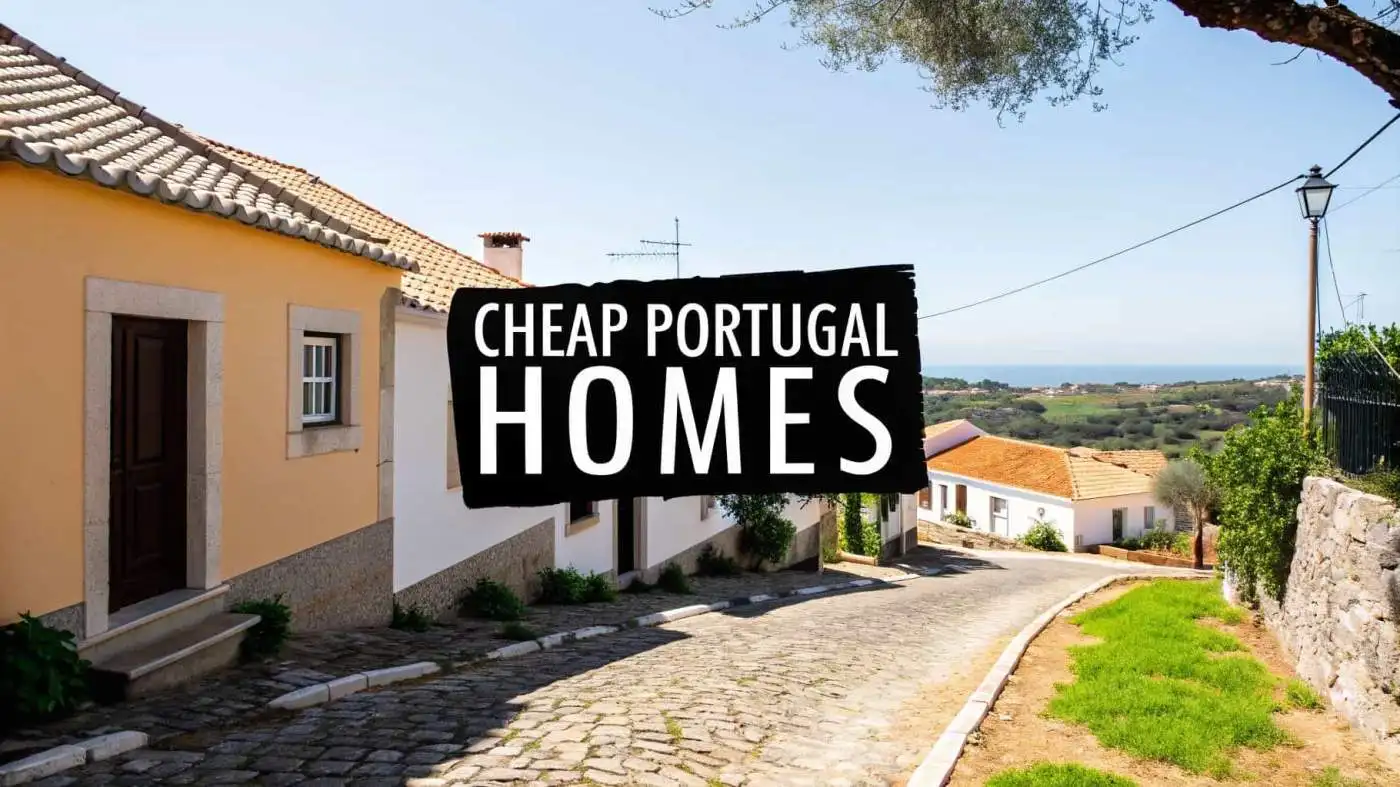
It is a common myth that Portugal’s property market is exclusively for the ultra-affluent. The reality is, for the discerning international investor, there is extraordinary value to be found. The key to securing cheap property Portugal is not about luck; it is about strategic market knowledge and looking beyond the high-priced, conventional hotspots. This guide provides a detailed roadmap for uncovering these opportunities, ensuring a secure and profitable investment journey.
Why Portugal Continues to Attract Global Investors
For years, buyers from the UK and the USA have been drawn to Portugal, seeking not just a sound investment but an enhanced quality of life. The country’s appeal lies in its unique combination of affordability, high safety standards, and a welcoming culture, positioning it as a premier destination for both investment and relocation.
As Nick Marr, founder of HomesGoFast.com, observes, “lifestyle-led markets with strong fundamentals are drawing unprecedented interest from overseas buyers.” This is not a fleeting trend but a fundamental shift in the global property landscape.
UK investors, in particular, find Portugal an attractive alternative as domestic property prices continue their upward trajectory. The strong economic bond between the two nations reinforces this confidence. According to UK government data, the total trade in goods and services between the UK and Homes for Sale in Portugal reached a significant £12.3 billion in the four quarters leading up to Q3 2025. This long-standing relationship provides a stable foundation for British buyers.
So, what underpins Portugal’s value proposition for those seeking cheap property in Portugal? Several factors are key:
- Diverse Regional Markets: The property landscape is highly varied. From rustic quintas in the countryside to modern coastal apartments, the diversity ensures there are properties to suit almost any investment strategy or budget.
- An Unbeatable Lifestyle: Portugal consistently ranks highly in global quality-of-life indices, celebrated for its temperate climate, exceptional cuisine, and relaxed pace of life.
- Favourable Tax Regimes: While policies evolve, Portugal has historically offered attractive tax incentives for foreign residents, adding a compelling financial layer to its appeal.
Understanding these market dynamics is the first step. For a more granular analysis, this external guide on how to buy a cheap house in Portugal offers an excellent resource. This guide is a crucial read for those looking for how to find affordable homes in Portugal.
Identifying Portugal’s Most Affordable Regions
To find genuine bargains in the Portuguese property market, one must look beyond the premium postcodes of Lisbon and the Algarve. The key to securing cheap property in Portugal is to explore the emerging regions that offer an exceptional quality of life without the corresponding high price tags. These areas represent not just lower-cost alternatives but intelligent investment plays with significant growth potential.
While prime locations see price appreciation slow, these secondary markets are where astute investors are now focusing. The focus is on locations where new infrastructure and evolving lifestyle trends are creating the next property hotspots. For investors considering a broad portfolio, there’s a world of International Property For Sale with similar dynamics.

This connection highlights a steady flow of investment, with many buyers now actively seeking out these less-trodden paths for better value and returns.
The Silver Coast: A Compelling Algarve Alternative
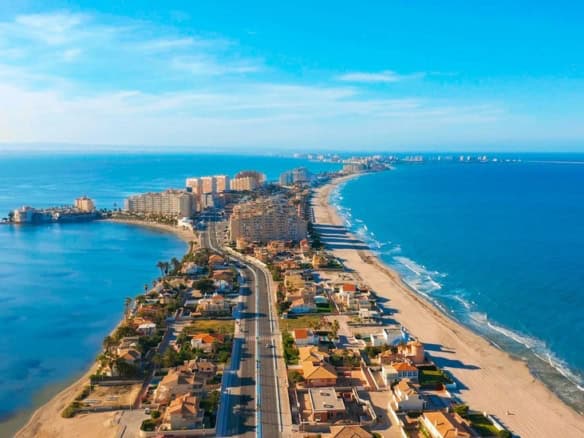
Stretching north from Lisbon, the Silver Coast (Costa de Prata) is defined by its dramatic coastlines, charming historic towns, and authentic Portuguese culture. It offers a more relaxed and significantly more affordable lifestyle than the bustling Algarve, with property prices that are markedly different.
Towns like Nazaré, famous for its world-record waves, and the walled medieval village of Óbidos, offer a mix of traditional homes and modern apartments. Here, one can find seaside properties and country houses for a fraction of the cost further south, making it a prime choice for anyone seeking coastal living on a sensible budget. Where to find coastal property bargains in Portugal is a key question this region answers.
Central Portugal: The Cultural Heartland
For those prioritising culture and authenticity, Homes for Sale in Central Portugal is a largely undiscovered treasure. This region is home to Coimbra, one of Europe’s oldest university cities, and is characterised by river beaches, lush forests, and historic schist villages.
Property here is among the most affordable in the country. It is not uncommon to find large rural properties, known as quintas, with substantial land for well under €150,000. Village houses requiring renovation can be acquired for even less. This area is a magnet for buyers seeking a peaceful retreat and a genuine connection to Portuguese heritage. You can explore the data in more detail in our guide to home prices in Portugal.
Northern Portugal: An Emerging Powerhouse
The north is experiencing significant momentum, driven by the economic dynamism of cities like Porto and Braga. While Porto’s city centre is no longer a bargain hunter’s paradise, its surrounding areas and other northern cities present a compelling case for investment.
In fact, Portugal’s secondary markets are delivering superior returns. Cities such as Homes for Sale in Braga have seen property values increase by over 17% annually, with rental yields achieving a robust 5-6%—comfortably surpassing Lisbon’s 3-4% average. This growth is bolstered by improved transport links and a government VAT reduction to 6% on certain new constructions, further enhancing its appeal.
Regional Property Price Comparison (Average Price Per Square Metre)
To provide a clear perspective on value, this table breaks down average property prices across Portugal’s key regions. It illustrates the significant purchasing power gained by looking beyond traditional tourist centres.
| Region | Average Price per m² (Apartment) | Average Price per m² (House/Villa) | Key Appeal |
|---|---|---|---|
| Lisbon | €5,426 | €4,980 | Capital city, economic hub, high rental demand |
| Algarve | €3,286 | €3,450 | Premier tourist destination, beaches, golf resorts |
| Silver Coast | €2,350 | €2,100 | Authentic coastal living, lower prices, proximity to Lisbon |
| Central Portugal | €1,450 | €1,200 | Rural charm, historic towns, lowest prices in Portugal |
| Northern Portugal | €2,490 | €2,050 | Dynamic cities (Porto), strong growth, cultural heritage |
Source: Idealista, March 2024. Prices are indicative and can vary by specific location.
The price disparity is stark. For the cost of a small city-centre apartment in Lisbon, one could acquire a spacious villa with land in Central or Northern Portugal. This is precisely why savvy buyers are expanding their search parameters.
“We’re seeing a clear shift. International buyers are increasingly focused on lifestyle-led markets with long-term value fundamentals, and Portugal’s northern and central regions are delivering exactly that.”
– Nick Marr, HomesGoFast.com
By venturing beyond the primary tourist zones, buyers can uncover cheap property in Portugal that delivers not just a lower entry price, but also a richer, more authentic living experience with solid potential for future growth.
Proven Tactics for Finding Below-Market Deals
To find genuinely cheap property in Portugal, one must look beyond the standard online portals. Experienced investors understand that the most advantageous deals are rarely the most visible. They are typically found in market segments that casual buyers overlook. Adopting a few proven tactics can provide a significant competitive advantage.

The strategy is to target areas with less competition and more motivated sellers, which often involves properties requiring renovation or a more complex acquisition process. To succeed, one must understand how to effectively find undervalued properties, even in popular markets. A key long-tail strategy involves searching for Portuguese renovation projects for sale.
Uncovering Bank Repossessions
Targeting bank repossessions, known locally as retomas de banco, is one of the most effective strategies. When a borrower defaults, the financial institution repossesses the asset and is often highly motivated to sell quickly to recover its losses. These properties are frequently listed at a significant discount to market value.
Listings can be found on the dedicated real estate sections of major Portuguese banks like Millennium BCP, Novo Banco, and Santander. Specialist agencies also consolidate these listings. However, due diligence is paramount:
- Condition: Repossessed homes are sold “as is” (no estado em que se encontram) and may require substantial repairs after being vacant.
- Legal Checks: A thorough inspection and legal review are non-negotiable to ensure all prior debts and liens have been cleared.
- Financing Advantage: The selling bank is often willing to offer favourable mortgage terms to the new buyer, sometimes financing up to 100% of the purchase price.
Navigating Property Auctions
Property auctions, or leilões de imóveis, are another excellent source for below-market-value deals. These can be judicial auctions managed by courts to settle debts or private auctions organised by agencies. The online platform e-leilões.pt is a primary resource for court-ordered sales.
Success at auction hinges on preparation. Thorough research of the property and its market value is essential. It is crucial to establish a firm maximum bid and adhere to it, avoiding the emotional escalation common in auction environments.
Capitalising on Renovation Projects
For investors with vision, seeking out renovation projects is a superb method for building instant equity. Portugal has an abundance of old stone houses (casas de pedra), particularly in the rural centre and north, that are structurally sound but require complete modernisation.
These properties are often priced very low. The primary challenge is accurately budgeting for the renovation. It is imperative to obtain at least three detailed quotations from reputable local builders and to consult the local council (câmara municipal) regarding planning permissions (licenças) before making an offer. A successful renovation can transform a derelict structure into a high-value home.
Navigating the Purchase Process Like a Pro
The Portuguese property buying process, while initially appearing complex, is a logical and secure system. For anyone serious about acquiring cheap property in Portugal, mastering this process is essential for protecting the investment and avoiding costly complications.
The transaction is structured around key milestones designed to provide security for both buyer and seller. Understanding these steps ensures a smooth journey from property selection to ownership.
Your Essential First Steps
Before making a formal offer, two administrative steps are crucial for every foreign buyer.
-
Obtain a Fiscal Number (NIF): The Número de Identificação Fiscal is a unique Portuguese tax ID number. It is impossible to buy property, open a bank account, or arrange utilities without it. The process is straightforward and can be completed at any local tax office (Finanças).
-
Open a Portuguese Bank Account: A local bank account is necessary for transferring funds, paying taxes, and managing ongoing property-related expenses. It simplifies the entire financial aspect of the transaction.
Completing these two steps signals to sellers that you are a serious and prepared buyer, strengthening your negotiating position.
Understanding the Legal Stages
The legal framework for property acquisition in Portugal is robust and typically unfolds in two main stages.
-
Promissory Contract (CPCV): The Contrato de Promessa de Compra e Venda is the initial legally binding agreement. Upon signing, a deposit (usually 10-20% of the purchase price) is paid. This contract secures the property, outlines all terms, and sets a date for the final deed. If the buyer withdraws, the deposit is forfeited. If the seller withdraws, they are typically required to pay double the deposit back to the buyer.
-
Final Deed (Escritura): The Escritura Pública de Compra e Venda is the final contract, signed before a public notary. At this stage, the remaining balance is paid, and ownership is officially transferred. The notary verifies the legality of the transaction, and the property is then registered in the new owner’s name at the Land Registry (Conservatória do Registo Predial).
Budgeting for Additional Costs
The advertised price is not the final cost. Several taxes and fees must be factored into the budget from the outset.
-
Property Transfer Tax (IMT): The Imposto Municipal sobre as Transmissões Onerosas de Imóveis is the most significant tax. It is a progressive tax, with the rate depending on the property’s value, type, and intended use.
-
Stamp Duty (IS): The Imposto de Selo is a flat-rate tax of 0.8% of the property’s declared value.
-
Notary and Registration Fees: These cover the notary’s services and the cost of land registry. A budget of around 1-2% of the purchase price is a reliable estimate for these combined costs.
Portugal’s real estate market continues to attract international buyers. National residential prices closed 2025 at an average of €3,019 per m², with a more moderate growth of 2-7% forecast for 2026. This stabilisation is creating excellent entry points for investors seeking cheap property in Portugal. For further analysis, the CBRE Real Estate Market Outlook for Portugal provides valuable insights.
For a broader perspective on the process, our comprehensive guide on how to buy property abroad is a useful resource.
Common Mistakes International Buyers Make
When pursuing the opportunity of cheap property in Portugal, awareness of potential pitfalls is crucial. The path to a successful investment can be fraught with challenges that can turn a bargain into a financial liability.

Many international buyers, particularly from the USA and Europe, are captivated by the romantic notion of a rustic ruin without fully appreciating the hidden costs and complexities. A dramatic underestimation of renovation costs and timelines can quickly erode the initial value proposition.
Underestimating Renovation and Bureaucracy
This is perhaps the most significant error. A charming, dilapidated farmhouse may appear to be a bargain, but bringing it to modern standards can be a protracted and expensive process.
Furthermore, Portuguese bureaucracy requires patience and local expertise. Securing the correct planning permissions (licenças de obras) from the local council (câmara municipal) can be time-consuming. Building regulations, particularly for historic properties, can impose significant constraints on development plans.
The solution lies in proactive due diligence:
- Obtain Detailed Quotes: Secure at least three written quotations from reputable local builders before making an offer.
- Consult an Architect: Early engagement with an architect can clarify what is feasible from a planning and design perspective.
- Visit the Câmara: A direct inquiry at the local council can reveal zoning laws or restrictions pertaining to the property.
Neglecting Professional Due Diligence
Attempting to reduce costs by forgoing professional advice is a false economy that can lead to severe financial repercussions. A critical oversight is failing to verify the property’s habitation licence (licença de utilização). Without this licence, the property cannot be legally occupied, and obtaining one retrospectively can be extremely difficult. An independent lawyer will identify such issues immediately, along with any hidden debts or encumbrances.
The Surveyor and Lawyer Are Non-Negotiable
For older properties, engaging an independent, RICS-chartered surveyor is essential. They possess the expertise to identify structural problems, damp, and other issues not apparent to the untrained eye.
Similarly, a reputable, independent lawyer who is fluent in your language is the most critical member of your professional team. They will conduct all legal checks, ensure contracts are robust, and solely represent your interests. It is inadvisable to use a lawyer recommended by the seller’s agent due to the clear conflict of interest.
Adhering to these principles is fundamental to distinguishing a smart investment in cheap property in Portugal from a costly mistake. Many of these same principles apply to other emerging markets, such as when considering Homes for Sale in Brazil.
FAQs: Buying Cheap Property in Portugal
1. Can a foreigner secure a mortgage in Portugal?
Yes, foreigners can and regularly do secure mortgages in Portugal. Portuguese banks are accustomed to lending to non-residents, though typically require a larger deposit of 30-40%. The application will require proof of income, a Portuguese NIF (tax number), and a local bank account. Obtaining pre-approval provides a clear budget and strengthens your negotiating position.
2. What are the key closing costs to budget for?
The listing price is not the total cost. You must budget for additional closing costs, which typically include:
- Property Transfer Tax (IMT): A progressive tax based on the property’s value and purpose.
- Stamp Duty (Imposto de Selo): A flat tax of 0.8% of the purchase price.
- Notary and Registration Fees: Approximately 1-2% of the purchase price.
- Annual Council Tax (IMI): An ongoing property tax payable annually.
For renovation projects, costs for surveys, architects, and permits must also be included.
3. Which is better for value: rural or urban property?
This depends entirely on your investment objectives. For the absolute lowest entry prices and more land, rural areas in regions like Central and Northern Portugal offer unbeatable value. This is ideal for those seeking a tranquil lifestyle. Conversely, for investors focused on rental yields and long-term capital appreciation, properties in emerging cities like Coimbra or Braga often represent a stronger investment, benefiting from better infrastructure and amenities despite a higher initial cost. Best places to invest in Portugal on a budget often include these secondary cities.
4. Is it mandatory to hire an independent lawyer?
While not legally mandatory, it is 100% essential for any international buyer. An independent lawyer (advogado) works exclusively for you, protecting your interests. They conduct critical due diligence, including checking title deeds, ensuring there are no outstanding debts tied to the property, and verifying all permits and licences are in order. This is a non-negotiable step to ensure a secure and transparent transaction.
About Homesgofast.com
HomesGoFast.com is a leading international property website, established in 2002, helping homeowners, real estate agents, and developers reach overseas buyers. Featuring thousands of listings from over 50 countries, the platform connects global property seekers with homes, apartments, villas, and investment opportunities worldwide.
Looking to sell property from Portugal ? use our service to sell homes for sale Portugal
https://homesgofast.com/sell-your-portugal-property-fast-2/
Explore more overseas homes for sale at our global partner site:
https://homesgofast.com/overseas-property/
Looking to sell real estate to foreign buyers? Go to
https://homesgofast.com/sell-overseas-property/