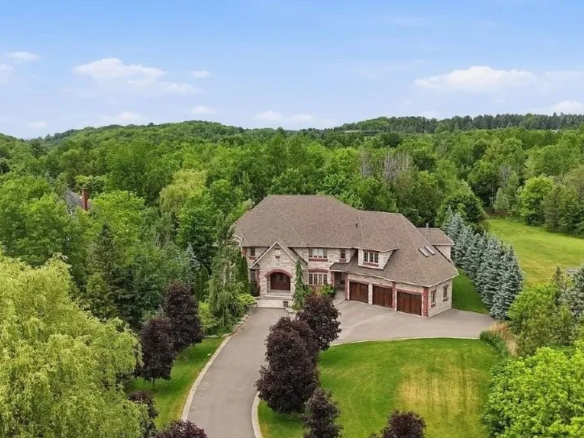

Yes, a US citizen can still purchase property in Canada, but the landscape has become a whole lot trickier. Recent laws, widely known as the Foreign Buyer Ban, have thrown up some significant hurdles, mostly affecting residential homes in the big urban centres. That said, plenty of exemptions and specific property types keep the door wide open for many American buyers. For international property investors, understanding these nuances is key.
Understanding Canada’s Foreign Buyer Ban
For years, the path for a US citizen to purchase property in Canada was pretty clear-cut. The shared border and close economic ties made cross-border real estate a common move for affluent buyers. But with housing affordability spiralling into a crisis, the Canadian government decided it was time for some drastic action.
This led to the Prohibition on the Purchase of Residential Property by Non-Canadians Act. Kicking in on 1 January 2023, this law was aimed at cooling the housing market by reining in foreign investment. The government pointed the finger at foreign capital buying up homes that then sat empty, pushing prices out of reach for locals.
Originally planned for two years, the ban has already been extended and is now set to run until 1 January 2027.
This act completely changes the game for American buyers, especially if you’ve got your eye on prime markets like Toronto or Vancouver. It specifically targets residential properties like detached and semi-detached houses within what are called Census Metropolitan Areas (CMAs) and Census Agglomerations (CAs).
Key Restrictions and Property Types Affected
The heart of the ban is about limiting the purchase of smaller residential homes. If your dream is a US citizen purchase of property in Canada for a single-family home in a major city, you’re likely going to run into these restrictions.
The ban typically applies to:
- Detached Houses: Your classic standalone single-family homes.
- Semi-Detached Houses and Townhomes: Properties sharing one or more walls.
- Residential Condominium Units: Individual flats within a larger building.
- Properties with Three or Fewer Dwelling Units: This includes duplexes and triplexes.
Where you buy matters just as much. The ban isn’t a blanket rule across the whole country; it’s focused on properties inside Canada’s CMAs and CAs, which basically covers all the major cities and their busy surrounding areas.
To make this easier to digest, here’s a quick snapshot of how the ban impacts US buyers.
US Buyer Eligibility Snapshot Under Canada’s Foreign Buyer Ban
| Aspect | Details for US Citizens |
|---|---|
| Primary Restriction | Banned from buying residential properties in Census Metropolitan Areas (CMAs) & Census Agglomerations (CAs). |
| Key Affected Properties | Detached houses, condos, and buildings with 3 or fewer units. |
| Biggest Exemption | Properties located outside CMAs and CAs are not affected. This includes most rural and recreational areas. |
| Building Size Exemption | Buildings with four or more private dwelling units are exempt. |
| Personal Status Exemption | Certain temporary residents (e.g., work permit holders) may be exempt if they meet strict criteria. |
| Ban Duration | Currently in effect until 1 January 2027. |
This table should give you a clear, at-a-glance view of the situation. While the rules seem strict, the exemptions are where the opportunities lie for savvy international property investors.
Crucial Exemptions For American Buyers
Despite the headlines, the legislation has some pretty significant loopholes that create clear pathways for American citizens.
The ban does not apply to:
- Properties Outside CMAs and CAs: This is the big one. Real estate in many rural, resort, and recreational areas is completely fair game. This opens up countless opportunities for holiday homes, cottages, and properties in less populated regions.
- Larger Residential Buildings: The rules don’t cover buildings with four or more private homes, making small apartment blocks a viable investment.
- Certain Individuals: Temporary residents who meet specific conditions, like work permit holders and some international students, might also be exempt.
For many Americans, the dream of owning a lakeside cottage in Muskoka, a ski chalet near Whistler, or a quiet retreat in the Maritimes is still very much alive. The key takeaway is that the rules are designed to steer foreign money away from urban family homes and towards recreational properties and larger multi-unit buildings.
If you are still set on a vibrant city, exploring options in a place like Montreal will require some careful navigation. You might find our guide on things to consider before buying a property in Montreal a good place to start.
Budgeting For Your Canadian Property Purchase

When you start looking at a US citizen purchase of property in Canada, it’s easy to get caught up in the listing price. But that figure is just the beginning of the story. To get this right, you need a meticulous budget that accounts for everything from market swings and regional price gaps to the specific financial hurdles non-residents face.
The Canadian real estate market isn’t static; it’s seen some pretty dramatic shifts recently. Data from the Canadian Real Estate Association (CREA) paints a clear picture: the average home price hit a peak of $816,720 in February 2022, only to correct down to $632,802 by November of the same year. That’s a drop of about 22.5%.
This kind of volatility is exactly why careful planning is non-negotiable. For savvy American buyers, this market cooling can actually open up some strategic doors, especially if you look beyond the overheated city centres. You can dig into more data on market fluctuations and non-resident rules to see how things are trending.
The Urban Versus Rural Cost Divide
The foreign buyer ban has had a fascinating effect. It’s naturally pushed American interest toward rural and resort areas, where properties are not only exempt but often offer far better value for money. The financial gap between a downtown condo and a lakeside cottage is massive.
Take Vancouver, for example. In the city centre, you could be looking at prices around $1,257 per square foot. Move a little further out, and it might drop to $910 per square foot. But venture into the exempt rural or recreational territories, and the numbers become much more attractive.
“We’re seeing a clear trend where savvy US buyers are bypassing the complexities of urban markets,” notes Nick Marr, founder of Homesgofast.com. “They’re discovering incredible value and lifestyle opportunities in Canada’s resort regions and rural communities, areas where their investment is not restricted and often goes much further.”
To put this into perspective, let’s break down what a hypothetical $700,000 property purchase might look like in two very different locations.
Cost Comparison Urban vs Rural Property In Canada
This table gives a snapshot of how dramatically your upfront costs can change based on location, primarily due to the foreign buyer tax.
| Cost Factor | Major Urban Centre (e.g., Vancouver) | Rural/Exempt Area (e.g., The Kootenays, BC) |
|---|---|---|
| Purchase Price | $700,000 | $700,000 |
| Typical Down Payment (35%) | $245,000 | $245,000 |
| Land Transfer Tax (BC) | ~$12,000 | ~$12,000 |
| Foreign Buyer Tax | 20% = $140,000 (If not exempt) | $0 (Not applicable) |
| Legal Fees & Closing Costs | ~$2,500 | ~$2,500 |
| Estimated Upfront Cost | ~$399,500 | ~$259,500 |
The difference is staggering. Avoiding the foreign buyer tax in exempt zones can slash your initial cash outlay, making a US citizen purchase of property in Canada much more achievable in these non-restricted spots.
Decoding The Down Payment And Closing Costs
Beyond the big-ticket items, there’s a list of other expenses you absolutely must factor into your budget. Getting caught off guard at closing is a headache you don’t need.
The 35% Down Payment Requirement
This one is a big deal for Americans. Unless you have permanent residency, Canadian lenders are pretty firm on requiring a minimum down payment of 35%. It’s a significant jump from the 5-20% that Canadian citizens often pay and is probably the single biggest financial hurdle for US buyers who need a mortgage.
A Checklist of Additional Costs
Your upfront cash needs to cover more than just that hefty down payment. Make sure your budget has room for these:
- Provincial Land Transfer Tax (PTT): Every province charges this tax when a property title changes hands. The rate is a percentage of the purchase price and varies by province.
- Legal Fees: You’ll need a Canadian real estate lawyer or notary to handle title searches, review contracts, and register the property. It’s a non-negotiable cost.
- Home Inspection: Always get a professional inspection. It’s your best defence against buying a property with hidden, costly problems.
- Property Appraisal: If you’re getting a mortgage, your lender will insist on an appraisal to make sure the property is worth what you’re paying for it.
- Property Insurance: You must have property insurance arranged and ready to go, effective from your closing date.
- Potential Goods and Services Tax (GST): This tax can apply if you’re buying a brand-new or substantially renovated home, so be sure to check.
Accounting for every one of these items is the key to a smooth and financially sound US citizen purchase of property in Canada. With a crystal-clear budget, you can move forward with confidence and land that perfect Canadian spot—whether it’s a bustling city-adjacent investment or a peaceful rural escape.
Ready to see what your budget can get you? Explore our listings of International Property For Sale to browse homes across Canada’s diverse regions.
Securing A Mortgage And Handling Currency Exchange
Let’s be frank: navigating the financial side of buying property in Canada is often the most challenging part of the whole process for Americans. Finding your dream home is the fun part, but getting your financing in order and managing currency risk demands a sharp, strategic mindset. The lending rules for non-residents in Canada are quite a bit tighter than what you’re likely used to back home.
The biggest initial shock for many is the down payment. Canadian banks are notoriously risk-averse when it comes to foreign nationals. As a result, you’ll almost certainly be asked for a minimum down payment of 35% of the property’s purchase price. This is a significant cash outlay that immediately raises the financial bar.
And that stellar US credit score you’ve worked so hard to build? Unfortunately, it doesn’t carry much weight north of the border. Canadian financial institutions operate on their own credit reporting system, so without a local credit history, they have to rely on other, more tangible metrics to feel comfortable with the loan.
Canadian Mortgage Nuances For Americans
To get a loan approved, Canadian lenders are going to want to see a very clear and detailed picture of your financial health. They’ll ask for extensive paperwork to prove your creditworthiness without the benefit of a local credit file.
You should have the following ready to go:
- Proof of Income: Expect to provide at least two years of US tax returns and letters from your employer.
- Bank Statements: Lenders will want to see proof of the funds for your down payment and closing costs sitting in a Canadian bank account.
- Asset Verification: Be prepared to show a complete picture of your global assets to demonstrate your overall financial stability.
Given how rigorous this process is, many Americans find it much easier to work with a US-based bank that has a strong Canadian presence. Banks like RBC Bank (USA) or TD Bank understand cross-border financing inside and out and may be able to take your US financial history into more comprehensive consideration.
When you’re a non-resident applying for a mortgage in Canada, it’s less about your credit score and more about proving you have substantial liquid assets and a stable income. Lenders need solid evidence that you can handle the investment without them relying on a credit history they can’t easily verify.
This can feel like a complex puzzle, and getting good advice is key. Our broader guide on how to buy property abroad offers more insights that can help round out your research.
Managing Currency Exchange Volatility
One financial factor that can catch buyers off guard is the ever-changing exchange rate between the US dollar (USD) and the Canadian dollar (CAD). This isn’t a minor detail—it can swing the cost of your down payment, closing fees, and even your future mortgage payments by tens of thousands of dollars.
Here’s a real-world example. Say you’ve agreed to buy a property for CAD $800,000. If the exchange rate is 1.35 CAD to 1 USD, the price tag is about USD $592,500. But if the rate shifts to 1.40 before you transfer your funds, that price drops to USD $571,400. That’s a saving of over $21,000! Of course, an unfavourable shift could just as easily add that amount to your cost.
Strategies To Mitigate Currency Risk
Just waiting and hoping for a good rate on the day you need to transfer funds is a high-stakes gamble. A much smarter approach involves using specialist tools to protect your money from market whims.
- Forward Contracts: This is the go-to strategy for serious investors. A forward contract lets you lock in today’s exchange rate for a transaction you’ll make in the future. You can secure the rate for your down payment months ahead of time, completely removing any uncertainty.
- Limit Orders: If you have a target rate in mind and think the market might get there, you can set up a limit order. This will automatically trigger the currency exchange if and when the rate hits your desired number, so you don’t have to watch the markets 24/7.
- Specialist Currency Brokers: Ditching your high-street bank for a dedicated foreign exchange broker is a wise move. They almost always offer better exchange rates and much lower transfer fees, and they truly understand the intricacies of large international property deals.
Mastering your mortgage and currency exchange strategy is absolutely crucial for a successful property purchase in Canada. By planning for the high down payment and actively managing your currency exposure, you’ll protect your investment and make a financially sound entry into the Canadian property market.
Navigating The Legal Process From Offer To Closing
The Canadian property buying journey has its own rhythm, and it can feel quite different from what you might be used to in the States. Once you’ve found the perfect spot and have your financing lined up, the legal machinery kicks in. This is where your intention to buy becomes a solid, binding reality.
For any successful US citizen purchase of property in Canada, getting this part right is absolutely critical.
Unlike some US states where one agent might wear multiple hats, the Canadian system requires you to bring in a legal expert. You’ll need to hire either a real estate lawyer or a notary (this is common in Quebec) to handle the legal heavy lifting. Their job is to protect you—they’ll scrutinise every document, run title searches, and make sure the property is clear of any debts or claims before your money is on the line.
Making The Offer And Adding Conditions
Your first official move is to submit an Agreement of Purchase and Sale. Once the seller accepts it, this becomes a legally binding contract. It details everything from the price and closing date to, most importantly, any conditions that need to be met for the deal to go through.
As a US buyer, these conditions (often called “subjects” in provinces like British Columbia) are your best friend. They build in a crucial window of time for you to do your homework without being locked into the purchase.
Here are the conditions you absolutely must consider:
- Financing Condition: This makes the offer dependent on you getting your mortgage approved. If for some reason the bank says no, you can walk away with your deposit, no strings attached.
- Home Inspection Condition: This gives you the right to have a professional inspector go through the property with a fine-tooth comb. If they uncover major problems, you have the power to renegotiate the price or back out of the deal.
- Document Review: If you’re buying a condo, this is non-negotiable. It gives your lawyer the chance to review the strata or condo corporation’s financial health, meeting minutes, and bylaws to spot any red flags.
From Deposit To Title Transfer
With an accepted offer on the table, you’ll need to pay a deposit. This is usually 5-10% of the purchase price and is held safely in the seller’s real estate brokerage trust account. It’s not part of your down payment, but it shows you’re a serious buyer.
From here, your lawyer takes the reins. They’ll manage the entire closing process, known as conveyancing, which involves preparing and registering all the documents to officially transfer ownership to you. If you want to dive deeper into what happens behind the scenes, our guide explains the conveyancing process for buying a property in much more detail.
On closing day, your lawyer is a busy person. They will:
- Collect the mortgage funds from your lender.
- Receive your down payment and closing costs.
- Pay the seller the full amount.
- Register the property’s title in your name at the provincial land registry office.
The All Important Certificate Of Compliance
Here’s a crucial piece of advice for any non-resident owner: get familiar with the Certificate of Compliance. You don’t need it to buy, but you will absolutely need it when you decide to sell.
This certificate is issued by the Canada Revenue Agency (CRA) and confirms you’ve made arrangements to pay any Canadian capital gains tax you owe from the sale.
Without this certificate, the buyer’s lawyer is legally obligated to withhold a hefty chunk of the sale price—often 25-50% of the gross proceeds—and send it straight to the CRA. Getting the certificate ahead of time ensures a smooth, predictable closing when you eventually sell.
It’s smart to chat with your lawyer about this right from the start, so you’re aware of your future obligations. While you’re at it, it’s also worth understanding how to set up a Power of Attorney for Property in Ontario. This can be a lifesaver if you can’t be in Canada to sign documents, allowing a trusted person to act on your behalf. A little proactive legal planning like this makes all the difference in a successful international property investment.
Managing Your Tax Obligations In Both Countries
Dipping your toes into the Canadian property market is an exciting step, but it also means navigating a new financial landscape. As a US citizen, your us citizen purchase of property in canada requires you to stay on the right side of two different tax authorities: the Canada Revenue Agency (CRA) and the Internal Revenue Service (IRS). Getting this right from day one is absolutely key to a successful investment.
First things first, owning a property in Canada automatically brings you under Canadian tax law. This starts with the annual property taxes you’ll pay to the local municipality, which work much like they do in the US. But the financial responsibilities don’t end there, particularly in certain provinces.
This visual breaks down the three core stages of buying property, from making an offer to getting the keys.
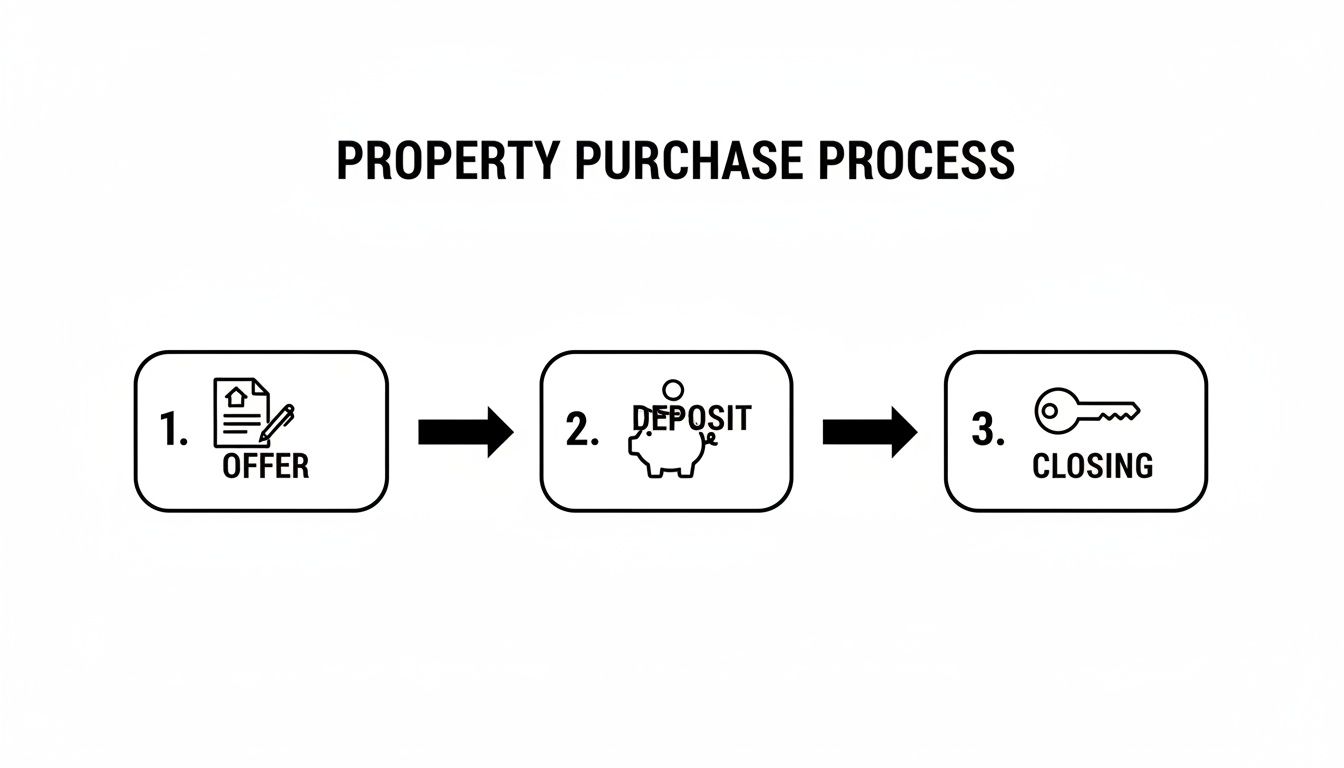
Each of these steps comes with its own set of legal and financial duties that you need to manage carefully, especially where taxes are concerned.
Provincial Taxes To Watch For
Some provinces have introduced specific taxes aimed at foreign buyers to help cool down their local housing markets. The big one is Ontario’s Non-Resident Speculation Tax (NRST). This is a hefty tax, currently set at 25% of the purchase price, that applies to properties bought by foreign nationals in the province.
British Columbia has a similar tax, the Additional Property Transfer Tax, for foreign buyers in certain areas. It’s vital to research these provincial taxes because they can dramatically inflate your upfront costs and need to be built into your budget. Not all provinces have them, though—Alberta, for instance, has no such foreign buyer tax.
The Tax Implications Of Selling Your Property
Your tax duties really come into focus when it’s time to sell your Canadian property. As a non-resident, Canada will tax you on any capital gain—the profit you make from the sale.
The CRA has a very specific process for this. When a non-resident sells a property, the buyer’s lawyer is legally required to withhold a portion of the total sale price (often 25% or more) and send it directly to the CRA.
This withholding isn’t your final tax bill. Think of it more like a security deposit to cover any potential capital gains tax you might owe. To get the excess funds back, you must file a Canadian tax return for the sale and get a Certificate of Compliance from the CRA.
If you don’t handle this process correctly, you can face major delays and headaches trying to access the proceeds from your sale. It’s a critical part of managing your US citizen purchase of property in canada.
US Tax Reporting Your Global Obligations
As a US citizen, you’re taxed on your worldwide income. This means the IRS will want to know about the sale of your Canadian property and any rental income it might have generated. You’ll need to report the capital gain on your US tax return.
This immediately brings up the worry of double taxation. Nobody wants to pay tax twice on the same profit. Thankfully, there’s a long-standing agreement in place to prevent that.
Leveraging The Canada US Tax Treaty
The Canada-US Tax Treaty is designed specifically to stop you from being taxed twice on the same income. The treaty allows you to claim a foreign tax credit on your US return for the taxes you’ve already paid to Canada on the property sale.
For instance, if you paid capital gains tax in Canada, you can generally credit that amount against what you would owe the IRS. While you still have to report to both countries, this mechanism ensures you won’t pay the full tax bill in both.
For clear, comprehensive guidance on these cross-border complexities, looking into specialized real estate accounting services is a smart move. Expert advice ensures you’re using the treaty to your advantage and meeting all your obligations without a hitch. A proactive approach to tax planning is essential for any serious international investor.
FAQs: Buying Property in Canada as a US Citizen
Can I use my US credit score to get a mortgage in Canada?
No, not directly. Canadian lenders operate within their own credit reporting system and will not see your US score. They will rely on other financial indicators, such as proof of income, verifiable assets, and a substantial down payment—typically 35% or more for non-residents—to assess your application.
What are the penalties for violating the foreign buyer ban?
The consequences are severe. Individuals found guilty can face a fine of up to CAD $10,000. More significantly, a Canadian court can order the forced sale of the property. In such a sale, you would only receive your original purchase price back, with any capital appreciation being forfeited to the Government of Canada.
Do I need to be physically in Canada to close the deal?
Not necessarily. It is common for overseas buyers to grant a Power of Attorney to their Canadian real estate lawyer. This legal document authorises your lawyer to sign the closing documents and finalise the transaction on your behalf, making a remote closing entirely feasible.
Are all properties in Canada subject to the foreign buyer ban?
No. The ban is specifically targeted and has significant exemptions. It does not apply to properties with four or more residential units, nor does it affect properties located outside of designated urban zones known as Census Metropolitan Areas (CMAs) and Census Agglomerations (CAs). This leaves Canada’s vast rural, resort, and recreational areas open for investment. You can explore a wide range of exempt International Property For Sale on our platform.
What are the main tax considerations for a US citizen selling Canadian property?
When you sell, you will be liable for Canadian capital gains tax. The Canada Revenue Agency (CRA) requires a withholding of a significant portion of the sale price (often 25%) until you file a Canadian tax return and receive a Certificate of Compliance. As a US citizen, you must also report the gain to the IRS. However, the Canada-US Tax Treaty allows you to claim a foreign tax credit to prevent double taxation.
About Homesgofast.com
HomesGoFast.com is a leading international property website, established in 2002, helping homeowners, real estate agents, and developers reach overseas buyers. Featuring thousands of listings from over 50 countries, the platform connects global property seekers with homes, apartments, villas, and investment opportunities worldwide.
Looking for expert mortgage guidance? Get international property mortgage advice here:
👉 https://homesgofast.com/mortgages-overseas/
Explore more overseas homes for sale at our global partner site:
👉 https://homesgofast.com/overseas-property/
Looking to sell real estate to foreign buyers? Go to
https://homesgofast.com/sell-overseas-property/