 by
by 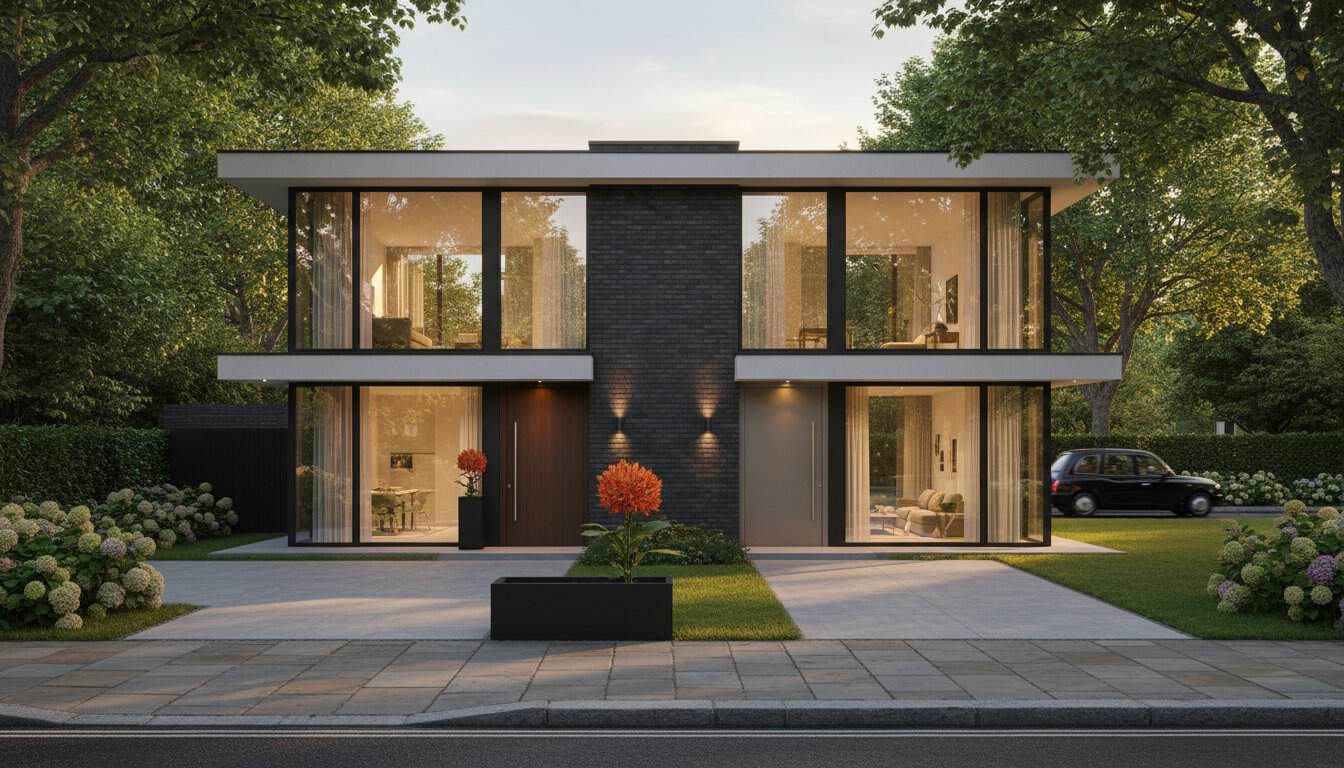
Your next home shouldn’t just be a place to sleep; it should be the primary engine of your wealth. Buyers are increasingly looking for properties that work harder, and the dual-occupancy model is the clear winner for 2026. You’ve likely realized that traditional single-family homes can feel like a financial drain in a high-interest climate. It’s natural to feel anxious about managing tenants or confused by the difference between a townhouse and a duplex for sale, but these hurdles shouldn’t stop your progress.
Key Takeaways
- Learn the essential differences between duplexes, twin homes, and townhouses to ensure you select the right property structure for your financial goals.
- Discover the “house hacking” strategy to maximize your investment potential by living in one unit while rental income helps cover your mortgage.
- Identify high-growth global hotspots and understand how to navigate foreign ownership rules when searching for a duplex for sale.
- Evaluate the lifestyle trade-offs and financial benefits of dual-occupancy homes to determine if they are the right entry-level asset for your portfolio.
- Master practical tools for vetting international listings and setting up targeted alerts to secure high-demand properties in competitive markets.
Understanding the Duplex: More Than Just a Two-Family Home
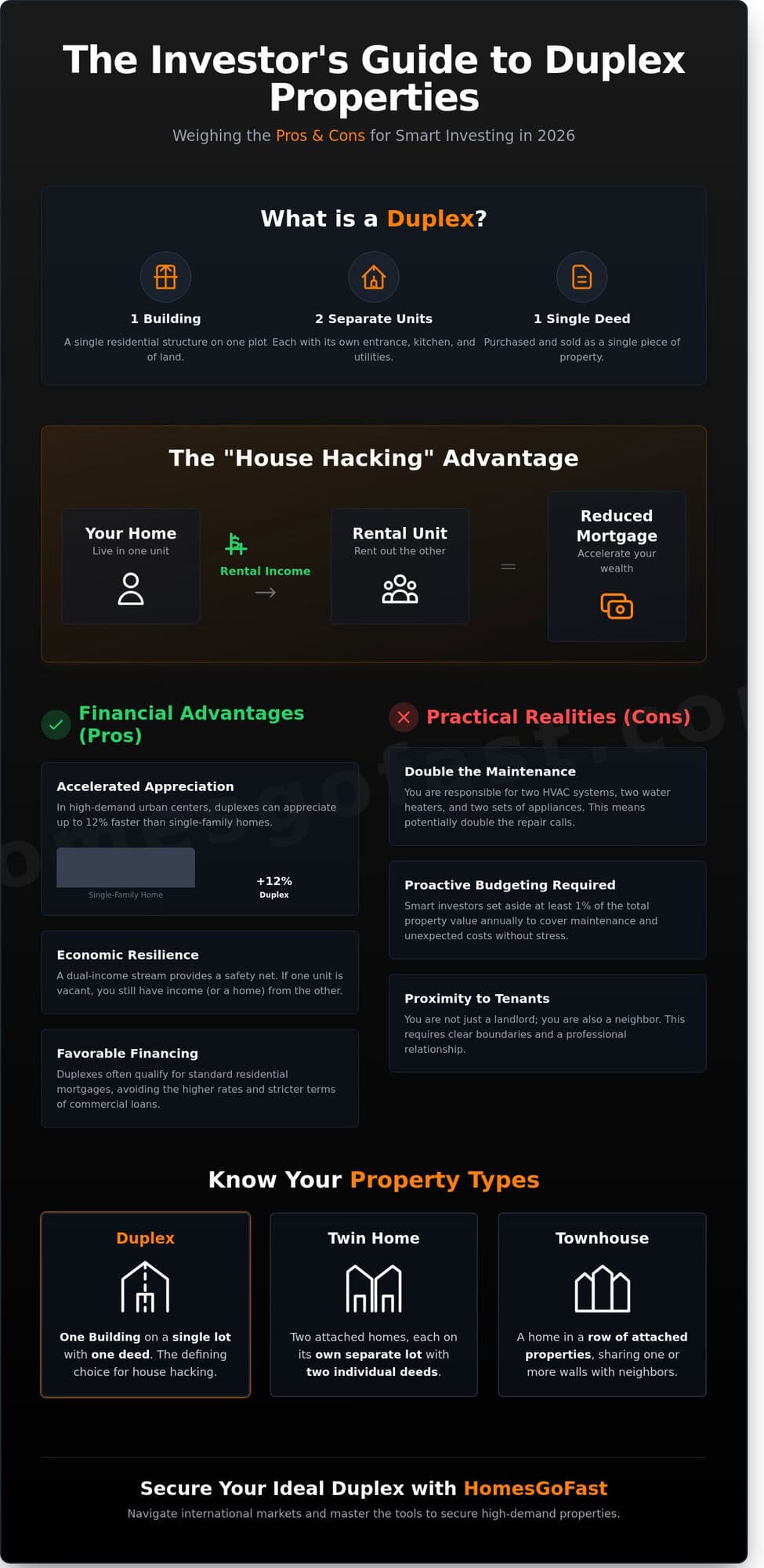
Finding a duplex for sale is a strategic move for any smart investor or homebuyer. A duplex is a single residential building containing two separate living units. Each unit has its own independent entrance, kitchen, and bathroom. You’ll find these properties listed frequently as dual-occupancy homes. By 2026, these structures have become a primary solution to global urban housing shortages. They provide density without the massive scale of apartment blocks. To get a foundational grasp of the technical layout, you can research What is a Duplex? to see how definitions vary across different international markets.
To better understand this concept and its investment potential, watch this helpful video:
Beginners often confuse a duplex with a twin home or a townhouse. The difference is simple but vital. A duplex sits on a single lot under one deed. A twin home looks identical but features two separate titles for each side of the building. Townhouses are different; they share walls with multiple neighbors in a row. Investors are attracted by the efficiency of a single structure. You manage one roof and one foundation while collecting two rent checks. It’s a powerful way to build equity fast.
How a Duplex Differs from Other Multi-Family Properties
Scaling up to a triplex or fourplex often moves you into the complex world of commercial financing. A duplex usually qualifies for standard residential mortgage rates. This keeps your entry costs lower and your ROI higher. The legal definition usually centers on the single deed. This makes the purchase process much faster than buying two separate houses. International buyers are increasingly looking for overseas property in this specific category. It offers a unique value proposition; you can live in one unit while your tenant pays your mortgage. This “house hacking” strategy is a top trend for 2026.
Common Architectural Styles of Duplexes Worldwide
The Pros and Cons of Buying a Duplex for Sale in 2026
Choosing a duplex for sale requires a shift in mindset from traditional homeownership. You aren’t just buying a place to live; you’re acquiring a functioning income asset. This “smart advisor” approach forces you to weigh the immediate financial gains against the reality of sharing your property boundary with a tenant. In high-demand urban centers, these properties often appreciate 12% faster than single-family homes because they offer higher density on limited land.
When evaluating your options, reviewing the Pros and Cons of Multi-Family Homes provides a clear framework for your decision. You must decide if the proximity to a neighbor is a fair trade for the massive reduction in your monthly housing expenses.
Financial Advantages: Rental Income and Tax Benefits
The biggest draw is mortgage subsidization. By renting out one unit, your tenant effectively pays a significant portion of your primary residence costs. In competitive markets, the rental income can cover up to 75% of your monthly mortgage payment. This cash flow accelerates your path to financial freedom and allows you to qualify for larger loans than you might otherwise manage.
- Tax Efficiency: You can deduct a portion of the mortgage interest, property taxes, and maintenance costs as business expenses.
- Depreciation: The rental side of the property allows for annual depreciation write-offs, which lowers your taxable income.
- Equity Growth: A duplex acts as a forced savings account by using tenant rent to build your personal wealth through consistent principal reduction.
Lifestyle Considerations: Privacy vs. Proximity
The main drawback is the “always-on” nature of being a resident landlord. If a pipe bursts at 2 AM in the next unit, the tenant knows exactly where to knock. You must establish clear boundaries and professional communication channels early on. If you prefer a hands-off approach, you can browse international property listings to find professional management services that can handle these interactions for you.
The Investor’s Perspective: Is a Duplex the Ultimate Entry-Level Asset?
Investors are attracted by the lower per-unit cost that dual-occupancy properties offer. When you search for a duplex for sale, you’re essentially looking at a wholesale real estate play. In many metropolitan markets, the cost per “door” in a duplex is 15% to 25% lower than a comparable detached single-family home. This price gap allows you to build a portfolio faster without the heavy capital requirements of large apartment blocks.
While this guide covers global trends, investors focusing on specific high-growth regions like North Texas can benefit from the M&A and business brokerage expertise of firms like Bravo Kilo Advisors to help scale their property-based enterprises.
The Concept of House Hacking Explained
To find the right property, you should analyze global market trends to identify areas where rental demand outpaces housing supply. Look for neighborhoods with a “walk score” above 70 and proximity to major employment hubs. Buyers are increasingly looking for properties near transit lines, as these units command a 10% premium in rental price. Once you secure a duplex for sale in a high-growth zone, your tenant effectively pays off your investment.
Calculating ROI and Rental Yields on Multi-Unit Properties
Successful investing relies on hard data rather than gut feelings. You must master two primary metrics: the Cap Rate and the Gross Rent Multiplier (GRM). The Cap Rate is calculated by taking your Net Operating Income (NOI) and dividing it by the purchase price. A healthy cap rate for a duplex in a stable market typically ranges between 5% and 8%.
- Gross Rent Multiplier: Divide the property price by the total annual rent. A lower number indicates a better deal.
- The 1% Rule: Aim for a monthly rent that is at least 1% of the total purchase price.
- Maintenance Reserves: Set aside 10% of your gross income for repairs and vacancy.
A duplex remains the most resilient asset class during economic shifts. If one unit becomes vacant, you still have 50% of your income flowing in. This safety net is why 68% of seasoned investors recommend multi-family units for those starting their journey in overseas property markets. It’s about risk mitigation and consistent cash flow.
Navigating the Global Market: Where to Find the Best Duplexes
Finding a duplex for sale requires you to look beyond your local borders. Savvy investors are currently shifting focus toward regions where dual-occupancy models solve local housing shortages. In 2024, institutional investors increased their share of multi-family assets by 12% across Europe, signaling a robust trend toward high-density living. You need to weigh the stability of traditional markets against the lower entry points found in emerging hotspots.
Ownership rules vary significantly by territory. You should verify if your target country allows non-residents to hold title to multi-unit residential property. For instance, some nations require a local bank trust, while others offer “Golden Visas” for property investments over specific thresholds. Proximity to infrastructure is your best safeguard for rental demand. Properties located within 800 meters of a major transport hub typically command 15% higher rental yields than those in isolated areas.
- Rental Demand: Target areas with growing expat communities or digital nomad hubs.
- Flexible Living: Buyers are increasingly looking for properties that allow for multi-generational living or a separate, private home office.
- Infrastructure: Ensure the location is within a 45-minute drive of an international airport to maintain high occupancy rates.
Top European Markets for Dual-Occupancy Homes
Spain remains a top choice for lifestyle and profit. You can find excellent spain property options that feature coastal duplexes with high holiday-let potential. These units often provide annual yields between 5% and 8% in regions like Alicante or Malaga.
Emerging Opportunities in the Americas and Beyond
Central America is a growing market for expat retirees. Panama and Costa Rica offer modern infrastructure and favorable tax laws. A duplex here allows you to live in one unit while the other generates income from the booming tourism sector. It’s a strategy that provides both a home and a retirement plan.
Ready to explore your options? You can browse thousands of overseas property listings to find your perfect dual-occupancy home today.
How to Secure Your Ideal Duplex with HomesGoFast
Securing a duplex for sale requires a strategy that balances speed with careful due diligence. You need more than just a search bar; you need a system that alerts you to opportunities before the general public reacts. By setting up targeted alerts on HomesGoFast, you gain a first-mover advantage in high-demand markets across Europe, North America, and the Caribbean. This proactive approach is essential in 2026, where high-yield properties often sell within 14 to 21 days of being listed.
Using Global Property Portals to Your Advantage
Our global property portal is designed for the specific needs of multi-unit investors. You can filter by property type to isolate dual-occupancy homes, ensuring your search remains focused and efficient. Buyers are increasingly looking for properties that combine lifestyle with income, such as mountain top homes for sale that provide stunning views alongside separate guest quarters. This global perspective helps you compare yields in different jurisdictions instantly, giving you the clarity needed to make a sound investment.
The Agent Pro Account bridges the gap between you and ground-level experts. These professionals handle the heavy lifting by verifying property details that you cannot see from a screen. They provide local context, such as upcoming infrastructure projects or school district changes, that impact long-term ROI. Transitioning from a casual browser to a serious buyer happens when you have a trusted local representative to submit your first international offer.
Tips for International Buyers and Overseas Investors
- Verify Ownership: Confirm “Freehold” vs “Leasehold” status with a local notary.
- Utility Separation: Ensure there are separate meters for electricity and water for both units.
- Rental History: Review the last 24 months of verified rental income if the property is an existing investment.
- Zoning Laws: Check local regulations for short-term rental permits if you plan to use platforms like Airbnb.
- Closing Costs: Budget for taxes and fees, which typically range from 5% to 15% of the purchase price depending on the country.
Taking the leap from browsing to buying is easier when you have a structured plan. Once you find a listing that fits your criteria, use our platform to request a virtual tour or a detailed survey. Making your first international offer is a significant milestone; ensure it is contingent on a satisfactory legal review and physical inspection to protect your capital.
Secure Your Future in the 2026 Duplex Market
Buying a duplex isn’t just about finding a home; it’s about building a resilient financial portfolio. You’ve seen how these properties maximize rental yields while offering the flexibility of multi-generational living. Investors are attracted by the dual income streams that provide a safety net against market fluctuations. Buyers are increasingly looking for smart entry points into high-growth regions where land value continues to climb. Your choice to enter this market now positions you ahead of the curve as urban density increases global demand for dual-occupancy housing.
Finding the perfect duplex for sale requires a partner who understands the nuances of international real estate. Since 2002, HomesGoFast has connected buyers and sellers across the globe with confidence. You can access expert guides for over 50 countries to ensure your investment is backed by reliable local knowledge. With thousands of global property listings at your fingertips, the right opportunity is closer than you think. Our platform simplifies the process, reducing the stress of cross-border transactions through clear, actionable data.
Just as you would seek professional management for a high-yield property, ensuring the long-term value of your other investments requires expert attention; for those maintaining premium vehicles, Surrey Detailing provides the specialized protection needed to keep assets in showroom condition.
Don’t let the complexity of overseas markets hold you back from achieving your property goals. Take advantage of our two decades of experience to streamline your search and secure a high-performing asset today.
Browse the latest duplexes and international listings on HomesGoFast
Frequently Asked Questions
Is a duplex considered a single-family home for mortgage purposes?
Lenders classify a duplex as a multi-family residential property rather than a single-family home. This distinction is vital because financing for a duplex for sale often follows different debt-to-income requirements. Most major institutions, including Fannie Mae, categorize buildings with two units as multi-family assets. This allows you to count 75% of potential rental income toward your mortgage qualification, making higher loan amounts more accessible for many buyers.
Can I buy a duplex with an FHA loan or similar low-deposit schemes?
You can absolutely secure a duplex using an FHA loan with a down payment as low as 3.5%. This strategy requires you to occupy one of the units as your primary residence for at least 12 months. It’s a popular choice for investors looking to maximize investment potential while minimizing upfront capital. Many buyers use this path to enter the market before transitioning to larger portfolios.
What is the average price difference between a duplex and a single-family home?
A duplex typically carries a price tag 15% to 25% higher than a single-family home in the same postal code. While the initial purchase price is higher, the cost per square foot is often lower because you’re sharing land and infrastructure. Investors are attracted by the dual income stream, which frequently results in a higher net yield. This makes the property a more resilient asset during market fluctuations.
How do I handle utilities in a duplex with two separate units?
The most efficient way to manage utilities is through separate metering for electricity, gas, and water. If your property isn’t already split, retrofitting meters costs between $1,500 and $4,000 per utility line based on 2024 contractor averages. This setup ensures tenants pay for their own consumption directly, which reduces your monthly overhead. It also prevents common disputes between neighbors regarding the fair distribution of shared utility bills.
Is it better to buy a side-by-side or an up-and-down duplex?
Side-by-side duplexes are generally superior for long-term value because they offer better privacy and reduced noise transfer. Property management data shows that noise-related tenant turnover is 40% lower in side-by-side configurations compared to up-and-down units. Buyers are increasingly looking for these layouts to provide a house-like feel for both the owner and the tenant. This layout typically supports higher rental rates and stronger resale interest.
Do duplexes have higher insurance premiums than standard houses?
Insurance premiums for a duplex are usually 15% to 30% higher than those for a standard single-family residence. This increase covers the additional liability risks associated with having tenants on the property. You’ll need a landlord policy for the rented unit and a standard homeowner policy for your side. Alternatively, you can secure a hybrid multi-family policy to ensure full protection against structural damage and the loss of rental income.
How do I legally screen tenants when living in the other half of the duplex?
What happens if I want to sell only one half of the duplex later?
Selling only one half of a duplex for sale requires you to legally subdivide the lot or convert the property into a condominium. This process involves hiring a surveyor and paying legal fees that typically range from $5,000 to $15,000. Once the titles are separated, you can sell the units individually. This strategy often increases the total combined value of the asset compared to selling it as a single block.