

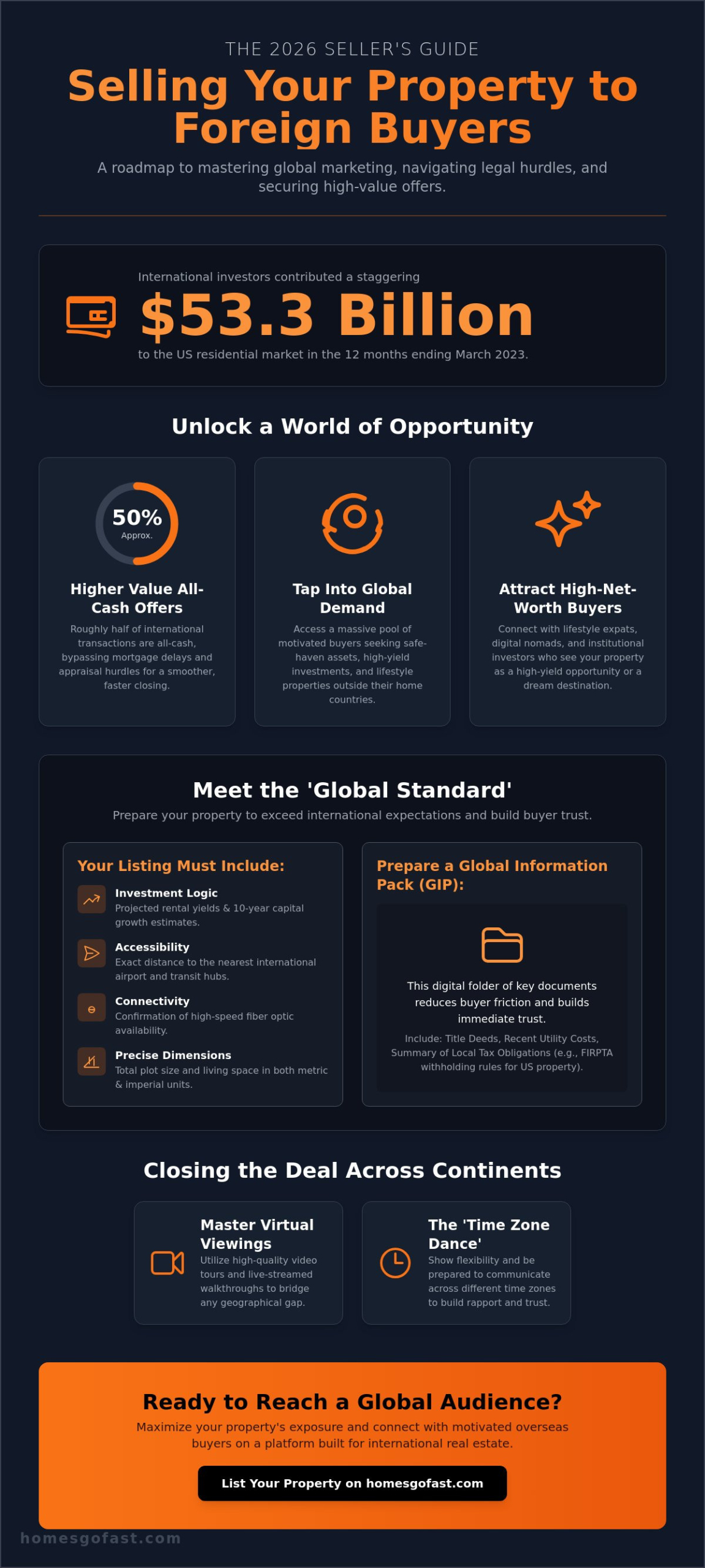
Did you know that international investors contributed $53.3 billion to the US residential market alone in the 12 months ending March 2023, according to the National Association of Realtors? If your local market feels stagnant, you aren’t alone in feeling frustrated by slow lead times and low-ball offers. You likely realize that your home has massive potential, yet local buyers just aren’t biting. This 2026 guide reveals exactly how to sell property to foreign buyers by targeting high-net-worth demographics and utilizing international property listings that reach a truly global audience.
Investors are increasingly looking for stability and ROI outside their own borders, often arriving with all-cash offers that simplify the closing process. We’ll show you how to navigate cross-border regulations with confidence and explain where to list your overseas property to ensure it attracts the right attention. This guide provides a complete roadmap for mastering global marketing, navigating legal hurdles, and securing the high-value offers your property deserves.
Key Takeaways
- Learn why international investors are increasingly looking for safe-haven assets in 2026 and how to position your home as a high-yield opportunity.
- Discover the essential strategies for how to sell property to foreign buyers by mastering global listing standards and using cultural staging to attract international interest.
- Identify your ideal target market and leverage high-traffic advertising platforms to maximize your exposure and reach a massive audience of motivated overseas buyers.
- Navigate the complexities of cross-border transactions, from understanding FIRPTA and capital gains taxes to managing legal requirements for non-resident sellers.
- Secure high-value cash offers by mastering virtual viewing techniques and the “Time Zone Dance” to build trust with buyers in any hemisphere.
Understanding the Global Shift: Why Sell to Foreign Buyers in 2026?
Selling your home in 2026 means looking far beyond your local neighborhood. The buyer pool has transformed into a sophisticated global network. You aren’t just selling to the family down the street; you’re reaching lifestyle expats and institutional investors chasing high yields. Buyers are increasingly looking for stability in an unpredictable world. They view property as a safe-haven asset that preserves wealth across borders.
Historical data, such as Foreign investment in United States real estate, shows that international capital flows toward markets offering transparency and legal protection. This trend has accelerated into 2026 as global wealth becomes more mobile and digital connectivity makes cross-border transactions seamless.
To better understand how these buyers think, watch this helpful video:
One of the biggest perks of learning how to sell property to foreign buyers is the “Cash is King” reality. In 2026, roughly 50% of international transactions bypass traditional bank financing. This removes the stress of mortgage delays and appraisal hurdles that often sink local deals. Utilizing international real estate listings is the most effective way to bridge the gap between your local inventory and this massive global demand.
The Motivation of the International Investor
Smart investors often use overseas property for currency hedging. If their local currency is weakening, they want to lock in value in a stronger zone. Many are also driven by the “Golden Visa” effect, where property purchases grant residency rights in specific regions. Safe Haven Real Estate is defined as any property investment used as a strategic hedge against local inflation and political instability.
Top Markets Attracting Foreign Capital
Investors are attracted by high rental yields in emerging digital nomad hubs. We’ve seen a surge in interest for European coastal properties and Central American retreats. For instance, the enduring popularity of Italian homes for sale and Spanish villas shows that buyers still prioritize lifestyle and culture alongside capital growth. These markets offer a blend of historical charm and modern investment potential that local markets often lack.
Preparing Your Property for an International Audience
Selling to an international buyer requires a shift in perspective. You aren’t just selling a home; you’re selling a lifestyle and a financial asset. To succeed in how to sell property to foreign buyers, you must meet the “Global Standard.” This means providing a level of detail that exceeds local market expectations.
Buyers are increasingly looking for transparency and data-driven listings. Your Global Standard checklist should include:
- Investment Logic: Provide projected rental yields and 10 year capital growth estimates.
- Accessibility: List the exact distance to the nearest international airport and major transit hubs.
- Connectivity: Confirm high-speed fiber optic availability, which is a priority for digital nomads and remote executives.
- Precise Dimensions: Include total plot size and internal living space in both metric and imperial units.
A Global Information Pack (GIP) is your best tool to reduce buyer friction. This digital folder should contain title deeds, recent utility costs, and a summary of local tax obligations. For example, if you are selling a US-based asset, including information on IRS FIRPTA withholding rules helps foreign investors understand their immediate tax liabilities. Providing this clarity upfront builds the trust necessary to close a cross-border deal.
Visual Excellence: Moving Beyond Basic Photography
In 2026, static photos are merely the starting point. 4K drone footage and 3D walkthroughs are non-negotiable for overseas buyers who may not visit the property in person. A 2024 industry report indicated that 75% of cross-border buyers expect a virtual tour before they even consider an inquiry. These tools allow prospects to understand the topography and the flow of the home from thousands of miles away.
Floor plans are equally critical. International buyers demand precise measurements in both meters and feet to compare the value against their local markets. Virtual staging is a game-changer for unfurnished international properties, allowing you to showcase multiple interior styles that appeal to different cultural aesthetics without the cost of physical furniture. If you are ready to reach this audience, you can sell overseas property by leveraging these high-end visual standards on a global platform.
Listing Translation and Localization
Professional localization is the hallmark of a premium listing. While Google Translate has improved, it often fails to capture the nuanced “prestige” language required for high-end real estate. Professional translation ensures that your property’s unique selling points resonate emotionally with specific demographics, whether they are in Shanghai, London, or Dubai.
Localization also involves “unit conversion” beyond just floor space. You should translate currency, local tax rates, and even climate data into formats the buyer understands. HomesGoFast handles multilingual exposure automatically, ensuring your property reaches non-English speakers in their native language while maintaining the integrity of your marketing message. This approach removes the language barrier and positions you as a sophisticated, global seller.
Marketing Strategies to Reach Overseas Investors
Selling your home internationally requires more than just a local listing. You need a targeted roadmap to find the right eyes. First, identify your specific demographic. If you’re selling a gite in the Dordogne, your primary market is likely the UK, where buyers sought over 12% of rural French properties in recent years. Conversely, Panama condos attract US retirees looking for the Qualified Investor Visa. Knowing your audience allows you to tailor your messaging to their specific lifestyle goals.
Once you’ve identified your target, leverage high-traffic property advertising platforms to maximize reach. This is a critical component of how to sell property to foreign buyers because it puts your home in front of active searchers across multiple continents. You should also utilize social media “Geo-fencing.” This technique allows you to target ads specifically to wealthy zip codes in cities like Manhattan, London, or Dubai. It ensures your marketing budget isn’t wasted on disinterested audiences. Finally, engage with buyer agents and relocation specialists in the target country. These professionals act as gatekeepers for high-net-worth individuals moving abroad and can fast-track your sale.
The Power of Global Property Portals
International portals like HomesGoFast are essential because they aggregate leads from dozens of international sources simultaneously. Instead of managing ten different listings, you manage one that distributes everywhere. To stay above the noise in competitive markets, use “Featured” status. This keeps your listing at the top of search results, where roughly 70% of user clicks occur. If you’re ready to secure your spot, you can view owner pricing to get the global exposure your property deserves.
Building Trust Through Transparency
International transactions involve high stakes and distance. Buyers are increasingly looking for sellers who provide upfront structural surveys to eliminate the fear of hidden costs or repair bills. In 2026, transparency is your best sales tool. Use “Verified Listing” badges on portals to combat the fear of international scams. This simple step builds immediate credibility with someone thousands of miles away.
Investors are attracted by clear data and social proof. Showcase successful cross-border sales in your neighborhood to demonstrate that the process is straightforward. When an investor sees that others have successfully navigated the local legal system, their confidence in your property grows. You can sell overseas property more effectively by providing a digital pack that includes floor plans, tax obligations, and recent utility costs. This level of detail reduces friction and speeds up the decision-making process for serious buyers.
Legal, Tax, and Financial Considerations
Learning how to sell property to foreign buyers requires a solid grasp of cross-border financial regulations. In 2026, the global tax landscape is more transparent than ever, meaning you can’t afford to overlook compliance. If your property is in the U.S., you must understand the Foreign Investment in Real Property Tax Act (FIRPTA). This law typically requires the buyer to withhold 15% of the gross sales price to ensure the IRS receives its share from foreign sellers. Many European and Asian jurisdictions have implemented similar withholding regimes to prevent capital flight before tax obligations are met.
Investors are attracted by jurisdictions that offer clear, predictable tax structures. You should provide prospects with detailed information on capital gains tax on sale of property to help them calculate their net ROI. In 2026, many countries have updated their non-resident tax brackets, often removing the primary residence exemptions available to locals. To keep the deal moving, hire a specialized international conveyancer. These professionals bridge the gap between different legal systems, ensuring that contracts meet the standards of both the seller’s and the buyer’s home countries.
Compliance is the next hurdle. Anti-Money Laundering (AML) and Know Your Customer (KYC) requirements have become more rigorous. You’ll likely need to verify the buyer’s source of wealth using blockchain-verified digital IDs or certified bank records. Buyers are increasingly looking for sellers who have their documentation ready, as this reduces the risk of the transaction being flagged or delayed by regulatory bodies.
Handling Currency Fluctuations
Currency volatility is a silent deal-killer. A 3% shift in the exchange rate during a 60-day closing period can cost a buyer thousands. You can protect the sale price by suggesting Currency Forward Contracts. These allow both parties to lock in a specific rate for up to 12 months, providing financial certainty. Encourage your buyers to use specialist FX brokers rather than retail banks. Traditional banks often charge margins of 3% to 4% above the mid-market rate, while specialist brokers can reduce these costs significantly, making your property more affordable without you dropping the price.
Ownership Structures for Foreigners
Foreign ownership isn’t always a simple fee-simple arrangement. Some regions enforce strict coastal zone laws or agricultural land limits. For example, Mexico uses bank trusts for coastal land, while other nations may link ownership to specific investment visas. It’s helpful to contrast these with more straightforward markets. You’ll find that French homes for sale often follow a very transparent, notary-led process that is easier for foreigners to navigate. Some buyers may prefer using holding companies or trusts to acquire international assets for better privacy and inheritance planning. When you master how to sell property to foreign buyers, you transform these complex legal steps into a seamless experience for your client.
Navigating the Transaction: From Enquiry to Closing
Success in international real estate depends on your ability to bridge the gap between a digital enquiry and a physical deed. If you are researching how to sell property to foreign buyers, you’ll find that 2026 buyers prioritize speed and digital accessibility. The process is as much about logistics as it is about the bricks and mortar. You need to be responsive, transparent, and tech-savvy to maintain momentum across borders.
Managing the “Time Zone Dance” is your first challenge. Investors are attracted by sellers who respect their local time. Use scheduling tools like Calendly to let buyers book viewings when it suits them. For live tours, use WhatsApp or Zoom. Don’t just show the rooms; walk the perimeter and show the street. Buyers expect high-definition, stable video that provides a realistic sense of the space and the surrounding neighborhood.
The transition from interest to commitment often starts with a Letter of Intent (LOI). This document captures the agreed price and conditions before the lawyers draft the formal contract. While the LOI is often non-binding, it sets the stage for the Notary. In cross-border sales, the Notary acts as the neutral gatekeeper, verifying identities and ensuring the title is clear. Digital signatures have accelerated this stage, but always confirm if your local jurisdiction requires a physical signature for the final deed.
Overcoming the Language Barrier
Misunderstandings are the primary cause of collapsed deals. Hire a professional interpreter for the final negotiation sessions to ensure every detail is clear. It’s vital to provide all legal documents in both the local language and the buyer’s native language. You can use global market trends data to explain why local closing costs, such as transfer taxes or legal fees, are structured the way they are. This “smart advisor” approach prevents the buyer from feeling surprised by additional expenses.
Finalizing the Sale Fast
The final hurdle is the movement of funds. International wire transfers can take three to five business days; start the process early to avoid completion delays. Ensure your buyer uses a reputable currency exchange broker to secure the best rates and avoid heavy bank fees. Once the funds land, focus on a seamless handover to secure your reputation. Mastering how to sell property to foreign buyers means thinking about their needs after the sale is complete.
- Provide a digital folder with scans of all warranties and manuals.
- Prepare a list of local utility providers and property management firms.
- Ensure all keys and security codes are ready for immediate transfer.
A professional finish ensures your name carries weight in the expat community. You can sell overseas property today by listing with the experts and reaching a global audience of motivated investors.
Take Command of the 2026 Global Property Market
Success in the coming year depends on your ability to bridge the gap between local listings and international demand. Investors are attracted by high-yield opportunities and lifestyle shifts that prioritize global flexibility. You need to ensure your property meets international standards while mastering the digital tools that connect you with overseas capital. It’s about being visible where the money is moving.
Learning how to sell property to foreign buyers involves more than just a simple translation; it requires a strategic presence where these investors actually search. Since 2002, the market has evolved rapidly. Having over 20 years of global marketing expertise at your side makes a significant difference. You can now reach buyers in over 50 countries through established multilingual networks that simplify the entire transaction process.
Don’t leave your sale to chance in an increasingly competitive landscape. Reach thousands of international buyers—advertise your property on HomesGoFast today! Join a platform trusted by professional agents and private sellers worldwide to secure your next big deal. The global market is waiting for your listing, and the right buyer is likely looking for a home just like yours right now.
Frequently Asked Questions
Can I sell my property to a foreign buyer without a real estate agent?
Yes, you can sell your property privately to save on high commission costs. Platforms like HomesGoFast.com empower you to reach millions of international leads without a middleman. In 2023, direct sales accounted for roughly 8% of the global market. You’ll need to handle your own marketing and ensure your legal documents are prepared for a cross-border transaction to maintain security.
Do foreign buyers usually pay for property in cash?
Foreign buyers are nearly twice as likely to pay in cash compared to domestic purchasers. Data from the National Association of Realtors shows that 42% of international transactions are all-cash deals. This liquidity is a major advantage because it removes the risk of a sale falling through due to mortgage rejection. It also speeds up the closing process, making these buyers highly attractive to sellers.
What are the most common scams when selling to international buyers?
The most frequent scams involve overpayment schemes and phishing for sensitive bank details. Real estate wire fraud increased by 13% in 2022, according to FBI reports. You should never accept a check for more than the asking price or share financial information via unencrypted email. Always use a verified escrow service and verify the buyer’s identity through a reputable legal professional before proceeding with any transaction.
How long does it typically take to close a sale with an overseas buyer?
Closing an international sale typically takes between 60 and 90 days. This timeline is longer than domestic sales because it accounts for international wire transfers, document translation, and notarization across different time zones. While a local sale might close in 30 days, the extra 30 to 60 days ensure all cross-border legal requirements are met. You can reduce this time by having your paperwork ready before you list.
Will I have to pay extra taxes if I sell my home to someone from another country?
You won’t usually pay extra taxes just because the buyer is foreign, but you must comply with local withholding rules. For example, the US FIRPTA law requires 15% of the sale price to be withheld if the seller is a foreign person. As the seller, your primary concern is capital gains tax in your own jurisdiction. Investors are attracted by markets with clear tax treaties that prevent double taxation.
How do I know which countries I should target for my property type?
Identify your target market by analyzing currency strength and existing expat communities. If you have property for sale in Spain, you should focus on UK and German buyers who represented 34% of foreign transactions in 2023. Learning how to sell property to foreign buyers requires matching your home’s unique lifestyle appeal with the specific needs of investors from high-demand regions who are seeking capital growth.
What is a “Golden Visa” and how does it affect my property sale?
A Golden Visa is a residency-by-investment program that grants visas to foreigners who purchase property above a specific price threshold. In countries like Greece, the minimum investment was raised to 800,000 Euros in high-demand areas in 2024. If your property meets these criteria, it becomes a high-value asset for non-EU investors. Buyers are increasingly looking for these opportunities to secure European residency and freedom of movement.
Do I need a special lawyer for an international property transaction?
You should hire a lawyer who specializes in international real estate and cross-border tax law. Standard conveyancers might not understand the nuances of foreign exchange regulations or international power of attorney. A specialist ensures your contract protects you against currency fluctuations and complies with the laws of both countries. This expertise reduces the stress of overseas transactions by providing clear, expert guidance on complex legal hurdles.