 by
by 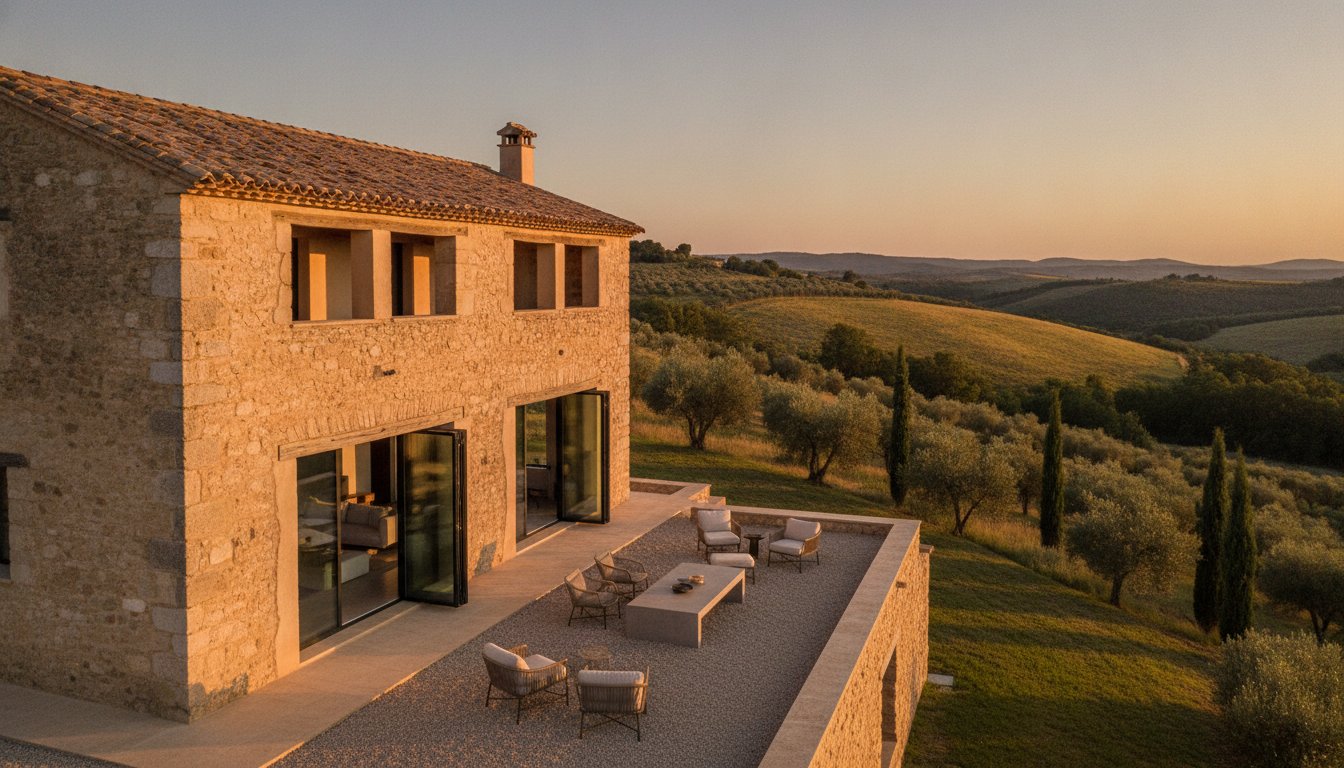
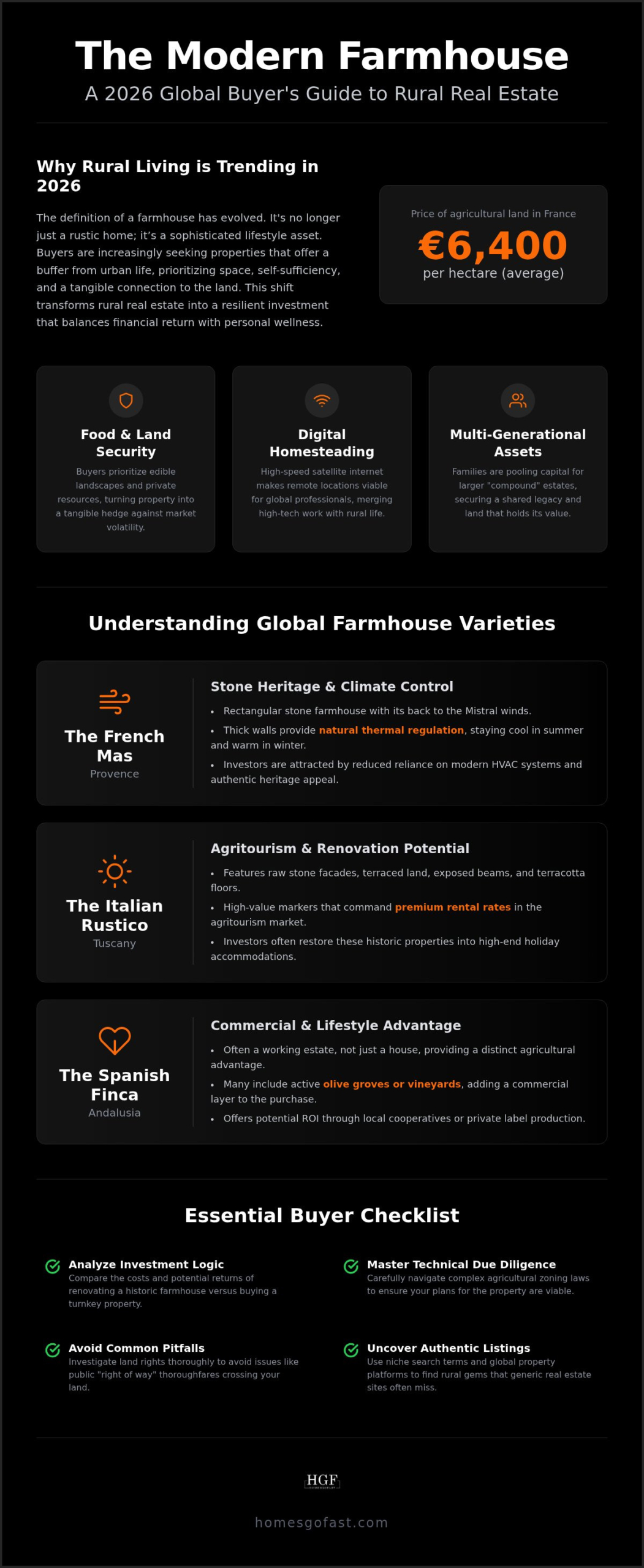
Did you know that the average price of agricultural land in France hit a record €6,400 per hectare leading into 2026? This surge reflects a massive global shift as more buyers look for a farmhouse for sale to secure their own slice of heritage and self-sufficiency.
You’ve likely spent hours scrolling through generic sites, dreaming of a stone cottage in Provence or a homestead in the American West, only to feel stalled by the fine print of land rights and maintenance costs. It’s a common hurdle. Investors are attracted by the dual benefit of lifestyle freedom and tangible land value, but the technicalities of cross-border deals often cause unnecessary stress if you don’t have the right data.
This guide will strip away the confusion. I’ll show you how to identify authentic opportunities and master the due diligence required for international rural real estate. We will explore the best-performing regions for 2026, break down the costs of agricultural upkeep, and provide a clear roadmap for turning a quiet country home into a high-yield investment.
Key Takeaways
- Learn why the modern farmhouse is evolving into a self-sustaining lifestyle asset that prioritizes food security and personal freedom in 2026.
- Identify the differences between regional architectural styles, from the French Mas to the Spanish Finca, to find your ideal heritage home.
- Analyze the investment logic of renovating a historic farmhouse for sale versus purchasing a turnkey property with established agritourism potential.
- Master the technical due diligence required to navigate complex agricultural zoning laws and avoid common pitfalls like “right of way” thoroughfares.
- Discover how to use niche search terms and global property platforms to uncover authentic rural listings that generic real estate sites often miss.
The Allure of the Farmhouse for Sale: Why Rural Living is Trending in 2026
The definition of a farmhouse for sale has shifted. It’s no longer just a rustic dwelling; it’s a sophisticated lifestyle asset. In 2026, the demand for space and food security is a mainstream priority. Buyers are increasingly looking for properties that offer a buffer against urban congestion. They want resources for a self-sufficient life. Edible landscapes and natural water sources have become as important as square footage or interior design.
Investors are attracted by the “lifestyle investment” model. Here, financial returns balance with personal wellness. A rural property allows you to diversify your portfolio into tangible land while securing a private retreat. This dual-purpose approach makes rural real estate a resilient choice. It’s about security. It’s about freedom. Owning a productive estate provides a tangible hedge against market volatility that paper assets simply cannot match.
To see the scale and potential of these properties, watch this look at a rural estate currently on the market:
The Rise of Digital Homesteading
Remote work has deleted the old “commutable” boundaries. High-speed satellite internet now reaches the most secluded valleys. You can manage a global team from a restored barn in the hills. Connectivity is no longer a luxury; it’s a utility that makes even the most remote locations viable for professionals. Digital homesteading is the merger of high-tech work and traditional rural living.
Farmhouses as Multi-Generational Assets
Families are pooling capital. They want larger estates with acreage. This trend toward “compound living” allows multiple generations to share a footprint while maintaining individual privacy. Land holds its value. Many buyers scan international real estate listings for properties with outbuildings. These can become studios or guest suites. Understanding global market trends helps you spot these multi-use opportunities before they hit the mass market. It’s a strategic move to secure a family legacy in an increasingly crowded world.
Understanding Global Farmhouse Varieties: Mas, Fincas, and Homesteads
Searching for a farmhouse for sale reveals a vast architectural spectrum. Your choice depends on whether you value ancient stone heritage or expansive timber-frame flexibility. Regional variations aren’t just aesthetic; they dictate your maintenance schedule, utility costs, and even your potential for agricultural income. Understanding these differences is the first step toward making a sound international investment.
European Classics: Provence, Tuscany, and Andalusia
French architecture offers the iconic Mas and the Bastide. A Mas is typically a rectangular stone farmhouse built with its back to the Mistral winds. Buyers looking at French homes for sale often prioritize these for their thick walls and natural thermal regulation. They remain cool in the summer and retain heat in the winter, reducing your reliance on modern HVAC systems.
In Italy, the “Rustico” is the gold standard for rural charm. These Italian homes for sale often feature terraced land and raw stone facades. Investors are attracted by the possibility of restoring these ruins into high-end holiday rentals. The exposed beams and terracotta floors are high-value markers that command premium rates in the agritourism market.
Spanish Fincas offer a distinct agricultural advantage. A finca is often more than just a house; it’s a working estate. When searching for property for sale in Spain, you’ll find that many include active olive groves or vineyards. This adds a commercial layer to your lifestyle purchase, providing a potential ROI through local cooperatives or private labels.
New World Charm: Colonial and Modern Farmhouses
The American homestead has evolved into a global design phenomenon. The “Modern Farmhouse” aesthetic blends traditional gabled roofs and wrap-around porches with sleek, open-plan interiors. These homes often sit on significantly larger plots of land than their European counterparts. In North and South American markets, acreage is often measured in dozens or hundreds, offering a level of privacy that is rare in the Mediterranean.
Maintenance needs are heavily influenced by local materials. European stone requires periodic repointing with specific lime mortars to prevent damp. In contrast, American timber-frame homes need regular staining or siding inspections to guard against pests and rot. Timber is faster to renovate but requires more frequent exterior care than stone.
Before you commit to a specific style, it’s helpful to browse international real estate listings to compare how far your budget goes in different territories. Each region offers a unique balance of culture, land, and architectural character.
The Investment Logic: Renovating a Historic Farmhouse vs. Buying Turnkey
Deciding between a restoration project and a move-in ready home is the most critical financial choice you’ll make. A historic farmhouse for sale often carries a lower sticker price, but the hidden costs of modernization can quickly erode your margin. Turnkey properties command a premium because they allow you to generate rental income from day one, bypassing the complexities of local planning permissions.
Investors are attracted by the high yields of rural boutique hospitality, particularly in regions where “slow travel” is booming. Many European territories offer tax incentives for the restoration of historic agricultural buildings to prevent rural depopulation. These grants can cover a portion of structural repairs, making a “fixer-upper” more viable for those with a long-term horizon. In France, for example, notary fees for existing French homes for sale average around 7.5%, a factor you must include in your initial capital calculations.
Calculating the Sweat Equity in Rural Property
In 2026, renovation costs are driven by the rising price of sustainable materials and a shortage of specialized craftsmen. You should prioritize “good bones” over aesthetic finishes. A property with a sound roof and dry stone walls is a safer bet than one with a new kitchen but a failing foundation. A sympathetic restoration that preserves the building’s heritage while integrating modern energy systems typically results in a 20-30% value increase.
Success in renovation requires a local network. You’ll need reliable contractors who understand traditional building techniques. If you’re managing this from abroad, the “sweat equity” often involves more project management than physical labour. The goal is to bridge the gap between the purchase price and the market value of a modernized estate.
The Commercial Potential: Agritourism and Rentals
Buyers are increasingly looking for properties with guest-hosting potential. Outbuildings like old stables or granaries are no longer just storage; they’re the foundation of a lucrative agritourism business. Converting these structures into luxury holiday rentals allows you to tap into the boutique travel market. This ancillary income significantly improves your total ROI compared to a standard residential let.
Don’t ignore the land itself. Investors are attracted by the potential for high-end glamping or small-scale organic farming. These activities provide a diversified revenue stream that makes the estate self-sustaining. Before you buy, explore overseas property options that offer multiple structures. Diversification is your best defense against seasonal fluctuations in the tourism market.
Essential Due Diligence for Rural and Agricultural Property
Buying a farmhouse for sale involves more than a structural survey. You’re acquiring a land asset, which brings complex legal responsibilities. Zoning is your first hurdle. Residential zoning allows for living space, while agricultural zoning often restricts construction to buildings necessary for farming. In France, the SAFER agency has pre-emption rights. They can step in and buy agricultural land at the agreed price to keep it in farming use. You must confirm these rights before you sign.
Investors are attracted by large plots, but you must look for the “Right of Way” trap. Many rural properties in Europe have ancient public footpaths or tractor access routes cutting through them. These are often legally protected. If your dream of a private pool sits on a historic thoroughfare, your plans will stall. Always verify the “Cadastre” or local land registry to see exactly where these easements lie. This ensures your privacy remains intact.
Land Rights, Boundaries, and Right of Way
Paper deeds don’t always match reality. You need a physical boundary check. Old stone walls or hedge lines might have shifted over decades. If there’s an existing agricultural lease on the land, you might not be able to use it immediately. Some leases are protected for years, even after a sale. It’s vital to have a professional review these contracts. You don’t want to buy 10 hectares only to find a local farmer has the right to graze it for the next decade.
Off-Grid Living: Utilities and Connectivity
Isolation is the draw, but it makes utilities expensive. Connecting a remote house to the main electrical grid can cost thousands. Many buyers now opt for solar arrays and battery storage. It’s a sustainable choice that offers independence. However, you must also check waste management. Modern regulations for septic tanks are strict. In many regions, old “soakaway” systems are now illegal and must be replaced with micro-treatment plants. This is a significant cost to factor into your budget.
Water is the #1 priority in Mediterranean climates. When looking at a property for sale in Spain or Italy, check the irrigation rights. Owning the land doesn’t always mean you own the water beneath it. You need a permit for a well, and the water must be tested for safety. If the well runs dry in August, your “rural escape” becomes a liability. Testing well water for safety and sustainability is a non-negotiable step in your due diligence process.
For those interested in American estates where sophisticated water management is a priority, you can check out Aquamax Sprinkler Systems to see how professional irrigation solutions are implemented on large-scale properties.
Before you commit, ensure you’re working with experts who understand these local nuances. You can browse verified overseas property for sale to find listings that have already undergone preliminary checks.
Navigating International Real Estate Listings to Find Your Dream Farmhouse
Finding an authentic farmhouse for sale requires a shift in how you search. Most buyers make the mistake of using generic filters like bedroom count or proximity to a city center. In the rural market, these metrics are secondary. You should focus on niche keywords that reveal the true potential of a property. Terms like “outbuildings,” “stables,” or even “ruin” often lead to a farmhouse for sale that has been overlooked by the mass market. These properties usually offer the best value for those looking to build “sweat equity” or develop a boutique agritourism business.
Using a specialized property advertising platform provides an edge over generic real estate sites. These platforms aggregate listings from local agents who understand the nuances of agricultural land and heritage buildings. Serious investors often look for listings managed via an “Agent Pro Account” because they provide deeper technical data. These accounts allow professionals to upload essential documents that casual listings omit, such as soil quality reports, irrigation permits, and detailed boundary maps. Access to this information is vital for making an informed decision before you commit to a physical viewing.
How to Search effectively on Global Portals
Efficiency is key when scanning thousands of international listings. You should prioritize filtering by land size, measured in hectares or acres, rather than just the number of rooms. A three-bedroom house on ten hectares represents a different investment category than the same house on a small garden plot. Set specific alerts for high-culture regions like Spain or Greece to stay ahead of increasing demand from foreign buyers. Investors are attracted by properties with existing olive groves or proven water rights, so reacting quickly to new listings is essential for securing a deal. For a step-by-step guide to this process, you can review the ultimate checklist for navigating international real estate listings.
Why HomesGoFast is Your Smart Advisor in the Rural Market
We act as a bridge between your rural aspirations and the practical reality of the global marketplace. Our platform connects you with seasoned agents who specialize in unique rural assets and agricultural land. They provide the “boots on the ground” insight you need for successful viewings, identifying structural issues or local planning constraints that aren’t visible in high-resolution photos. To help you understand the complex language of international deals, use our glossary of global market trends. It simplifies foreign terminology and financial jargon so you can negotiate with confidence. Whether you want to start your search or sell overseas property with us, we ensure your transaction is efficient and results-driven.
Securing Your Rural Legacy in 2026
Finding the perfect farmhouse for sale is a journey that balances romantic aspiration with rigorous data. You’ve seen that success in the rural market depends on mastering local zoning laws and verifying water rights before the contract is signed. Whether you’re attracted to a stone Mas in Provence or a timber-frame homestead in the Americas, the goal is to create a self-sustaining asset that serves both your lifestyle and your financial portfolio.
The shift toward digital homesteading has made remote living more accessible than ever. By focusing on niche keywords and leveraging professional market data, you can uncover authentic properties that offer high yields and personal wellness. It’s a strategic move that requires the right partner to navigate the complexities of international real estate and technical due diligence.
HomesGoFast has been a trusted connector in the global market since 2002. With our global network of professional agents and expert guides for international buyers, we simplify the search for unique rural assets across borders. Don’t let the complexity of cross-border regulations hold you back from your escape. Find your dream farmhouse for sale on HomesGoFast and start your next chapter with confidence.
Frequently Asked Questions
Is buying a farmhouse a good investment in 2026?
Buying a farmhouse for sale is a strong investment in 2026 because it combines tangible land value with high demand for remote work retreats. Investors are attracted by the potential for agritourism income and the hedge against inflation that productive land provides. While urban markets fluctuate, rural properties with self-sustaining features maintain their appeal as both a financial asset and a personal wellness sanctuary.
What is the difference between a farmhouse and a country house?
A farmhouse was originally designed as a functional hub for agricultural operations, whereas a country house is built primarily for leisure. Farmhouses typically feature outbuildings like barns and stables that offer commercial potential. Country houses focus on aesthetic gardens and living space. If you want a property that can generate income through farming or rentals, a farmhouse is the superior choice.
Can foreigners buy agricultural land in Europe?
Most European countries allow foreigners to buy agricultural land, though specific regulations like France’s SAFER pre-emption rights apply. In some Eastern European territories, there may be restrictions on non-EU citizens buying large tracts of farmland. It’s vital to check if the land is classified as productive or residential before you commit, as this affects your legal obligations and tax rates.
How do I check for water rights on a rural property?
You must verify water rights through the local land registry or Cadastre to ensure you have legal access to wells or streams. Owning the land doesn’t automatically grant you the right to extract water for irrigation. In dry climates like Spain, you need a specific permit for any borehole. Always ask for recent water quality tests and flow rate data to ensure the supply is sustainable.
What are the hidden costs of owning a farmhouse?
Hidden costs often include septic tank modernization, maintaining private access roads, and higher insurance premiums for heritage structures. You should also budget for the annual property taxes on undeveloped land, which can vary significantly by region. Upgrading old electrical systems to handle modern tech or renewable energy arrays is another common expense that first-time rural buyers frequently overlook.
Is it better to buy a renovated farmhouse or a ruin?
Buying a ruin offers the highest sweat equity potential, but a renovated property provides immediate rental yields. If your goal is a 20-30% value increase through restoration, a ruin is the better financial play. However, if you lack local contacts or project management time, a turnkey farmhouse for sale reduces stress and allows you to enjoy the rural lifestyle from day one.
How much land do I actually need for a small hobby farm?
You typically need between one and two hectares for a successful small hobby farm. This provides enough space for a large vegetable garden, a small orchard, and perhaps a few sheep or goats. If you plan to be entirely self-sufficient or want to sell produce commercially, you’ll likely need five hectares or more to ensure the land remains productive without being overgrazed.
What should I look for in a rural property survey?
A rural survey should prioritize boundary verification, soil quality, and the existence of public rights of way. You need to ensure that local farmers or the public don’t have legal access routes through your private land. The survey must also assess the capacity of existing utilities, specifically checking if the electrical supply can support modern appliances or electric vehicle charging.