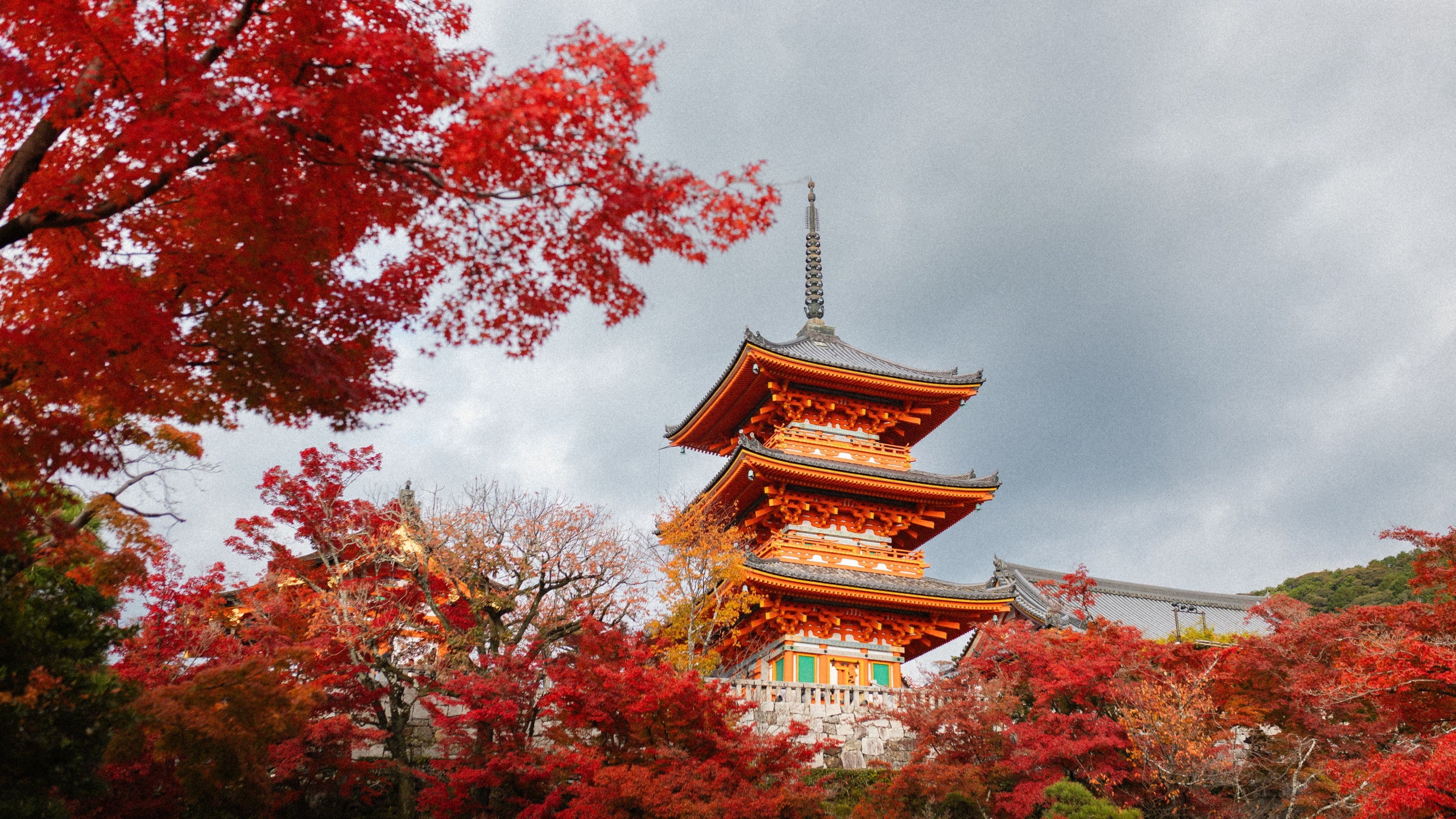
Japan has become one of Asia’s most interesting property markets for overseas buyers. It offers world-class cities, excellent transport, strong tourism demand, cultural appeal and, in many areas, surprisingly affordable property compared with London, Singapore, Hong Kong, New York or Paris.
Unlike many countries, Japan generally allows foreign buyers to own both land and buildings. You do not normally need Japanese citizenship or permanent residency to purchase real estate. However, buyers must understand reporting rules, tax costs, earthquake standards, short-term rental restrictions and the difference between owning property and having the right to live in Japan.
Video Guide: Buying Property in Japan as a Foreigner
Can Foreigners Buy Property in Japan?
Yes. Foreign individuals and foreign companies can generally buy real estate in Japan. This includes houses, apartments, land, commercial property and investment property.
Japan is attractive because foreign buyers can often own freehold land, not just lease property. This makes Japan more open than some Asian markets where foreign ownership is heavily restricted.
However, foreign buyers should be aware of post-purchase reporting rules. Japan’s Ministry of Finance explains that non-residents acquiring Japanese real estate may need to file a report under the Foreign Exchange and Foreign Trade Act.
Japan Housing Market Overview
The Japanese housing market is not one single market. Tokyo apartments, Osaka rental properties, Kyoto townhouses, Niseko ski homes, Okinawa villas and rural akiya homes all behave differently.
Tokyo
Best for liquidity, corporate tenants, long-term demand and international recognition. Prices are higher, but resale demand is stronger.
Osaka
Attractive for rental investors, business demand, tourism and potentially better yields than central Tokyo.
Kyoto
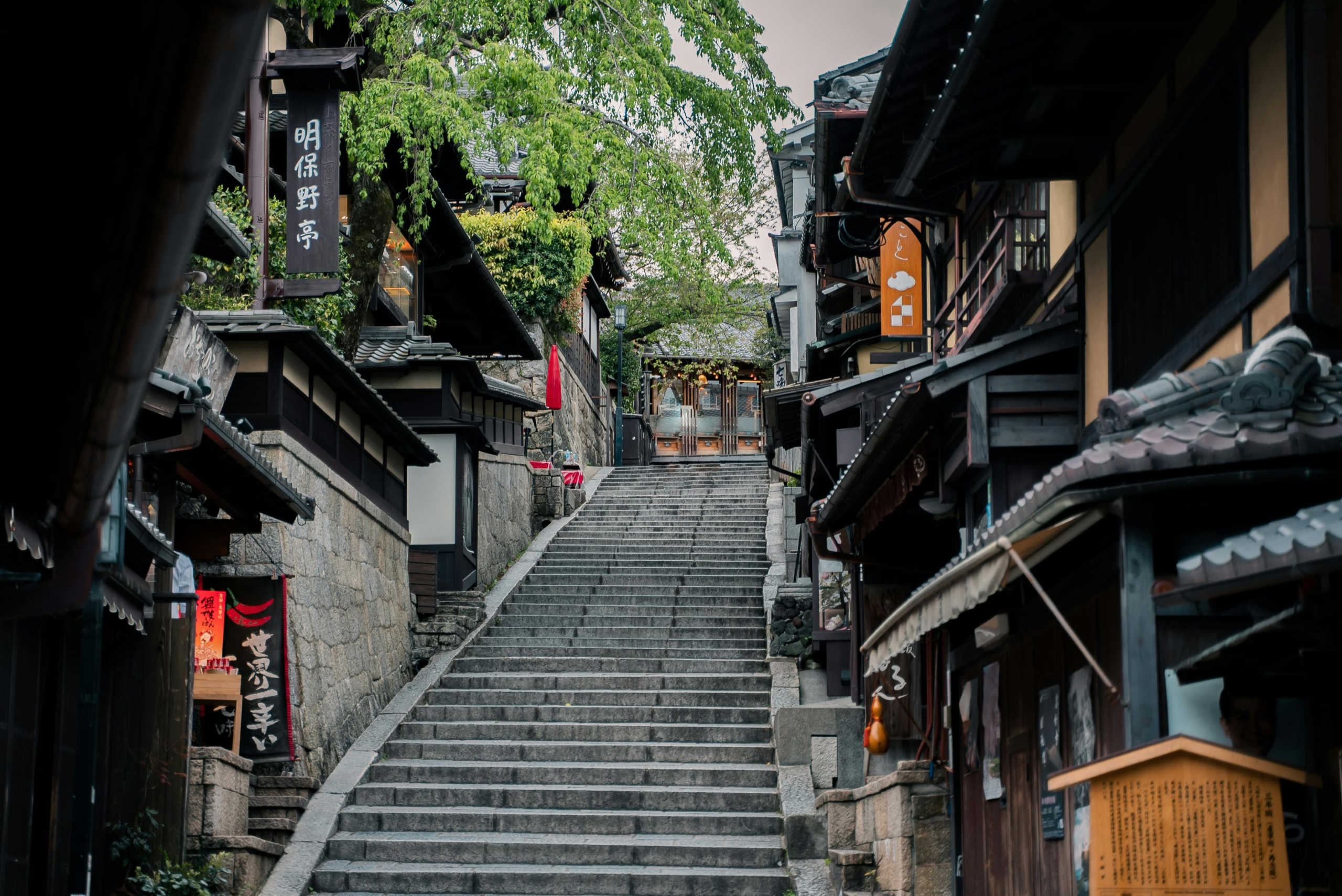
Strong heritage and tourism appeal, but buyers must check rental rules, building restrictions and renovation costs carefully.
Fukuoka
A growth city with younger demographics, business appeal and good transport links across Asia.
Niseko
Popular with overseas ski buyers and luxury investors, but seasonal demand and management costs must be checked.
Okinawa
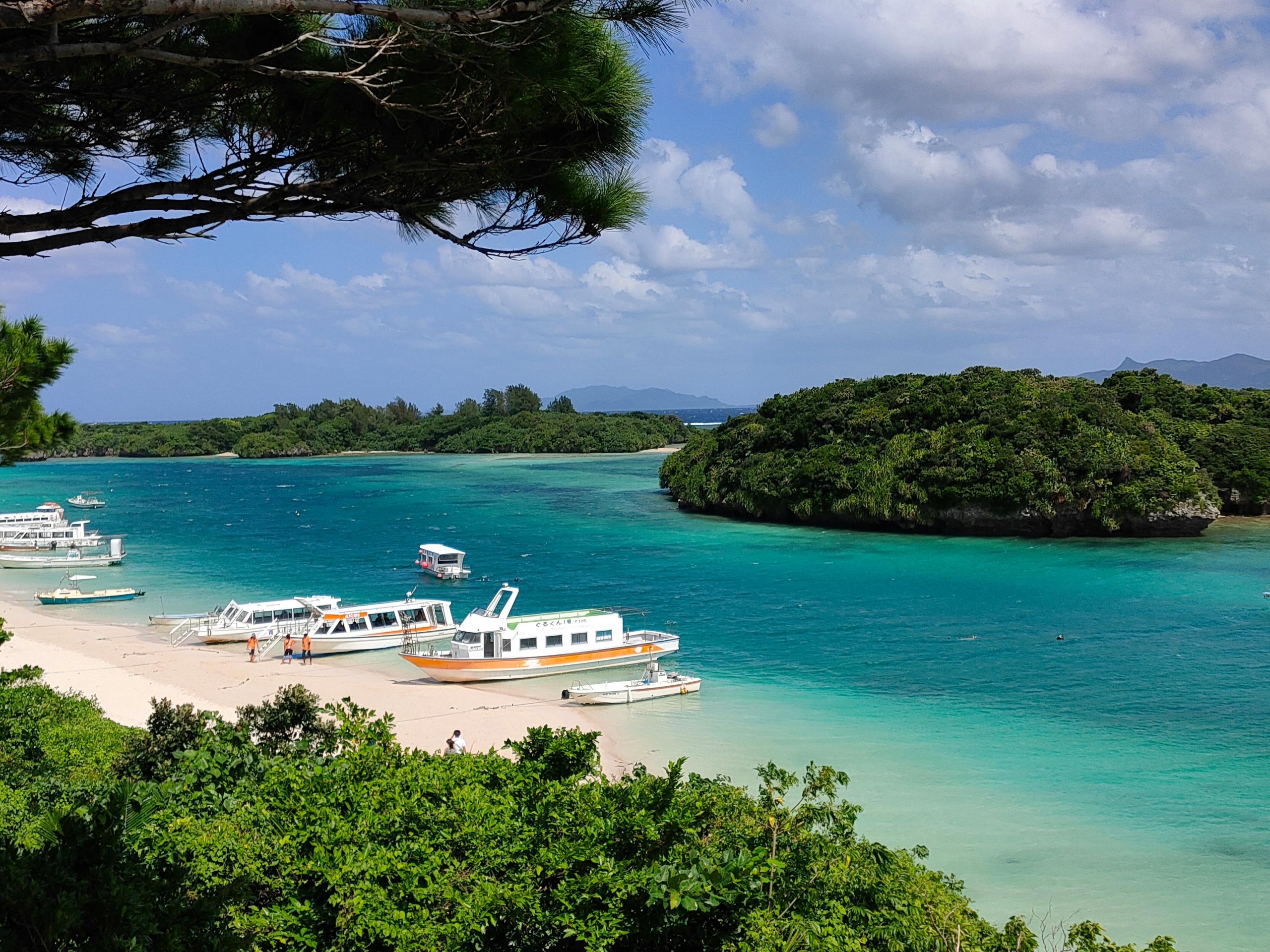
Appeals to lifestyle and resort buyers seeking warmer weather, beaches and holiday home potential.
Infographic: Japan Property Buyer Checklist
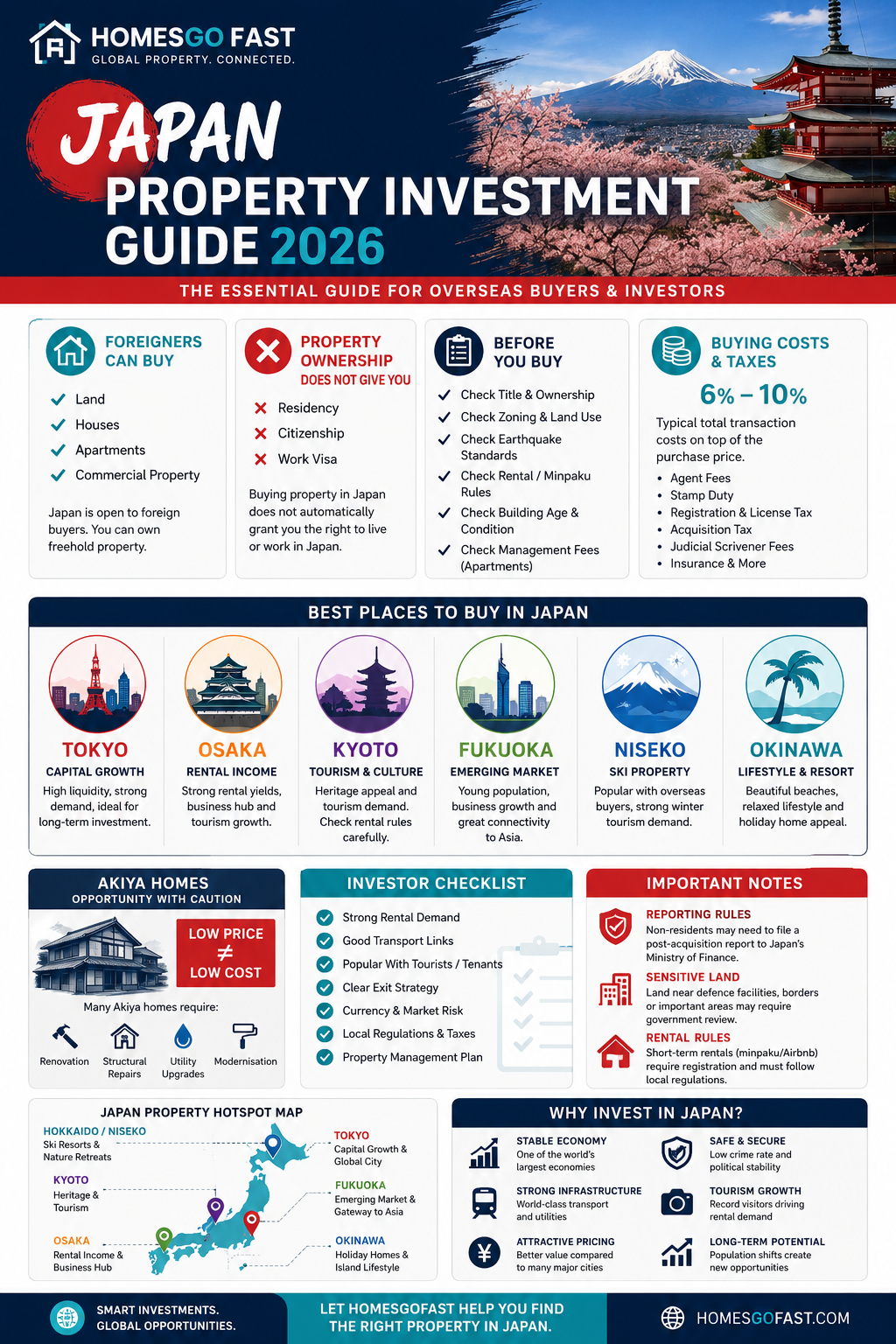
Japan Property Buyer Checklist for Overseas Investors
Foreigners can generally buy land and buildings in Japan.
Buying property does not automatically give residency.
Confirm title, zoning, boundaries and building use.
Non-resident buyers may need to file a post-acquisition report.
Check if land is near defence sites, borders or monitored facilities.
Older buildings should be checked for seismic compliance.
Short-term letting may require registration or licensing.
Consider resale demand before buying rural or older homes.
Akiya Homes: Cheap Opportunity or Costly Mistake?
Akiya are vacant or abandoned homes. Japan has a large number of vacant homes due to population decline, inheritance issues and rural depopulation. Some are extremely cheap, but they are not always simple investments.
Before buying an akiya, overseas buyers should check title, access, utilities, renovation cost, earthquake safety, local resale demand and whether the property can legally be rented or used as accommodation.
Short-Term Rentals and Airbnb in Japan
Japan allows private lodging, often called minpaku, but it is regulated. Buyers planning to operate Airbnb-style rentals must check national rules, local municipality restrictions, building management rules, fire safety requirements and permitted operating days.
Some apartment buildings ban short-term letting completely. Kyoto and other tourism-heavy areas can have stricter rules, so never buy on the assumption that holiday letting will automatically be allowed.
Buying Costs and Taxes
Foreign buyers should budget beyond the purchase price. Typical costs may include real estate agent commission, stamp duty, registration and licence tax, real estate acquisition tax, judicial scrivener fees, fixed asset tax adjustments, insurance, management fees and translation support.
As a broad planning guide, buyers often allow around 6% to 10% of the purchase price for transaction costs, depending on the property and structure of the deal.
Step-by-Step Buying Process
- Define your objective: lifestyle, rental income, renovation, holiday use or long-term investment.
- Choose the right location based on demand, transport and resale potential.
- Find a bilingual real estate agent experienced with overseas buyers.
- Arrange legal, tax and translation support.
- Check title, zoning, building age, repair reserves and seismic standards.
- Make an offer and agree terms.
- Review the explanation of important matters before signing.
- Pay deposit, complete the contract and register ownership.
- Set up property management if you are not based in Japan.
Best Buyer Types for Japan
Lifestyle Buyers
Best suited to Kyoto, Okinawa, Nagano, Hokkaido and attractive regional towns.
Rental Investors
Should focus on Tokyo, Osaka, Fukuoka and strong commuter locations.
Tourism Investors
May consider Kyoto, Osaka, Niseko, Okinawa and selected heritage or resort markets.
Renovation Buyers
May find value in akiya homes, but only with careful surveys and local contractor support.
Final Thoughts
Japan is one of the most open major property markets for foreign buyers, but it is not risk-free. The opportunity is real, especially for buyers who understand location, legal checks, rental regulations, building condition and exit value.
The smartest overseas buyers will not simply chase the cheapest property. They will focus on long-term demand, professional advice, local rules and realistic running costs.