In 2025, Greece issued 8,879 Golden Visa approvals, nearly doubling its previous annual record as buyers scrambled to adjust to the sudden closure of Spain’s program. You’ve likely felt the same pull toward international ownership, yet the fear of legal pitfalls or currency shifts often keeps those browser tabs firmly closed. Learning how to buy an apartment overseas in 2026 requires more than a sense of adventure; it demands a strategic grasp of a global market that’s moving faster than ever.
Buyers are increasingly looking for stability amidst these shifting regulations, and you deserve a roadmap that prioritizes your financial security. Investors are attracted by incentives like the capital gains tax suspension in Greece, yet they remain wary of fragmented listings and hidden costs. This guide simplifies the complexities of cross-border transactions by providing the practical logic you need to find and finance your ideal property. We’ll preview the latest 2026 mortgage rates, explain the impact of Portugal’s new 7.5% transfer tax, and give you the tools to vet international agents with total confidence.
Key Takeaways
- Learn why apartments are the preferred asset class for 2026, offering superior ease of maintenance and diversification for international portfolios.
- Discover the non-negotiable legal due diligence required to protect your deposit and navigate the differences between civil and common law.
- Master our expert 5-step roadmap on how to buy an apartment overseas, ensuring a smooth transition from your first search to receiving the keys.
- Compare the latest market trends and entry requirements for high-demand destinations like Spain and Greece to find your best investment fit.
- Gain the confidence to shortlist reputable agents and browse verified listings in your own language using established global platforms.
Navigating the Global Market: Why Buy an Apartment Overseas in 2026?
The shift toward global mobility has fundamentally changed the global real estate market. Buying an apartment in another country is no longer just a luxury for the ultra-wealthy. It’s now a calculated move for anyone seeking lifestyle freedom and asset diversification. Buyers are increasingly looking for apartments over villas, primarily because they offer significantly easier maintenance and lower overheads while you’re away.
This “lock-up-and-leave” trend is a hallmark of 2026. As remote work becomes the standard for professionals, the demand for high-quality urban units has surged. If you’re researching how to buy an apartment overseas, you’ll find that the security of a managed building often outweighs the privacy of a detached home. This approach allows you to enjoy the sun and culture of a new city without the constant worry of landscaping or roof repairs.
To better understand the practicalities of international acquisition, watch this helpful video:
The Rise of the Global Apartment Investor
Modern investors aren’t just looking for a place to sleep; they’re looking for community and convenience. Remote work has turned cities into global hubs where professionals congregate. Apartments in these areas provide built-in security and premium amenities like gyms or co-working spaces. These features are highly attractive to short-term tenants. Consequently, well-located apartments often generate higher rental yields compared to larger properties in remote regions. You can track these shifts through our global market trends reports to see which cities are currently outperforming the rest.
Investment vs. Lifestyle: Defining Your ‘Why’
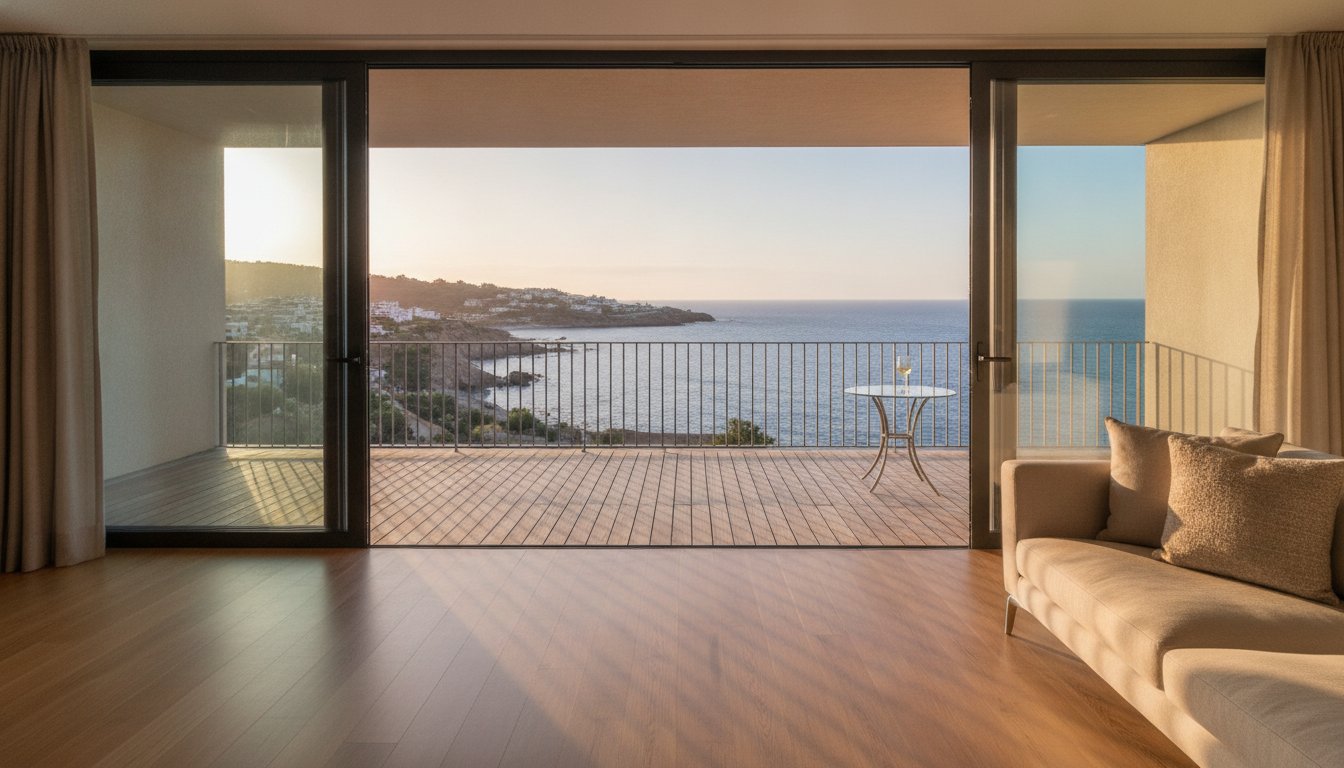
It’s easy to get swept up in the romance of a Mediterranean balcony, but you must balance that emotion with practical ROI logic. Investors are attracted by markets where entry costs remain manageable, even as regulations tighten. For instance, while Spain terminated its Golden Visa program in April 2025, Greece saw 8,879 approvals that same year as buyers pivoted. This surge nearly doubled the previous year’s figures, showing how quickly the market reacts to policy changes.
Your budget must account for more than just the sticker price. In Europe, you should expect to pay an additional 8% to 15% in taxes and fees. In Portugal, for example, non-residents now face a flat 7.5% Property Transfer Tax (IMT). Consider accessibility factors like proximity to major airports and established expat communities. Balancing these lifestyle desires with hard data is the first step in browsing overseas property listings effectively. Establishing a clear “why” will prevent you from making an emotional choice that doesn’t align with your long-term financial goals.
Legal and Financial Foundations: What Every Buyer Needs to Know
Securing a property in a foreign jurisdiction is a major milestone, but it requires a disciplined approach to legal safety. Before you pay any deposit, you must conduct non-negotiable checks to ensure the property is free of debts, liens, or unresolved planning issues. Understanding how to buy an apartment overseas starts with recognizing that legal structures vary wildly between borders. Using international real estate listings is an excellent way to benchmark prices, but your next step should always be appointing an independent legal representative who specializes in local property law.
The role of the Notary is perhaps the most misunderstood element for international buyers. In Civil Law jurisdictions, such as Spain, France, or Italy, the Notary is a neutral public official who ensures the transaction complies with state law. They don’t specifically protect your interests as a buyer. This differs from Common Law systems found in the UK or USA, where your solicitor acts solely for you. Always verify “foreign ownership rules” early in your search. Some countries restrict purchases in military zones or coastal strips, which can catch unprepared investors by surprise.
Financing Your International Acquisition
You have two primary paths for funding: local mortgages or releasing equity from your current home. Local lenders in 2026 typically offer non-residents between 60% and 75% loan-to-value (LTV). This means you should prepare for a down payment of at least 25% to 40%. For context, early 2026 mortgage rates in France for non-residents hover between 3.50% and 4.25% for fixed-term loans.
Currency risk is a silent budget killer. A 5% shift in exchange rates between your offer and the completion date can add thousands to your final price. Utilizing international banking services or a specialized currency broker can help you lock in rates and protect your investment from volatility. If you’re ready to start comparing market values, you can browse current listings to see how your budget aligns with local asking prices.
The Hidden Costs of Buying Overseas
The sticker price is never the final price. In Europe, you must budget for an additional 8% to 15% to cover acquisition costs. These include:
- Transfer Taxes: As of February 2026, non-resident buyers in Portugal face a flat 7.5% Property Transfer Tax (IMT).
- Notary and Legal Fees: These typically range from 1% to 3% of the purchase price.
- Ongoing Ownership: Community fees (HOA) for apartment buildings, annual non-resident taxes, and utility management.
In this context, due diligence is the process of verifying that the foreign title deeds are legitimate and that the seller has the legal right to transfer the property without encumbrances. Taking these steps ensures your dream apartment remains a sound financial asset rather than a legal burden.
Selecting the Right Destination: Top Markets for Apartments
Choosing where to invest requires a sharp eye for both lifestyle appeal and regulatory stability. In 2026, the global landscape for residency-by-investment has shifted significantly. While Spain terminated its Golden Visa program in April 2025, the enduring appeal of property for sale in Spain remains high due to its world-class infrastructure and established expat hubs. Buyers are increasingly looking for apartments in cities like Valencia and Malaga, where the “lock-up-and-leave” lifestyle perfectly suits the modern remote professional.
If you’re researching how to buy an apartment overseas with an eye on residency, your focus should likely pivot toward Greece. Following the closure of Spain’s program, Greece issued 8,879 Golden Visa approvals in 2025, nearly doubling its 2024 figures. This surge is driven by investors looking for a secure foothold in the EU. Greece also offers a strategic financial advantage: the 15% capital gains tax on property sales remains suspended through December 31, 2026, making it a highly attractive exit environment for short-to-medium-term investors.
European Hotspots: Spain, Italy, and Greece
The Mediterranean remains the top choice for apartment buyers because it balances culture with proven rental demand. Investors are attracted by the stable yields found in historic city centres, particularly where tourism remains a year-round driver. We see high demand for Italian homes for sale in cities like Florence and Milan, where apartments in heritage buildings offer a unique blend of prestige and capital growth. When evaluating these hotspots, prioritize proximity to international airports and the density of local services. An apartment that’s easy to reach will always command a premium in the rental market.
Emerging Markets and Residency Incentives
Beyond Europe, emerging markets in Central America and Southeast Asia are gaining ground for 2026. Countries like Panama and Thailand have refined their Digital Nomad Visas, creating a consistent floor for apartment rental demand in urban hubs. These visas allow professionals to live locally while working for foreign companies, which has stabilized the “mid-term” rental market for one and two-bedroom units.
Before committing to an emerging market, you must evaluate political and economic stability. Check the local inflation rates and currency pegging to ensure your investment won’t be eroded by local volatility. Understanding how to buy an apartment overseas in these regions often involves navigating different ownership structures, such as leasehold vs. freehold, so local expertise is essential. High-growth areas in Costa Rica or Panama often offer lower entry costs than Europe, but they require deeper due diligence regarding land titles and future infrastructure projects.
The 5-Step Process: From Search to Keys in Hand
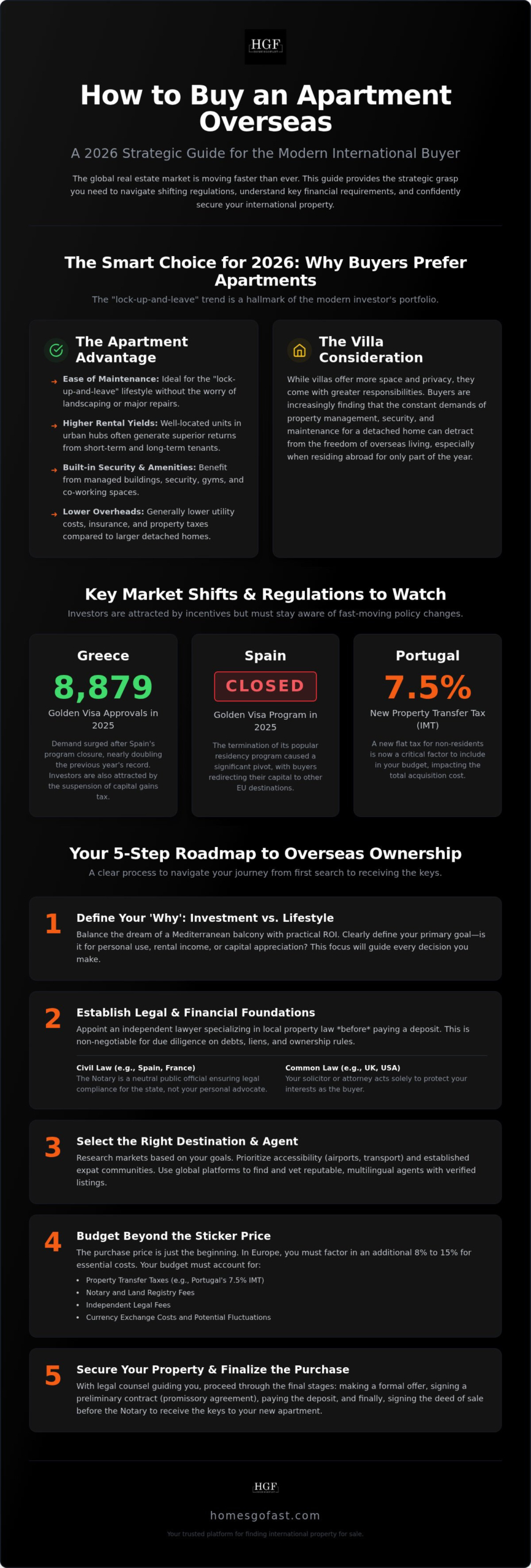
Executing a cross-border purchase requires a structured timeline to avoid the common pitfalls of international markets. You don’t need to “just go there and look around” without a plan. Instead, follow a professional sequence that prioritizes data and legal safety. Understanding how to buy an apartment overseas effectively means moving from digital research to physical verification with specific milestones in place.
- Step 1: Define and Filter. List your non-negotiables, such as proximity to transit or rental potential. Use overseas property portals to filter these criteria across different regions.
- Step 2: Verify Agents. Don’t settle for the first person who answers the phone. Shortlist agents who have established track records with international buyers and verify their credentials through global platforms.
- Step 3: The Viewing Trip. Dedicate at least one week to physical inspections. Focus on the building’s structural health and the quality of communal management.
- Step 4: The Reservation Phase. Once you find the right unit, you’ll likely sign a reservation contract. This typically involves a small fee to take the property off the market while your lawyer begins due diligence.
- Step 5: Completion and Management. After title registration, set up local property management. This is vital for “lock-up-and-leave” owners who need someone to handle utilities and maintenance in their absence.
How to Use Property Portals Effectively
Beating other international buyers requires speed and accuracy. Set up real-time alerts for new listings so you’re the first to see fresh inventory. This proactive approach helps you compare similar units in the same building or neighborhood. By doing this, you’ll identify if a seller is trying to charge a “foreigner premium” compared to local market rates. You should also look for “For Sale By Owner” opportunities. These listings often allow for more direct negotiation and can lead to significant savings on agent commissions.
Viewing the Apartment: A Technical Checklist
When you step inside a potential investment, look past the staged furniture. You’re buying into a collective structure, which means the building’s financial health is just as important as the apartment’s view. Ask for the last three years of maintenance records. If the building has deferred major repairs, you might face a “special assessment” fee shortly after moving in. Use this checklist for your neighborhood due diligence:
- Future Construction: Check local planning offices for upcoming high-rise projects that could block your view.
- Noise Pollution: Visit the area at different times, including late evening and early morning.
- Communal Areas: Evaluate the cleanliness of hallways, elevators, and gyms as an indicator of management quality.
- Soundproofing: Check wall thickness and window glazing, especially in historic city centers.
Taking a methodical approach ensures you aren’t blinded by the excitement of a new culture. If you’re ready to begin your search with verified data, you can browse current international real estate listings to see what’s available in your target market today.
Securing Your Investment: How HomesGoFast Simplifies the Journey
Success in the international market depends on the quality of your information and the reliability of your connections. Since 2002, HomesGoFast has acted as a seasoned global expert, simplifying the complexities of cross-border transactions for thousands of buyers. When you’re learning how to buy an apartment overseas, having a central hub that provides international real estate listings in your own language is a massive advantage. It removes the language barrier during the critical research phase; this allows you to focus on the data that matters most.
Our platform acts as a bridge between your lifestyle aspirations and the practical reality of making a sound financial decision. By centralizing fragmented listings from across the globe, we provide the visibility you need to compare markets with efficiency. You can move quickly from identifying a potential opportunity to contacting a professional who can facilitate the deal. This speed is essential in 2026, where high demand from foreign buyers often leads to rapid turnover in prime urban hubs.
Connecting with Verified Professionals
Working with the right people is just as important as finding the right unit. Our platform highlights agents with ‘Agent Pro’ status, ensuring you connect with professionals who specifically understand the needs of international buyers. These experts are equipped to handle the unique legal and financial hurdles discussed earlier, such as navigating the Notary process in civil law jurisdictions or managing currency transfers. Before you commit to a specific region, we encourage you to browse global market trends to see where demand is peaking and where yields remain most attractive.
Taking the First Step Toward Your Overseas Home
2026 is a pivotal year for global property acquisition. With the suspension of capital gains tax in Greece through December 31, 2026, and the stabilization of digital nomad hubs in Southeast Asia, the window for strategic investment is wide open. Buyers are increasingly looking for efficient ways to diversify their assets, and the “lock-up-and-leave” apartment model remains the most practical solution for modern owners. You’ve now mastered the roadmap; the next move is to transition from dreaming about a new lifestyle to taking concrete action.
Don’t let the complexity of foreign jurisdictions hold you back. The right advisor makes the process feel productive and streamlined rather than overwhelming. Start your journey today and find your next apartment overseas on HomesGoFast.
Ready to Claim Your Global Address?
The international property market in 2026 moves with unprecedented speed; you must do the same. You’ve now mastered the practical logic of how to buy an apartment overseas, from navigating Portugal’s 7.5% transfer tax to identifying high-yield units in Athens. By balancing the emotional appeal of a Mediterranean lifestyle with hard-nosed financial data, you’re prepared to make an investment that delivers both freedom and security.
Success starts with the right connections. Since 2002, we’ve provided a trusted gateway to the global marketplace, offering expert guides for over 50 countries and access to thousands of verified international listings. Don’t let your research end here. Move from the planning phase to the search phase with total confidence. Start your search for the perfect overseas apartment on HomesGoFast today and secure your future in the global real estate landscape.
Frequently Asked Questions
Can I buy an apartment overseas without a local bank account?
You will almost certainly need a local bank account to manage the ongoing costs of your property. While some jurisdictions allow you to make the initial purchase via an international transfer, you’ll need local banking to pay for utilities, community fees, and annual property taxes. Most countries also require you to obtain a local tax identification number, which is typically easier to secure once you have a local bank account established.
Do I need to pay taxes in both my home country and the country where I buy?
Most countries have Double Taxation Agreements in place to ensure you don’t pay twice on the same income. You’ll generally pay annual property taxes and rental income tax in the country where the apartment is located. However, you must still disclose these assets and any earnings to your home country’s tax authorities, who will apply the treaty rules to determine your final liability.
Is it better to buy a new build or a resale apartment overseas?
Buyers are increasingly looking for new builds because they offer modern energy standards and developer warranties. These “key-ready” units are ideal for those who want immediate rental potential without renovation stress. On the other hand, resale apartments in historic city centres often provide better long-term capital appreciation and are situated in established neighbourhoods with proven demand and character.
How do I verify that the seller actually owns the property?
Verifying ownership is the most critical step when learning how to buy an apartment overseas. Your independent lawyer must conduct a formal title search at the local Land Registry to confirm the seller’s identity and legal right to transfer the property. This search also ensures the apartment is free of hidden liens, outstanding mortgages, or unresolved legal disputes that could threaten your investment.
Can I get a mortgage as a non-resident in most countries?
You can secure financing in many popular international markets, though lenders typically offer lower loan-to-value ratios for non-residents. Expect to provide a down payment of 30% to 40% of the purchase price. In early 2026, indicative mortgage rates for non-residents in Spain and France range from 3.2% to 4.5%, depending on your financial profile and the length of the fixed-rate term.
What happens if I want to sell my overseas apartment later?
Selling your international asset involves local capital gains tax and potential exit fees. While some countries, like Greece, have suspended capital gains tax through December 31, 2026, others have strict rules for non-resident sellers. You must keep all original purchase contracts and receipts for structural improvements; these records are vital for offsetting your tax liability when you eventually decide to sell.
Are apartments safer than villas for international owners?
Apartments are generally considered a safer “lock-up-and-leave” investment for international owners. Most apartment buildings have communal security systems and professional management teams that oversee the exterior and common areas. This provides a level of protection and maintenance that is much harder to achieve with a private villa, which often requires active, on-site management to prevent neglect or security breaches.
How much should I budget for legal fees when buying abroad?
You should budget between 1% and 3% of the purchase price for professional legal representation. Understanding how to buy an apartment overseas requires acknowledging that the sticker price is just the beginning. In Europe, your total acquisition costs, including legal fees, notary costs, and transfer taxes, will typically range from 8% to 15% of the property’s final purchase price.