 by
by 
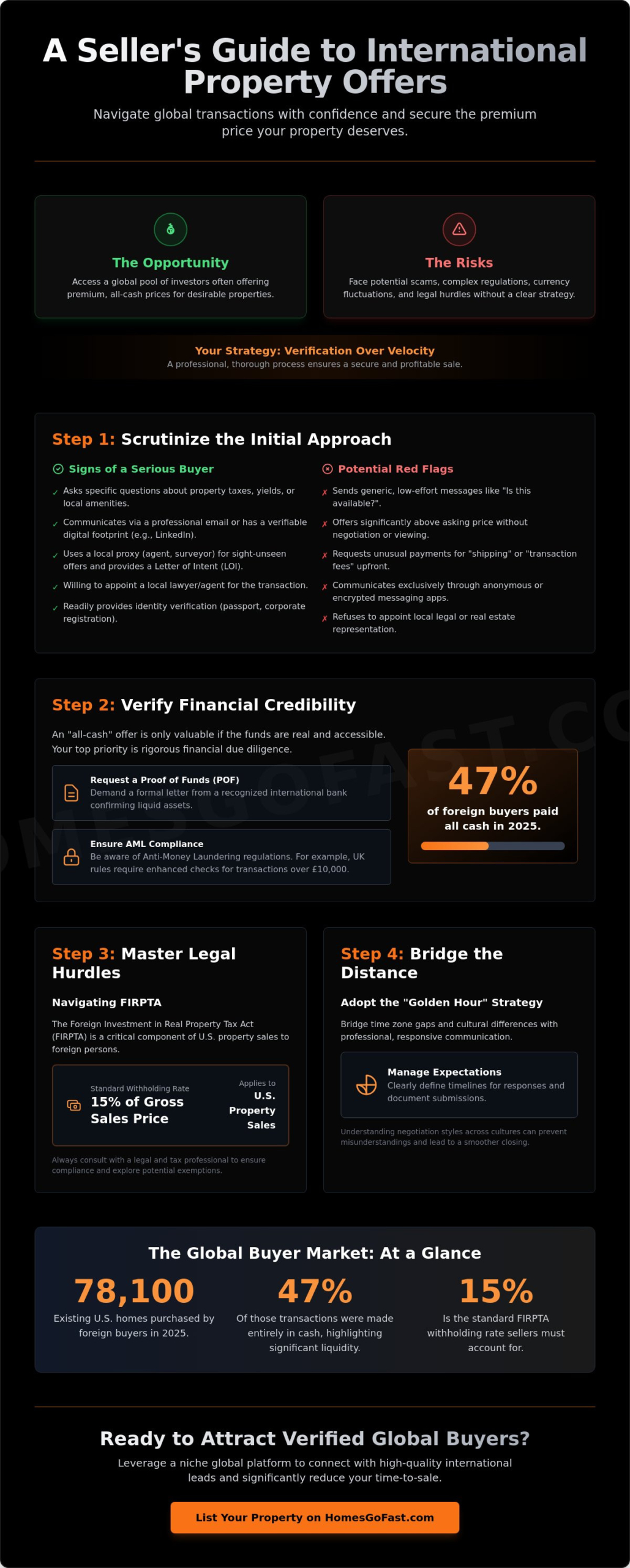
Did you know that 47% of foreign buyers paid all cash for their residential purchases in 2025? While a global offer brings excitement, it often triggers a wave of anxiety about “ghost” buyers and complex cross-border regulations. Learning how to handle offers from foreign buyers is now essential as international demand rebounds and median purchase prices hit record highs.
You want the premium price a global investor offers, but you don’t want the legal headaches or currency risks that come with it. It’s natural to feel overwhelmed by shifting tax laws or the standard 15% FIRPTA withholding rate. We’ll help you replace that uncertainty with a clear, professional strategy for a secure transaction.
This guide provides a masterclass in vetting international financing, navigating 2026 AML compliance, and protecting your ROI. We’ll explore the “Verification over Velocity” framework to ensure your cross-border sale closes faster and more profitably than ever before.
Key Takeaways
- Learn to distinguish legitimate global investors from potential scams by vetting “sight-unseen” offers and proxy communication effectively.
- Verify financial credibility by requesting international Proof of Funds (POF) and ensuring compliance with 2026 Anti-Money Laundering (AML) regulations.
- Master how to handle offers from foreign buyers while navigating legal hurdles such as FIRPTA withholding and evolving state-level ownership restrictions.
- Adopt the “Golden Hour” communication strategy to bridge time zone gaps and manage diverse cultural negotiation styles for a smoother closing.
- Leverage niche global advertising platforms and Agent Pro tools to attract verified, high-quality international leads and significantly reduce your time-to-sale.
Assessing the Offer: Distinguishing Serious Buyers from Scams
Receiving an enquiry from halfway across the world is a thrill. However, your first task is filtering the noise. Serious investors don’t just send a generic “Is this available?” message. They ask about local property taxes, rental yields, or the proximity to international schools. Buyers are increasingly looking for transparency from the start. Knowing how to handle offers from foreign buyers begins with scrutinizing the quality of their initial questions.
Professional communication is your first line of defense. Legitimate buyers usually operate through a business email or have a verifiable digital footprint. If the enquiry comes from a generic provider but addresses specific structural details of your home, it’s a good sign. To better understand the nuances of dealing with international leads, watch this helpful video:
Every serious foreign buyer needs a local lawyer or agent. If they refuse to appoint one, walk away. You should request a passport copy or corporate registration early. This isn’t being intrusive; it’s standard due diligence. If you’re looking to sell overseas property, you need to know who is on the other side of the screen. Using a secure portal for document exchange keeps everyone’s data safe.
Red Flags in International Property Enquiries
Watch for buyers who seem too good to be true. If someone offers way above your asking price without even negotiating, be wary. Scammers often use “shipping fees” or strange financial rebate requests to extract money before a deal closes. Legitimate investors don’t communicate solely through encrypted apps; they use verifiable professional email domains.
Using Digital Proof of Identity
Verify the buyer’s background via LinkedIn or corporate websites. In 2025, foreign buyers purchased 78,100 existing U.S. homes, and the best deals began with identity verification. Understand the legal backdrop too. The Foreign Investment in Real Property Tax Act (FIRPTA) involves specific tax withholdings. Serious buyers respect these formal hurdles. Always insist on a formal LOI to outline price and contingencies before moving to a binding contract.
Financial Vetting: Verifying Proof of Funds and Currency Stability
A cash offer from an international investor often feels like a guaranteed win. In 2025, 47% of foreign buyers paid all cash for their residential purchases, a significant jump from domestic averages. However, the all-cash label doesn’t exempt you from rigorous due diligence. Mastering how to handle offers from foreign buyers requires you to verify that the money actually exists and can be moved across borders legally.
You must request a formal Proof of Funds (POF) letter from a recognized international financial institution. This document should confirm the buyer has liquid assets ready for the transaction. Because global regulations are tightening, you’ll also need to navigate Anti-Money Laundering (AML) requirements. For instance, as of June 2026, UK regulations mandate enhanced due diligence for any transaction exceeding £10,000. These shifts can delay your closing if they aren’t addressed during the initial vetting phase.
Financial compliance also involves understanding tax withholdings. If you’re selling U.S. property, you must adhere to the IRS guidelines on FIRPTA, which typically require a 15% withholding of the gross sales price. Ensuring your buyer is aware of these obligations prevents last-minute friction. If you’re ready to reach these high-intent investors, you can advertise properties on global platforms that specialize in connecting sellers with verified leads.
Steps to Verify International Financing
Don’t take a PDF at face value. Contact the buyer’s bank directly to confirm the authenticity of the Letter of Intent or POF. Request redacted bank statements that show sufficient liquid assets for at least ninety days. Most modern banks now require a Source of Wealth declaration. This ensures the funds haven’t originated from sanctioned territories or illicit activities, protecting you from legal complications during the transfer.
Protecting the Sale from Currency Fluctuations
Currency volatility can erode your profits between the offer and the closing date. Investors are attracted by stable yields, but a 5% swing in exchange rates can cost you thousands. To mitigate this, set a Currency Collar in your contract. This agreement specifies a range for the exchange rate. If the currency fluctuates beyond these bounds, the purchase price is adjusted accordingly. Always use specialist currency brokers rather than high-street banks to secure better rates and lower transfer fees. Choosing the right Base Currency for your contract is a strategic decision that safeguards your final ROI.
Navigating Legal Hurdles and Foreign Ownership Regulations
Legal compliance is the anchor of any international sale. While global capital moves instantly, real estate laws remain stubbornly local. You must verify if your property falls under recent restrictions before accepting a deposit. By May 21, 2026, 30 states had passed 58 bills limiting foreign acquisition, particularly near infrastructure or military sites. Understanding how to handle offers from foreign buyers requires you to stay ahead of these shifting legislative landscapes.
If your property is near a sensitive installation, the deal might face a review by the Committee on Foreign Investment in the United States (CFIUS). This isn’t just a formality; it’s a critical legal hurdle that can stop a sale in its tracks. You’ll need to ensure your buyer is aware of these local restrictions from the first negotiation. Investors are attracted by transparency, so providing a clear legal roadmap builds the trust necessary to close the gap between two different jurisdictions.
Logistics are equally vital for a successful close. You’ll often need a Power of Attorney (POA) to sign on the buyer’s behalf if they can’t travel. While digital tools like DocuSign are gaining ground, many regions still demand physical, wet-ink signatures for property deeds. These documents must undergo apostillisation, which is a specialized form of international certification. Don’t let your timeline slip by forgetting to factor in a 10-day window for international couriers to move these physical deeds across borders.
International Tax and Withholding Rules
Tax obligations vary wildly depending on the buyer’s home country. You’ll need to identify if a double-taxation treaty exists between your nation and theirs. This prevents the buyer from being taxed twice on the same investment gain. Your notary or solicitor acts as a gatekeeper here, often holding tax reserves to satisfy local authorities. For a better grasp of these technicalities, browse our global market trends glossary to decode regional terminology and investment logic.
Facilitating a Remote Closing
Coordinating with international notaries is a high-stakes task. You’ll need to set realistic timelines that account for local holidays and varying “cooling-off” periods. In some European markets, these mandatory waiting periods can last up to 14 days after the initial contract is signed. Ensure all parties understand these pauses to avoid unnecessary anxiety. A well-prepared seller provides a checklist of required documents early, ensuring that the transition from offer to ownership is as streamlined as a domestic sale.
Mastering the Negotiation: Cultural Nuances and Timelines
Negotiation is where many international deals stall. While a domestic buyer might focus solely on the price, global investors often prioritize the relationship and the long-term ROI. Understanding how to handle offers from foreign buyers requires you to recognize that communication styles vary across borders. Some cultures prefer a direct, data-driven approach. Others value a slower, relationship-building phase before the final signature.
You need to manage the “Urgency Gap” effectively. Some buyers move with startling speed to lock in a favorable exchange rate. Others might seem to stall due to complex local banking protocols or cultural holidays. Don’t interpret a delay as a lack of interest. Instead, set a “Golden Hour” for daily communication that overlaps with both time zones. This ensures momentum stays high and questions don’t sit unanswered for 24 hours.
Technology bridges the physical distance during the final stages. A high-definition video walkthrough is now the standard for the final inspection. Walk the buyer through the property in real-time. Focus on the quality of finishes and mechanical systems. This transparency reduces post-sale disputes. It builds the confidence needed to move from a verbal agreement to a binding contract without a physical visit.
Bridging the Communication Gap
Act as a smart advisor rather than a salesperson. Explain local market demand using data to justify your price. You can build significant leverage by mentioning the high volume of interest in overseas property for sale. Always provide a written summary via email after every verbal negotiation. This prevents “lost in translation” errors. It also creates a clear paper trail for both legal teams to follow during the conveyancing process.
Setting Realistic Closing Deadlines
Forget the 30-day domestic close. For international transactions, 45 to 60 days is the new standard for a smooth handover. You must account for international banking holidays and potential transfer delays that occur during final AML checks. Build “Buffer Clauses” into your contract to allow for document transit times. This proactive planning reduces stress for both parties. It ensures a professional, efficient closing experience that respects the complexities of global finance.
Ready to find your global investor? View our property advertising options to start reaching a worldwide audience today.
Streamlining International Sales with Global Advertising Platforms
The final stage of a successful sale isn’t just about reacting to interest; it’s about attracting the right kind of interest from the start. Listing on a general real estate site often results in low-quality leads that drain your time and resources. Professional global platforms act as a sieve, ensuring you only spend energy on high-intent investors. Knowing how to handle offers from foreign buyers becomes much easier when the leads themselves are already pre-qualified by the platform’s niche focus.
Agent Pro accounts take this efficiency a step further by filtering for serious, verified international investors. These tools allow you to prioritize buyers who have a documented interest in cross-border acquisitions. By leveraging multilingual listings, you also reduce the initial friction that often kills a deal before it begins. Speaking the buyer’s language, literally and figuratively, builds the immediate trust necessary for a high-value transaction.
Many sellers begin their journey with a basic for sale by owner approach. While this offers initial control, transitioning to professional global marketing provides the massive visibility required for a premium sale in 2026. Investors are attracted by professional presentation, and a dedicated global portal provides the infrastructure to support that authoritative image.
Why High-Intent Buyers Use HomesGoFast
Success in the international market depends on credibility. With a 20-year history as a trusted connector for global property, HomesGoFast provides a badge of reliability that newer sites lack. Targeted marketing ensures your home reaches specific expat and investor demographics in their home countries. If your property is in a high-demand region like France or Italy, utilizing “Featured” placements can increase your visibility by up to 400%, cutting down your total time-on-market significantly.
Taking the Next Step in Your Sale
Preparing your property for a global audience requires a shift in perspective. Start with professional photography that highlights lifestyle aspirations, such as sun-drenched terraces or cultural proximity. Once your assets are ready, inviting enquiries through a specialized sell overseas property portal ensures you are positioned where the world is looking. This proactive move converts vague international interest into a secure, legally-binding contract, allowing you to close your sale with total confidence and professional ease.
Secure Your Global Sale with Confidence
The international market is moving faster than ever. By prioritizing rigorous financial vetting and understanding the nuances of cross-border legal compliance, you can turn a complex offer into a seamless success. Mastering how to handle offers from foreign buyers allows you to tap into a massive pool of high-intent investors while safeguarding your ROI against currency swings and regulatory shifts.
Success starts with the right visibility. With over 20 years of experience in international lead generation and a network of 100+ global property portals, we provide the scale you need to find the perfect buyer. Professional agents and private sellers worldwide trust our platform to deliver results. It’s time to leverage that credibility for your own property.
Don’t leave your international sale to chance. Reach millions of verified global buyers; list your property on HomesGoFast today. Your journey toward a secure, high-value sale is just one click away. Take the lead in the global marketplace and watch your property goals become a reality.
Frequently Asked Questions
Is it safe to accept an all-cash offer from a foreign buyer?
It’s safe as long as you follow a strict verification process. In 2025, 47% of foreign buyers used all-cash for their purchases, making it a very common practice in the global market. You’ll need to conduct thorough Anti-Money Laundering (AML) checks to confirm the buyer’s source of wealth. This protects you from legal risks associated with illicit funds. Always prioritize rigorous security over the promise of a quick closing time.
What is the most secure way to receive a deposit from an overseas bank?
The most secure method is using a neutral third-party escrow account or your solicitor’s client account. Never accept large sums directly into your personal bank account before a contract is signed. These professional accounts provide a layer of protection for both parties. They also ensure that the funds are subject to the necessary bank-level AML scrutiny before reaching you, reducing the risk of a frozen transfer.
Do I need a special lawyer to handle an international property sale?
You don’t necessarily need a “special” lawyer, but you do need one with international experience. They must understand specific withholdings, such as the 15% FIRPTA rate, and understand how to handle offers from foreign buyers in different jurisdictions. A lawyer who understands cross-border finance will ensure your contract includes the necessary protections for currency swings and the logistics of international document transit.
How do I verify that a foreign buyer actually has the funds they claim?
Learning how to handle offers from foreign buyers requires you to demand a Proof of Funds (POF) letter from a recognized international bank. Don’t just accept a screenshot. Contact the bank directly to confirm the letter’s authenticity. Verifying the buyer’s professional background through corporate websites or LinkedIn adds another layer of security. This ensures the funds are liquid and the buyer is prepared for the transaction’s scale.
What happens if the exchange rate changes significantly before we close?
You should include a “Currency Collar” in the sales contract to manage this risk. This clause sets a range for the exchange rate. If the currency fluctuates beyond these limits, the purchase price adjusts to protect your final ROI. Investors are attracted by this stability. Using a specialist currency broker instead of a traditional bank can also save you thousands in transfer fees while locking in a favorable rate.
Are there extra taxes I have to pay when selling to a non-citizen?
Usually, your tax liability as a seller is based on the property’s location rather than the buyer’s citizenship. However, you must ensure the buyer is aware of their own potential obligations. If you are a foreign person selling property in the U.S., the 15% FIRPTA withholding applies. Always consult a tax professional to understand how local transfer taxes or capital gains rules apply to your specific international transaction.
Can a foreign buyer sign property documents digitally from their own country?
Acceptance of digital signatures varies by country. While platforms like DocuSign are standard in some regions, many jurisdictions still demand physical, “wet-ink” signatures for property deeds. These documents often need to be “apostilled” or witnessed by a local notary to be legally valid. Always confirm the specific requirements with your lawyer early in the process to avoid delays caused by physical document transit.
How do I handle a buyer who wants to purchase my home sight-unseen?
Handle sight-unseen offers by insisting on a professional proxy. A serious buyer will appoint a local surveyor or agent to perform a high-definition video walkthrough. This adds a layer of transparency to the deal and reduces the chance of a buyer backing out later. Don’t move forward without a formal Letter of Intent (LOI) and a clear proof of identity. This helps you distinguish between a legitimate investor and a potential scam.