
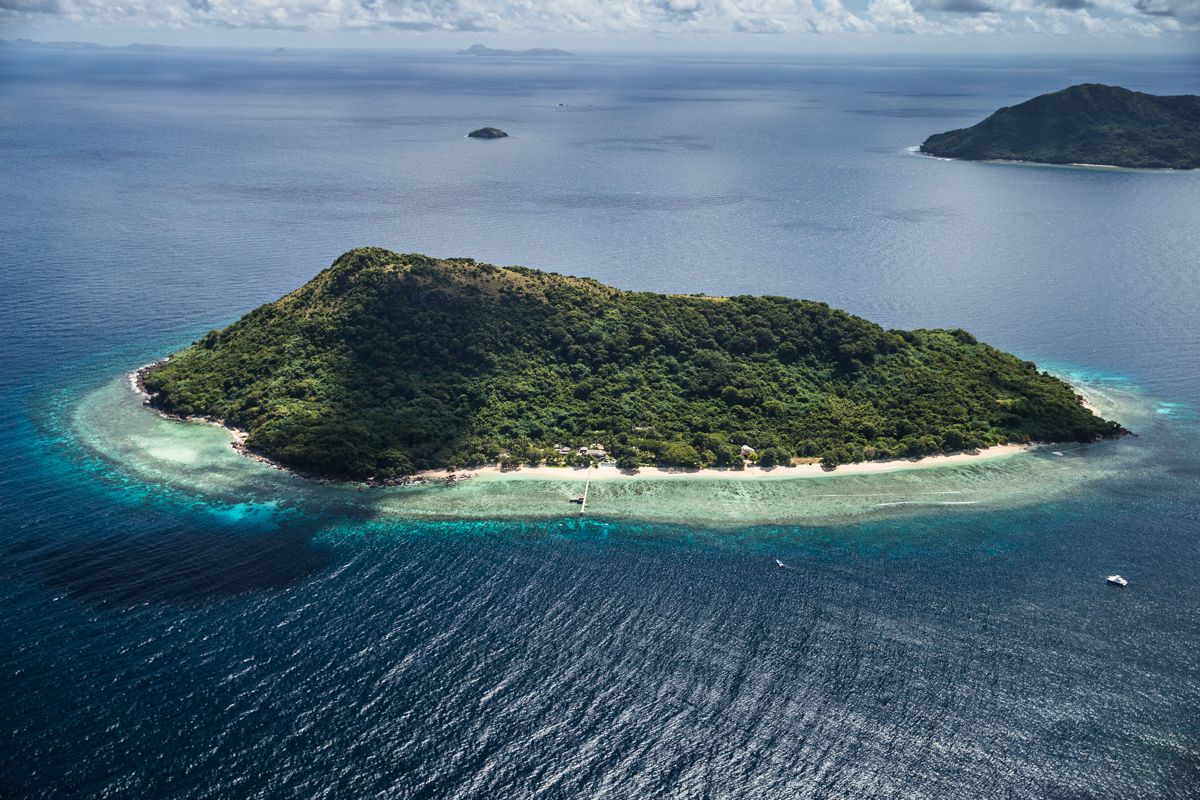
There is a category of real estate that sits entirely apart from the conventional market. No comparable sales. No standard valuation method. No typical buyer. Private islands occupy a corner of the property world where the usual rules of supply, demand, and pricing simply do not apply in the way they do elsewhere.
For buyers who have reached the point where a private island is a genuine consideration, understanding how this market actually works is more useful than any listing brochure.
Why private islands are unlike any other asset class
The first thing to understand about private islands is that scarcity is absolute. You cannot build more coastline, and you cannot manufacture an island with a specific combination of climate, privacy, and accessibility. What exists is what exists, and the supply of genuinely livable, well-positioned private islands in desirable locations is extraordinarily limited.
This creates a pricing environment that standard appraisal methods cannot reliably navigate. There are no true comparables. An island in the Bahamas tells you almost nothing about the value of one in the Pacific Northwest. Size, freshwater access, existing infrastructure, proximity to the mainland, and the regulatory environment of the jurisdiction all shape value in ways that no formula can adequately capture.
What this means in practice is that private islands are priced by negotiation between a seller with a unique asset and a buyer with specific requirements. The outcome depends almost entirely on who is in the room, and whether the right buyer has actually been reached.
Who is buying private islands
The buyer profile for a private island is narrower than for almost any other property type, but it is not monolithic. The motivations vary considerably:
- Primary privacy. For some ultra-high-net-worth individuals, an island represents the only genuine form of privacy available to them. No neighbors, no paparazzi, no unannounced visitors.
- Legacy assets. Islands are increasingly purchased as multigenerational assets, places designed to anchor family gathering across decades rather than serve a single owner’s lifestyle.
- Conservation. A segment of island buyers are motivated by environmental stewardship, acquiring islands to preserve ecosystems rather than develop them.
- Developed resort or hospitality use. Some buyers acquire islands with commercial intent, developing boutique resorts or private retreat facilities.
Each of these buyer types values different characteristics in a property, which further complicates the pricing question. An island ideal for a conservation buyer may hold little appeal for someone seeking a developed family compound, even at the same price point.
The challenge of finding the right buyer
For sellers, the scarcity that makes a private island valuable also makes it difficult to sell through conventional channels. A standard listing reaches the buyers who happen to be looking. At this level of the market, the buyers who would pay the most for a specific island may not be actively searching at all.
Reaching them requires a different approach: a global network of qualified buyers, proactive outreach to individuals and family offices whose profiles match the asset, and a process that creates genuine competitive interest rather than waiting for a single motivated buyer to appear.
This is precisely where a structured luxury real estate auction has a clear advantage for island properties. The auction format does not assume the right buyer is already searching. It assembles qualified buyers around a specific asset on a defined timeline, creating competition where a passive listing would generate only isolated inquiries. For an asset as unique as a private island, that distinction is material.
What to know before exploring private islands for sale
The due diligence required for an island acquisition goes well beyond a standard property transaction. A few areas that deserve particular attention:
Jurisdiction and ownership rights. Islands sit within the legal framework of the country whose waters they occupy. Ownership rights, development permissions, and the ability to transfer title to a foreign buyer vary significantly by jurisdiction. Legal advice specific to the relevant country is not optional.
Infrastructure. The cost of developing and maintaining infrastructure on an island, power, freshwater, communications, boat or air access, can be substantial and is often underestimated. Existing infrastructure adds value that is not always reflected in the asking price; its absence adds cost that often is not either.
Environmental regulations. Many island jurisdictions have significant restrictions on development, particularly in ecologically sensitive areas. Understanding what can and cannot be built before acquisition is essential.
Access. An island that requires a two-hour boat journey from the nearest airport is a fundamentally different asset from one accessible by a short tender ride or private airstrip. Access shapes how the island can be used and who it appeals to.
For buyers seriously exploring private islands for sale, the starting point is understanding which characteristics matter most for their intended use, and then finding the assets that match, rather than being drawn to a listing and working backward.
Concierge Auctions has handled some of the world’s most significant island properties, bringing a global buyer network and a structured process to a category of real estate where the conventional market consistently falls short. For assets this singular, the method of sale matters as much as the property itself.